
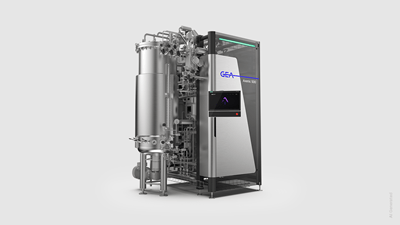
Reliable, automatic operation for consistent, successful precision fermentations
At a glance
All precision fermentations, be they for research or production, has a few critical requirements, that never changes: Consistent performance in and between batches, insight into the production performance, and high degree of flexibility. This requires that fermentation systems manage contamination risks and process variabilities, while providing the process insight to continuously optimise that productions. GEA AXENIC® is a food-grade, aseptic fermentation system, designed to help you produce reliable precision fermentations with confidence. From consistent pilot runs to reliable seed fermentations for production-scale systems, it provides the control, transparency and operational reliability needed to achieve low risk and high productivity.
The result
- Consistent and repeatable fermentation runs
- Reduced contamination risk
- Greater process visibility
- Faster, more reliable scale-up
- Long-term operational performance
Designed for productivity and process stability
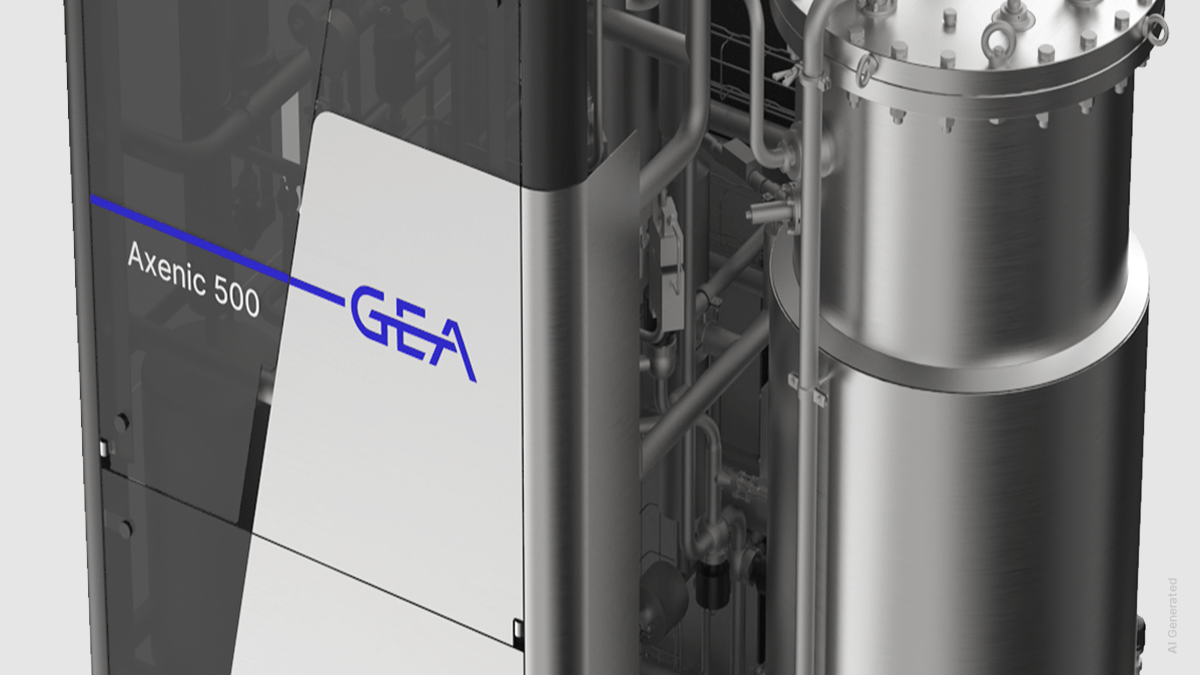
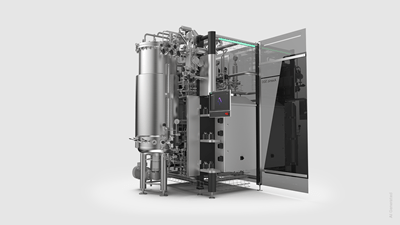
Minimise contamination risk with hygienic design
In precision fermentation, contamination can lead to lost batches, production delays and significant financial impact.
That's why every aspect of AXENIC® is designed to support aseptic operation and protect product integrity.
Key advantages
- Fully automated and validated cleaning-in-place (CIP) and sterilisation-in-place (SIP) cycles.
- Hygienic mechanical design design without dead legs and full drainability.
- High-quality aseptic components, and option for open/close feedback on valves.
- Fully automated operation that minimizes operator errors.
- Agitator with sterile double mechanical seal.
Together, these features help safeguard production while improving uptime and operational confidence.
Reduce downtime and maintain reliable operation
Unplanned downtime, maintenance requirements and equipment failures can impact production schedules and increase operating costs.
AXENIC® is built for long-term reliability, helping you maximise equipment availability and reduce maintenance burdens.
Benefits
- Robust vessel construction designed for long service life
- Double-jacket design suitable for extended operating campaigns and high temperature sterilizations.
- Premium aseptic components, including GEA Vesta® valves
- Easy access for maintenance activities
- Large sight glass for improved process monitoring
The result is a system designed to deliver consistent performance day after day, year after year.
Integrate seamlessly into your production environment
As precision fermentation facilities grow, equipment must fit easily into increasingly complex production lines.
AXENIC® is designed for seamless integration with both upstream and downstream processes, helping reduce engineering complexity and simplify plant expansion.
Benefits
Simplify facility integration: The system is ready for external CIP systems and can communicate efficiently with surrounding process equipment.
Support future expansion: Built to form part of larger turnkey fermentation solutions for food and biotech production.
Maintain process flexibility: Flow control on addition lines, valve feedback functionality and steam barriers provide greater operational control and reduces risk of contamination between systems.
Choose the configuration that fits your needs: Available as either an integrated production-line installation or as standalone solution with built-in CIP and local operator interface.
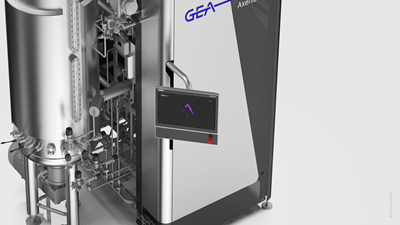
Automate critical operations with confidence
Manual process management can introduce variability, increase operator workload and make it harder to achieve consistent results.
AXENIC® runs on the GEA Codex® automation platform, helping ensure that every batch is executed consistently and according to defined process parameters.
Benefits
- Automated recipe management
- Consistent batch execution
- Reduced risk of operator error
- Full batch history and traceability
- Intuitive operator interface
- Siemens-based control architecture
Build a stronger foundation for production success
When fermentations are inconsistent, the impact can be felt throughout the entire process. Variability at this stage can reduce productivity, affect product quality and increase costs further downstream. This is relevant whether you need consistency in your seed train, or whether you need sufficient repeatability between pilot batches, to achieve a successful scale-up.
AXENIC® helps you establish a robust fermentation basis by combining precise process control, excellent hygienic design, and advanced automation in a single solution.
Whether you're developing alternative proteins, producing functional ingredients or expanding biotech production capacity, AXENIC® gives you greater confidence in every batch.

Turn process data into better decisions
Improving fermentation performance requires more than data collection. It requires clear, actionable insight.
Through GEA Digital Core, AXENIC® provides access to real-time and historical production data, helping teams identify optimisation opportunities and improve operational performance.
Benefits
- Monitor production KPIs in real time
- Track equipment uptime and utilisation
- Analyse historical process performance
- Access documentation and system information remotely
- Monitor utility consumption and identify efficiency improvements
This enables more informed decision-making and supports continuous process improvement.
Frequently asked questions about GEA AXENIC®
GEA-inzichten
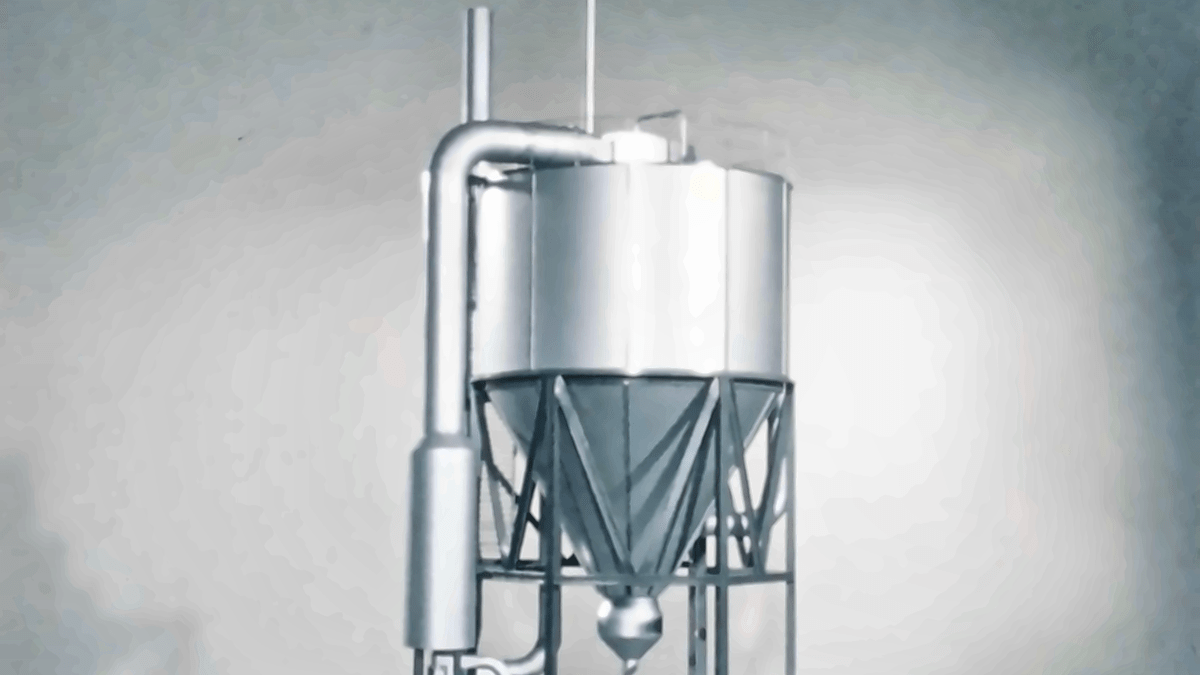
The breakthrough that changed spray drying
In 1976, NIRO engineers responded to a competitive challenge by rethinking what spray drying could do. Their idea became the multi-stage dryer MSD. Fifty years later, the same fundamental principle helps turn liquids into the powders used in essential nutrition products and important medicines around the world. Refined through decades of engineering expertise, customer insight and continuous development, MSD is a story of innovation with lasting impact.

Verder dan de machine: betere prestaties van de installatie ontsluiten
Een efficiënte machine betekent niet automatisch een efficiënte fabriek. Echte verbetering begint vaak met verder kijken dan de afzonderlijke apparatuur en met inzicht in hoe processen, energiesystemen en operationele beslissingen elkaar beïnvloeden. Het is een holistische benadering die bedoeld is om kansen te ontdekken die anders wellicht over het hoofd gezien zouden worden.
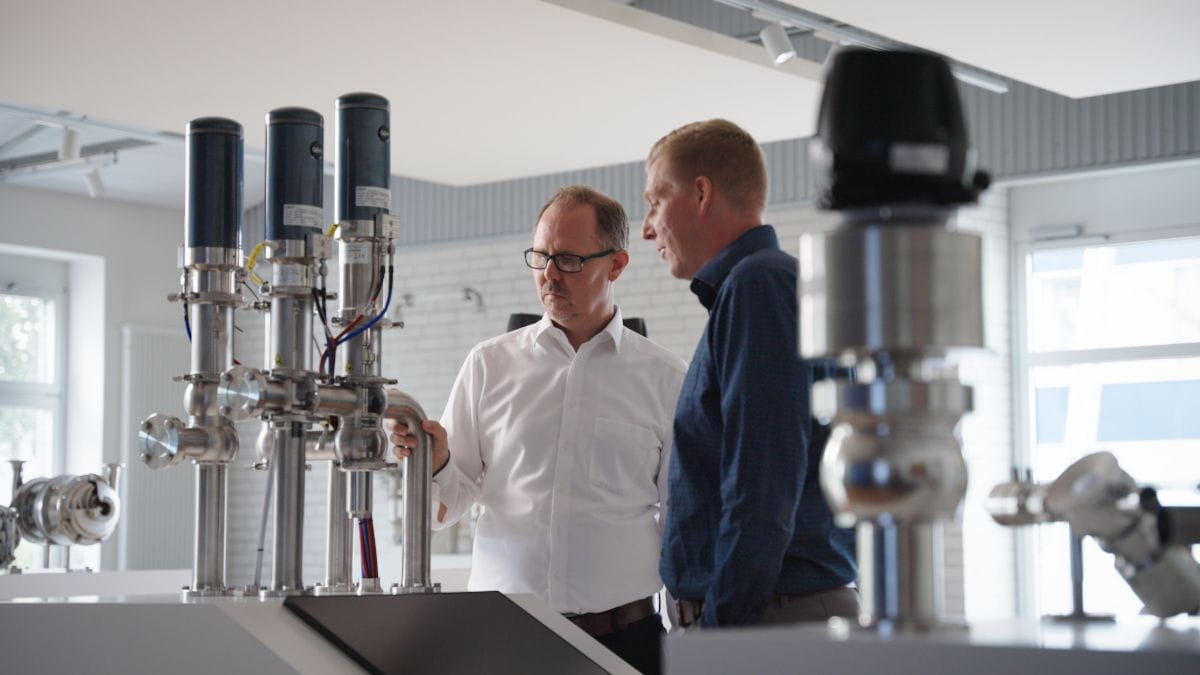
Hoe een klep de manier waarop eten en drinken worden gemaakt opnieuw vormgeeft
De kleppen in voedingsmiddelen- en drankinstallaties worden doorgaans met perslucht bediend. GEA Hydract® Actuation Technology stuurt kleppen daarentegen aan met water, in een gesloten, digitaal geregeld circuit. Het resultaat is een klep die precies op zijn plaats kan worden gehouden en in nauwkeurig afgestemde stappen kan worden aangestuurd. Dit leidt tot een lager energieverbruik en meer controle.
