
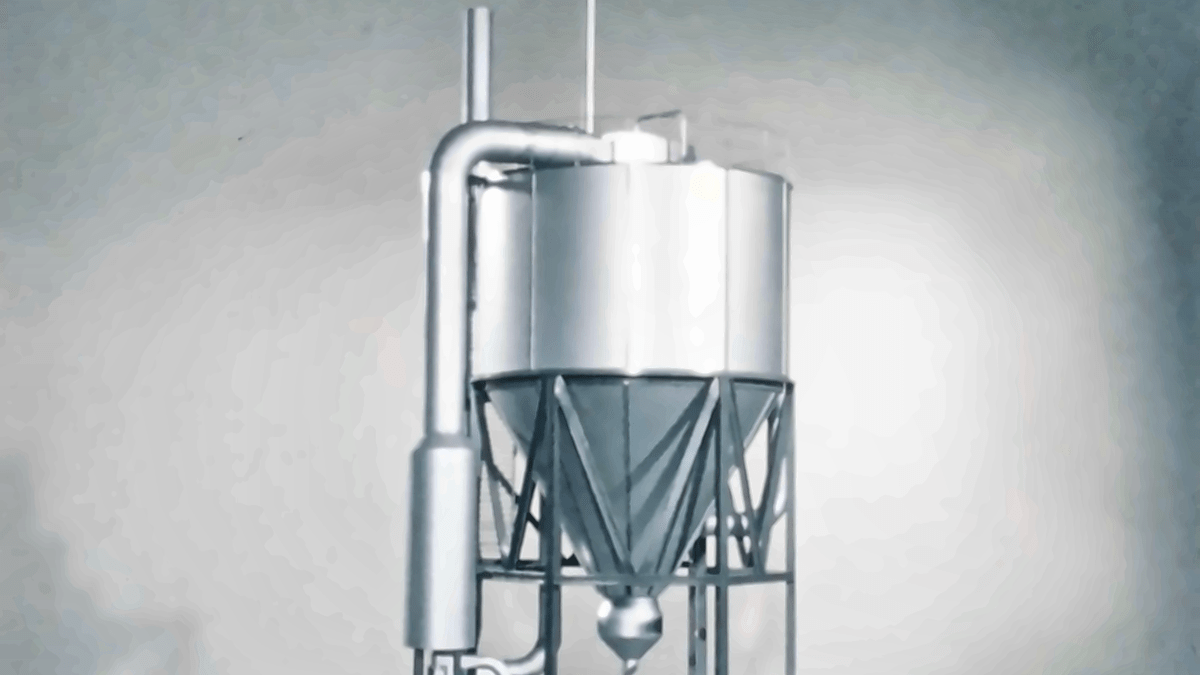
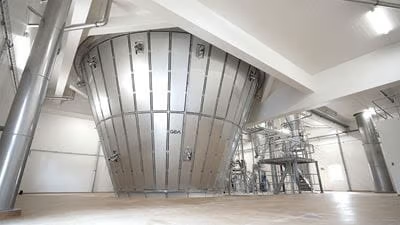
This spray dryer installation at Arla Foods is a modern example of the GEA MSD spray dryer.
Finding a better way to dry
Spray drying is fundamentally a way to transform a liquid concentrate into a powder. The dryer atomizes the liquid into fine droplets. Hot air then removes the moisture as the particles move through a drying chamber.
In the 1970s, two-stage drying was common, with drying in the chamber followed by final drying in a separate fluid bed – a unit outside the chamber where warm air flows upward through the powder, keeping the particles suspended and removing more moisture.
But some products exposed a weakness in this approach. Particularly with infant formula, dairy ingredients and nutritional powders, moist particles could stick to the chamber wall, form deposits and force more frequent production stops for cleaning.
At the same time, a new technology emerged in the United States. It could handle products that established spray drying technology found difficult or even impossible to process, while producing powders that dissolved more easily and flowed better. Reports from the period identified this technology as a serious competitive threat.
A world leader in spray drying at the time, the Danish company A/S NIRO ATOMIZER, now part of GEA, saw the challenge as an opportunity. Rather than defend its existing technology, NIRO set out to make spray drying work for more challenging products.
"Getting product into a spray dryer is not the difficult part," says Martin Skanderby, Global Project Integration Manager, Dairy Powder, GEA. "The know-how lies in getting it out again with the right characteristics."
The idea its engineers documented in 1976 would become the multi-stage dryer MSD.
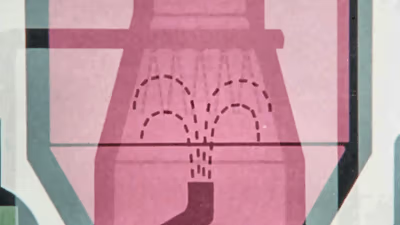
This early spray dryer illustration from NIRO shows the basic operation of the machine – liquid is sprayed inside a chamber, where it quickly dries.
The MSD solution
NIRO's engineers changed where the drying took place. They integrated a fluid bed into the chamber and added another fluid-bed stage, allowing more of the drying to happen outside the spray zone. At the same time, they changed the air flow patterns. This multi-stage principle helped the process handle more difficult products while improving the characteristics of the resulting powder.
In applications such as instant milk powder and infant formula, the technology produced powders that mixed with and dissolved in liquid more easily. The essential idea is straightforward. MSD does not replace spray drying. It changes how drying is distributed through the process to achieve the required product more effectively.
From idea to industry
Turning the concept into a viable industrial proposition took time. In 1982, French dairy Isigny Sainte-Mère bought the first NIRO MSD – six years after NIRO documented the idea.
As more systems entered production and demonstrated what multi-stage drying could achieve, adoption accelerated from the late 1980s. Engineers moved beyond solving their original processing challenge and began proving the concept’s value across a wider range of applications.
When GEA acquired NIRO A/S, it also gained spray drying technology and the expertise behind it. Development of MSD continued, building on the original principle through successive generations of engineering and application experience.
The influence of multi-stage drying became clearer as competitors developed dryers based on the same principle. What had begun as NIRO ATOMIZER's response to a competitive threat was becoming an established approach to multi-stage spray drying and a platform GEA could continue to develop.
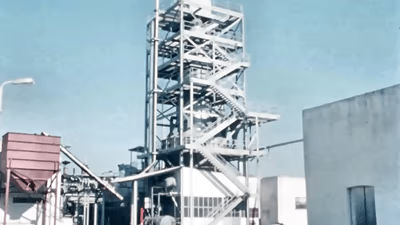
An early NIRO MSD spray dryer is fully constructed and operational.
An idea that kept moving
An engineer from MSD's early years would still recognize the geometry of a modern drying chamber and understand the principle at work. The machinery around that familiar concept, however, would tell a story of continuous development.
Air dispersion is one example. Improvements in air dispersion, how hot air enters the dryer, have helped reduce deposits and thereby increase efficiency. Hygienic operation, automation and process control also developed as production demands changed. Modern systems can support 24/7 operation, while advances in agglomeration and granulation, the process of forming larger, more porous powder particles, provide further ways to influence powder characteristics.
Digital tools such as GEA OptiPartner now support continuous process optimization, using real-time process data to help keep production running at optimal conditions. The tools available today would have been unimaginable to the engineers of 1976, but the objective would have been familiar: understand the process and use that knowledge to improve performance.
Spray drying requires significant energy, so efficiency matters throughout a plant's operating life. In relevant applications, MSD can operate at lower outlet temperatures, meaning more drying takes place in the fluid beds rather than in the drying chamber itself. Heat recovery and wider process optimization provide further opportunities. GEA AddCool builds on this approach, using high-temperature heat pump technology to recover and reuse waste heat, helping reduce energy consumption and reliance on fossil fuels.

50 years of MSD
1976
NIRO documents the original MSD concept.
1982
The first NIRO MSD is sold to Isigny Sainte-Mère, France.
Late 1980s
Adoption accelerates as multi-stage drying proves itself in production.
Early 2000s
Air dispersion developments further reduce deposits and improve efficiency.
Today
The original principle continues to develop through advances in hygiene, continuous production, automation, agglomeration and digital process optimization.
Fifty years of learning
Experience from operating plants has shaped much of MSD’s development. Every installation has its own constraints, and solving one bottleneck can expose another. Those challenges show GEA's engineers where to improve the process.
The learning runs both ways. GEA brings experience from different products, applications and installations, while customers know the behavior of their own plants in detail. Together, those perspectives can reveal opportunities to reduce deposits, extend production periods or improve control.
Accumulated experience also means knowing when not to recommend MSD. Different products, capacities and operating conditions may call for another technology, and sometimes a simpler solution is enough.
That experience now extends beyond the dryer. By combining process and utility expertise, GEA can optimize the dryer as part of the complete production line. It is as much about choosing and applying the right technology as it is about continuing to develop the technology itself.
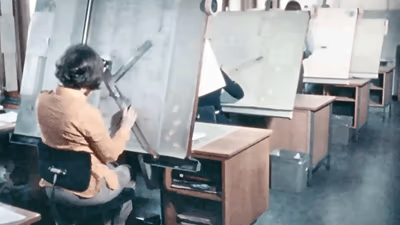
Early in the history of the MSD, team members drew plans by hand.
From one generation of engineers to the next
The continuity in the MSD story is human as well as technical. Some members of today’s GEA team began their careers alongside engineers who had developed the original MSD. They remember people who believed strongly in what they had created and worked hard to convince others that the idea was right.
Their confidence proved well founded. The approach they championed became established in industrial production and continued to find new applications long after their early work was complete.
The original MSD marks the beginning of this story – not its end. The tools have changed dramatically since 1976, but the instinct remains: understand the problem, apply engineering expertise and keep improving.
