

Energy-efficient evaporation for phosphate production
Phosphoric acid concentration is an energy-intensive step in phosphate and fertilizer production. ATMOS helps producers reduce steam consumption, lower cooling water demand and cut CO2 emissions by recovering energy from process vapors that would otherwise be lost.
Many existing phosphoric acid concentration units still operate as conventional single-effect evaporators. These systems can create several operational and environmental challenges:
- High steam consumption
- Excessive cooling water demand
- Contamination risks in cooling water circuits caused by fluorine and silica
- Limited opportunities for energy recovery
- Increasing compliance pressure due to environmental regulations and decarbonization targets
ATMOS addresses these challenges with a patented, energy-integrated evaporation concept that combines double-effect evaporation, vapor purification and fluorine capture in one practical solution.
What is ATMOS?
ATMOS is a patented evaporation technology developed by GEA in partnership with Yara International for energy-efficient phosphoric acid concentration. The technology is designed to help phosphate producers improve steam economy, reduce utility costs and modernize existing evaporation systems with minimal plant modifications.
The concept converts conventional single-effect evaporation systems into highly efficient double-effect evaporation units. This makes ATMOS suitable for:
- Existing plant revamps
- Capacity and efficiency upgrades
- New phosphoric acid concentration plants
- Decarbonization initiatives
- Energy optimization programs
With ATMOS, phosphate producers can improve the sustainability and competitiveness of phosphoric acid concentration without replacing existing evaporation assets.
Key benefits of ATMOS
- Up to 46% lower steam consumption
By recovering and reusing process vapors, ATMOS significantly reduces the amount of live steam required for concentration.
- 40% reduction in cooling water demand
Lower cooling requirements reduce operating costs and improve overall plant sustainability.
- Significant CO2 reduction potential
Improved steam efficiency directly lowers fuel consumption and associated emissions, supporting corporate decarbonization strategies.
- Enhanced resource efficiency
By recovering energy already available in the process, ATMOS helps maximize output from existing infrastructure while reducing utility demand.

ATMOS
1
Atmospheric Evaporator (1st Effect)
2
Vapor Scrubbing System
3
Vacuum Evaporator (2nd Effect)
5
Fluorosilicic Acid Recovery System
How does ATMOS work?
ATMOS is designed for merchant-grade phosphoric acid concentration and can support both revamp projects and new installations. ATMOS uses an integrated wash column to purify fluorine- and silica-containing vapors so they can be reused as a heating medium in a second evaporation effect.
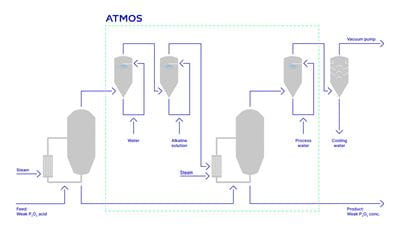
ATMOS flow scheme
Why choose ATMOS?
ATMOS gives phosphate producers a proven route to recover energy previously lost during phosphoric acid concentration and reduce the utility demand of existing or new evaporation systems.
- Up to 46% lower steam consumption
- 40% lower cooling water demand
- Improved sustainability and emissions reduction
- Minimal modifications to existing concentration lines
- Proven solution developed with Yara International
- Full GEA support from feasibility study to commissioning
- Pilot plant available for testing and validation.

Add Better Certified
A better future doesn't come with a price tag, but it does come with a label.
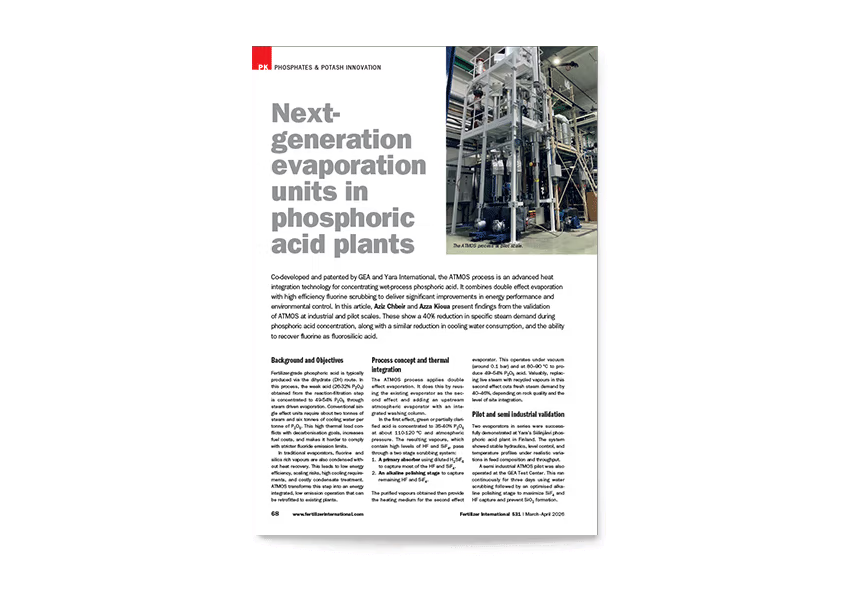
Get the ATMOS article
Improve energy performance and environmental control with ATMOS - the advanced heat integration technology for concentrating wet-process phosphoric acid.
Downloads
Produits associés

Évaporateur à circulation forcée
Idéal pour les liquides fortement visqueux ou ayant tendance à créer des incrustations. Optimal pour les solutions salines entre autres applications.

Laveur à colonne garnie
Équipement de transfert de masse gazeuse/liquide le plus utilisé pour le nettoyage des gaz d'échappement par absorption chimique ou physique.

GEA Insights
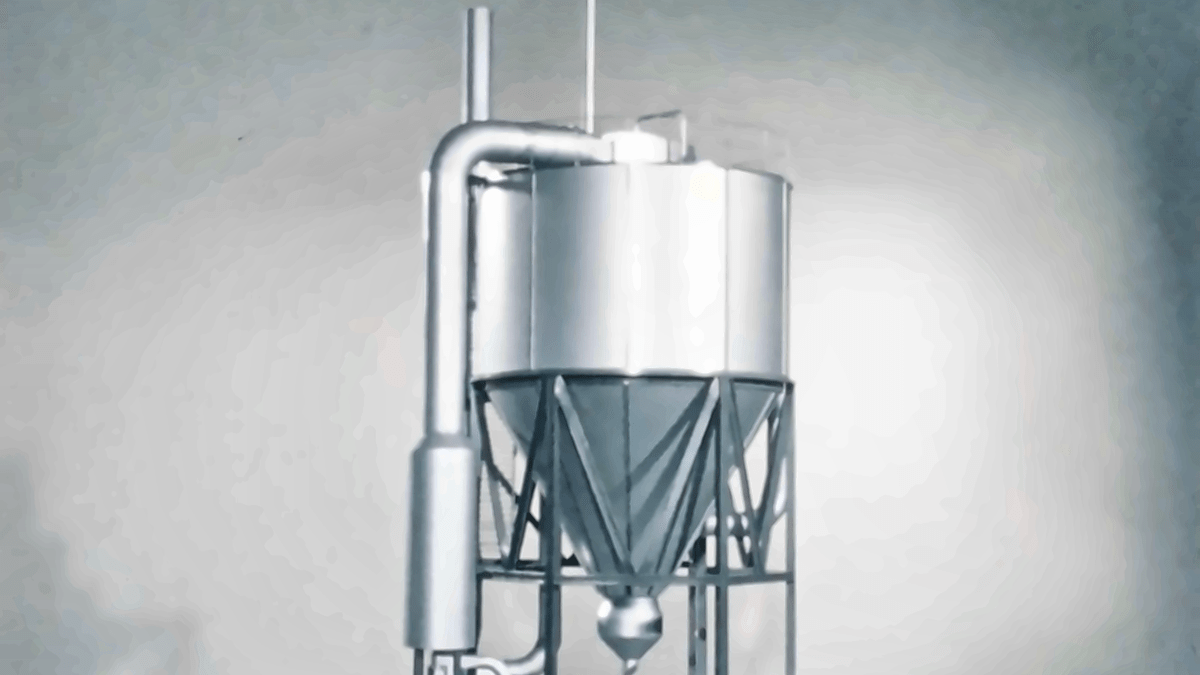
La percée qui a révolutionné le séchage par atomisation
En 1976, les ingénieurs de NIRO répondaient à un défi concurrentiel en repensant ce que pouvait faire le séchage par atomisation. Leur idée est à l'origine du sécheur-atomiseur à plusieurs étages MSD. Cinquante ans plus tard, ce même principe fondamental aide à transformer les liquides en poudres, qui sont utilisées dans des produits nutritionnels essentiels et des médicaments importants partout dans le monde. Perfectionné au cours de plusieurs décennies d'expertise technique, d'enquêtes clientèle et de développement continu, le MSD est une histoire d'innovation aux retombées durables.
Au-delà des machines : exploiter les gisements de performance des installations
Ce n'est pas parce que vous avez des machines efficaces que votre usine l'est. Une trajectoire d'amélioration efficace commence souvent par une analyse qui ne se limite pas aux équipements pris individuellement, et cherche à comprendre comment les processus, les systèmes énergétiques et les décisions opérationnelles s'influencent mutuellement. C'est une démarche holistique, conçue pour repérer des opportunités qui, sans cela, risqueraient de passer inaperçues.
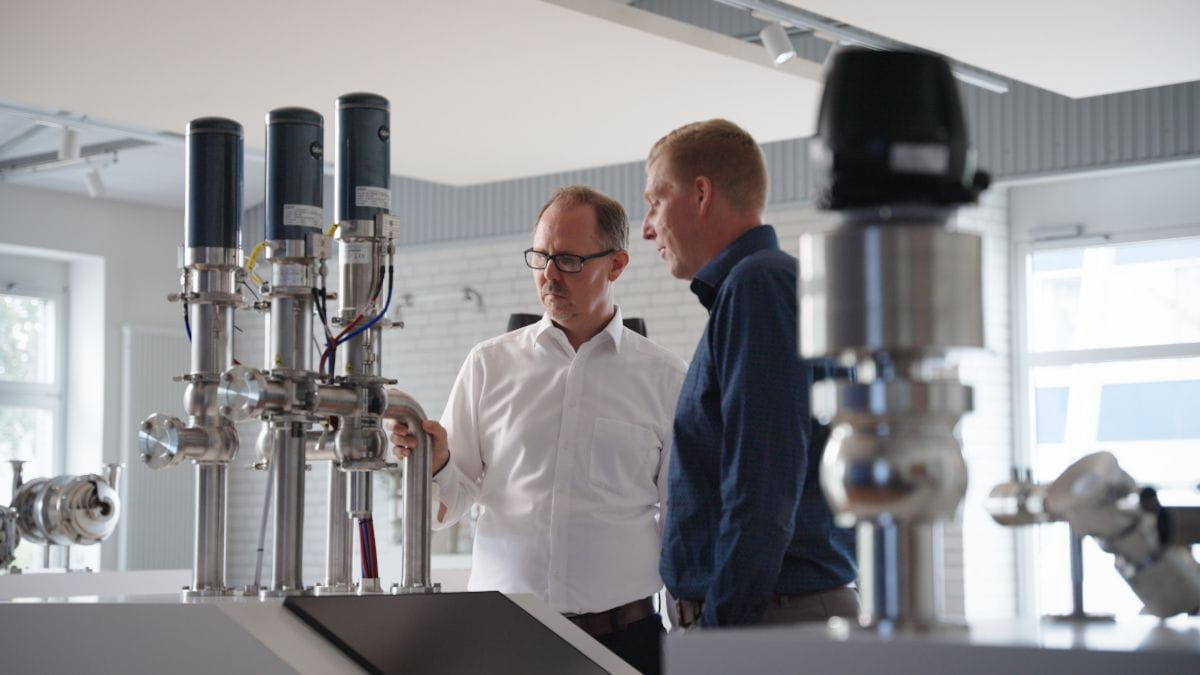
Comment une vanne révolutionne la production des aliments et des boissons
Dans les installations agroalimentaires, les vannes sont généralement actionnées en utilisant de l'air comprimé. La technologie d'actionnement GEA Hydract® Actuation Technology, quant à elle, actionne les vannes en utilisant de l'eau, au sein d'un circuit fermé à commande numérique. Résultat, une vanne peut être maintenue en place de manière exacte et réglée par petits paliers. Cela se traduit par une consommation d'énergie en baisse et un meilleur contrôle.
