
Putting Theory into Practice
A series of initial tests was done using a LYOVAC® FCM 2 to compare the coefficient of performance (COP) and process energy consumption of the ECO Mode with the theoretical value of a two-stage reciprocating compressor (R507). Using 3% mannitol as the test product and taking an average of five trial runs, the results were impressive.
In both situations (with a constant condenser temperature of ≤–70 °C for the classic mode and a dynamic condenser temperature not colder than –53 °C for the ECO Mode) and using pressure rise measurement [PRM] to determine the end of primary and secondary drying, the processing times for both the classic and ECO Mode were very similar .

Proven Results at Production Scale
Acting as a third-party validator, TUV concluded that, in accordance with the DIN EN ISO 14021:2021-10 standard, the TYPE II “ADD BETTER” ECOLABEL developed by GEA Lyophil GmbH for the use case: “LYOVAC ECO Mode” is reasonable, transparent and appropriate.
They also noted that the submitted data was “coherent and comprehensible,” and could be used in communication, marketing, or documentation to show customers and stakeholders that the environmental and/or technical claims have been verified by an impartial authority.
“Independent substantiation provides external assurance that our energy saving claims are consistent and scientifically sound,” said Thomas Beutler. “Being able to use the term ‘Validated by TÜV Rheinland’ gives our customers confidence that ECO Mode’s sustainability benefits are not just internal estimates; they have been independently verified.”

LYOVAC® ECO Mode
In Summary
This new algorithm changes the set point of both the fluid condenser temperature and the position of the mushroom valve during drying. What this means is that there’s no longer an actual fixed temperature for the condenser; it’s optimally matched to the ongoing process and no colder than necessary.”
In addition, the mushroom valve opening position can optionally be used as an extra control mechanism … as well as the nitrogen inflow rate. This allows the freeze dryer to reach the same chamber pressure, but with warmer condenser coils. As such, less nitrogen is needed to control the pressure. The system can also be augmented with a virtual sublimation sensor if required.Retrofit-compatible with any unit with a fluid condenser, and with the option to run existing processes in classic mode, ECO Mode will be a selectable recipe parameter that will transform the future of planet-friendly freeze drying.
Download more information about LYOVAC ® ECO Mode
Downloads
Produits associés

LYOVAC® Pharma Freeze Dryer
GEA’s LYOVAC® industrial-scale freeze dryers are built to customer specifications and are available with production areas of 1–60 m² and condenser capacities of more than 1000 kg.

LYOVAC® Freeze dryers for small scale production modules
LYOVAC® Freeze dryers for small scale production modules

LYOVAC® Small-Scale Freeze Dryers
Extending its range of LYOVAC™ Freeze Dryers, GEA now offers both integrated and standalone equipment for the production of small-scale batches and formulation or process development.
GEA Insights
La percée qui a révolutionné le séchage par atomisation
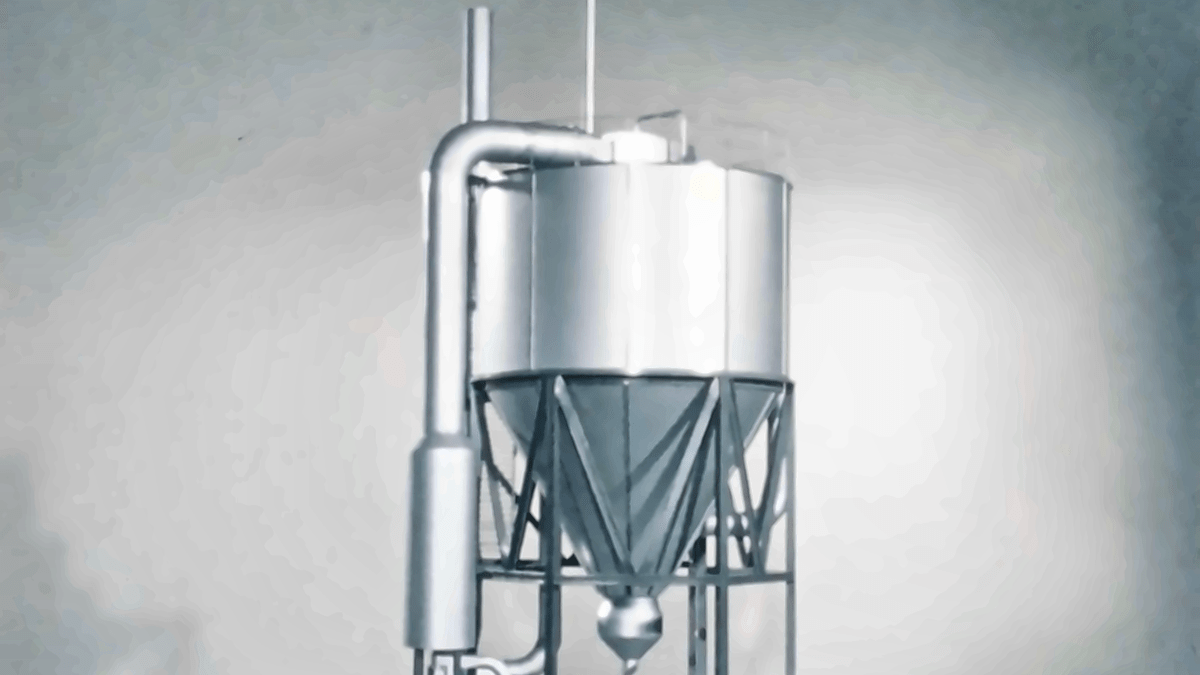
En 1976, les ingénieurs de NIRO répondaient à un défi concurrentiel en repensant ce que pouvait faire le séchage par atomisation. Leur idée est à l'origine du sécheur-atomiseur à plusieurs étages MSD. Cinquante ans plus tard, ce même principe fondamental aide à transformer les liquides en poudres, qui sont utilisées dans des produits nutritionnels essentiels et des médicaments importants partout dans le monde. Perfectionné au cours de plusieurs décennies d'expertise technique, d'enquêtes clientèle et de développement continu, le MSD est une histoire d'innovation aux retombées durables.

Au-delà des machines : exploiter les gisements de performance des installations
Ce n'est pas parce que vous avez des machines efficaces que votre usine l'est. Une trajectoire d'amélioration efficace commence souvent par une analyse qui ne se limite pas aux équipements pris individuellement, et cherche à comprendre comment les processus, les systèmes énergétiques et les décisions opérationnelles s'influencent mutuellement. C'est une démarche holistique, conçue pour repérer des opportunités qui, sans cela, risqueraient de passer inaperçues.

Comment une vanne révolutionne la production des aliments et des boissons
Dans les installations agroalimentaires, les vannes sont généralement actionnées en utilisant de l'air comprimé. La technologie d'actionnement GEA Hydract® Actuation Technology, quant à elle, actionne les vannes en utilisant de l'eau, au sein d'un circuit fermé à commande numérique. Résultat, une vanne peut être maintenue en place de manière exacte et réglée par petits paliers. Cela se traduit par une consommation d'énergie en baisse et un meilleur contrôle.
