

According to GEA experts, long-term success in dairy processing will depend on moving beyond isolated process improvements and connecting processes, utilities and data into one integrated operational strategy.
“Dairy manufacturers are balancing multiple pressures simultaneously,” says Riccardo Bergamini, Global Technical Sustainability Manager at GEA. “Energy prices remain volatile, sustainability expectations are increasing, and producers still need to increase efficiency and profitability. Without a clear long-term roadmap, many are uncertain where to invest first. It is important to identify opportunities that can deliver value today while also creating a virtuous path toward the future."
"The key is to look at the plant as a whole and understand how different improvements can work together.”
Riccardo Bergamini
Global Technical Sustinability Manager at GEA
Efficiency now depends on flexibility
Dairy plants can no longer be optimized around one fixed production scenario. Seasonal variations in milk supply, changing consumer demand and increasingly diverse product portfolios all require plants to adapt.
“Flexibility is becoming a competitive advantage for dairy producers.” says David Martínez-Maradiaga, Global Technical Sustainability Manager at GEA. “Plants that can adapt to changing milk volumes and product demand without increasing resource consumption will gain a key competitive advantage, influencing both profitability and sustainability at the same time.” This is where a connected approach becomes particularly important. Rather than optimizing individual processes or utilities in isolation, manufacturers need a holistic view of how the different elements of the plant work together. GEA NEXUS enables this broader perspective, helping identify opportunities that improve overall plant performance and support more informed operational decision.
Turning plant data into better decisions
For many dairy manufacturers, one of the biggest operational challenges is visibility.
Data may exist across different systems and processes, but without a connected view, it can be difficult to identify where resources are being consumed, where inefficiencies occur or where improvements can have the greatest impact.
The GEA NEXUS approach brings process, utility and operational insights together, and through GEA experts it creates a more complete and accessible view of plant performance.
That visibility can support everything from day-to-day operational decisions to long-term improvement strategies. Operators can identify inefficiencies, stabilize performance and optimize resource consumption, while advanced process control can automate optimization tasks that traditionally relied on operator experience.
“The real value of digitalization is not simply having more data, it is having the right information at the right time and using it to improve the way the plant operates.”
David Martínez-Maradiaga
Global Technical Sustainability Manager at GEA
Can sustainability and profitability go together?
For dairy manufacturers, sustainability has evolved from a corporate ambition into a core operational KPI. Reducing energy and water consumption, lowering emissions and improving resource efficiency are now closely connected to the cost of running a plant.
The challenge lies in achieving those improvements, while maintaining competitiveness.
According to Bergamini, that does not necessarily require large-scale investments in new technologies. “Process optimization is often the lowest-hanging fruit,” he says. “Before replacing equipment or making major investments, it is important to understand what can be achieved by optimizing the way existing processes operate. Only once that is done, it is time to invest for example in enhanced heat recovery systems, upgrading waste heat, considering the plant as the integrated system that it is.”
This principle offers a different approach to decarbonization. Rather than viewing sustainability as a series of isolated technology upgrades, manufacturers can identify opportunities across the entire plant and prioritize the measures that offer the strongest combination of environmental and economic benefits.
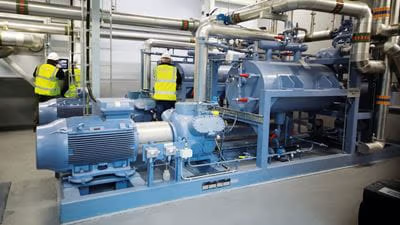
For example, better integration between heating and cooling systems can allow energy that would otherwise be wasted to be recovered and reused elsewhere in the process. Heat pump technology can further support the transition toward more efficient and lower-carbon energy systems. The key lies not only in the technologies themselves, but in how they are combined and integrated across the plant.
From optimization to transformation
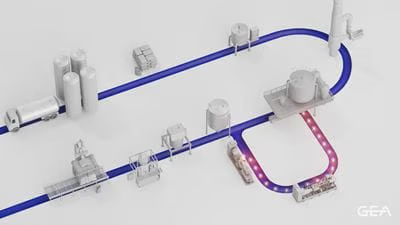
The future-ready dairy plant will not be defined by one technology. It will be defined by how effectively its processes, utilities, data and people work together.
“Decarbonizing a dairy plant is not about finding one solution that solves everything,” says Martínez-Maradiaga. “It is about understanding the whole system and identifying where the biggest opportunities are. Sometimes the answer is a technology upgrade. Sometimes it is process optimization. And often, the best result comes from combining several measures.”
This holistic approach can also make investments more future-ready. By establishing a clear understanding of how the plant operates today, manufacturers can prioritize improvements while keeping future production requirements, energy systems and sustainability ambitions in view.
Building the future-ready dairy plant
The dairy industry is entering a new operating era, in which efficiency, sustainability and flexibility are becoming increasingly interconnected. This shift is driving greater interest in integrated approaches that bring together process optimization, energy management and digital intelligence.
“Ultimately, it is about creating a plant that is more resilient and better prepared for what comes next,” says Bergamini. “Sustainability and profitability should not be competing goals. When you understand the plant as a whole, improving one can help improve the other.” GEA NEXUS supports this approach by connecting process, utility and operational insights into a single framework, helping manufacturers identify opportunities for continuous improvement while aligning operational and sustainability objectives.

Давайте поговорим о NEXUS!
Identify the next high-value improvement in your dairy plant.
Start with GEA NEXUS.
