
GEA is, among others, a single-source supplier of cost effective, energy efficient and reliable wastewater evaporator systems, based on using spray drying evaporation.
Drying of salt and solid-containing effluents from various industrial processes, including wastewater streams from wet type FGD (flue-gas desulfurization), is efficiently enabled using the well-proven GEA spray drying technology and proprietary equipment. The heat of the hot flue gas from the industrial process is used to evaporate the water in the effluent, leaving a dry powder to be collected in a downstream filter with no liquid effluent discharge at all.
Spray drying is a mature technology that was developed over a century ago. GEA has successfully delivered installations worldwide across many different spray drying applications in the power, waste to energy, sinter & metallurgical and glass industries — to name some.
Key features
- Mature and well-proven technology.
- Unmatched rotary atomizer.
- Excellent performance and with outstanding distribution of droplets' size.
- Flexible process.
- The heat source for effluent evaporation can be hot flue gas or pre-heated combustion air.
- Dried salts and solids can be collected either in an optional particular filter or in the main dust collector.
- Can be adapted for large variations of hot gas temperatures and ash load.
- Full ranges of atomizer sizes for different effluent capacities.
- System simplicity. Carbon steel construction with high degree of local supply.
Working Principle
Working Principle of Spray Drying Evaporation
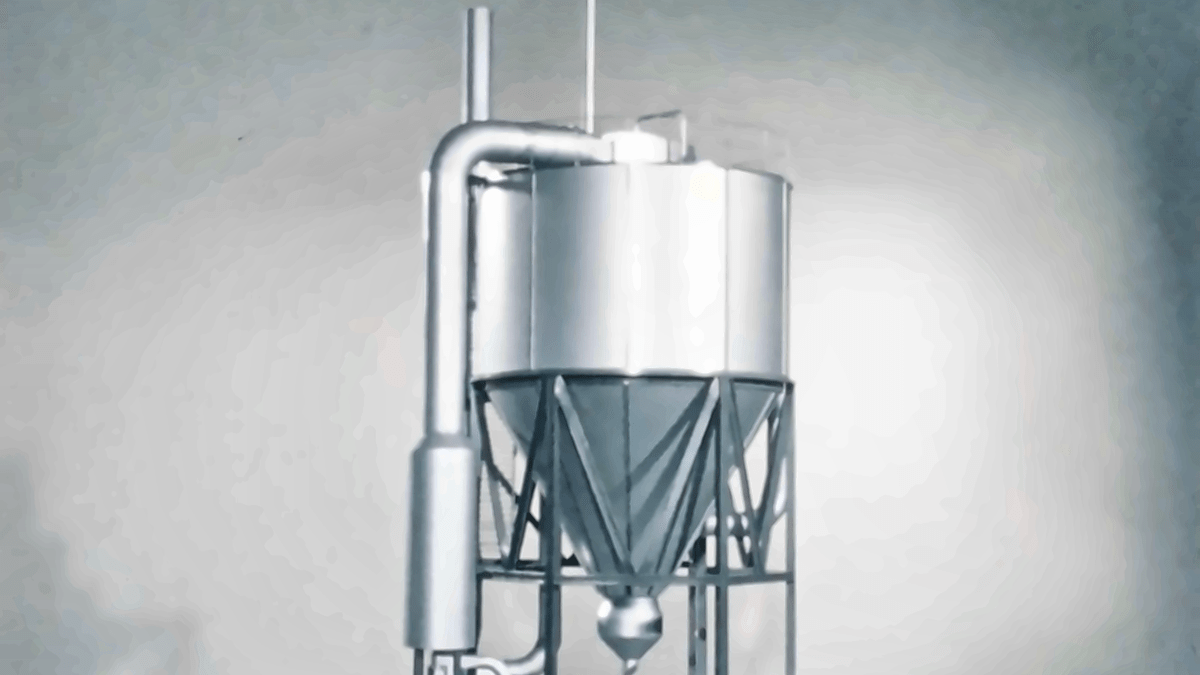
The GEA spray drying evaporation process is highly efficient yet very simple, as it basically consists of the spray dryer evaporator module and a down-stream filter.
A slipstream of hot flue gas is fed into a spray-drying chamber where it immediately comes in contact with a fine spray from atomization of the discharged scrubber liquid of a wet FGD (WFGD) system.
There is a precise control of the gas distribution, the WFGD scrubber liquid flow rate and droplet size to ensure that all droplets are converted into a fine dry powder.
The flue gas further flows into an optional dust collector or the main filter where any remaining suspended solids are removed. The filtered flue gases are then fed to the wet FGD for acid gases removal.
Downloads

GEA Insights
La percée qui a révolutionné le séchage par atomisation
En 1976, les ingénieurs de NIRO répondaient à un défi concurrentiel en repensant ce que pouvait faire le séchage par atomisation. Leur idée est à l'origine du sécheur-atomiseur à plusieurs étages MSD. Cinquante ans plus tard, ce même principe fondamental aide à transformer les liquides en poudres, qui sont utilisées dans des produits nutritionnels essentiels et des médicaments importants partout dans le monde. Perfectionné au cours de plusieurs décennies d'expertise technique, d'enquêtes clientèle et de développement continu, le MSD est une histoire d'innovation aux retombées durables.

Au-delà des machines : exploiter les gisements de performance des installations
Ce n'est pas parce que vous avez des machines efficaces que votre usine l'est. Une trajectoire d'amélioration efficace commence souvent par une analyse qui ne se limite pas aux équipements pris individuellement, et cherche à comprendre comment les processus, les systèmes énergétiques et les décisions opérationnelles s'influencent mutuellement. C'est une démarche holistique, conçue pour repérer des opportunités qui, sans cela, risqueraient de passer inaperçues.

Comment une vanne révolutionne la production des aliments et des boissons
Dans les installations agroalimentaires, les vannes sont généralement actionnées en utilisant de l'air comprimé. La technologie d'actionnement GEA Hydract® Actuation Technology, quant à elle, actionne les vannes en utilisant de l'eau, au sein d'un circuit fermé à commande numérique. Résultat, une vanne peut être maintenue en place de manière exacte et réglée par petits paliers. Cela se traduit par une consommation d'énergie en baisse et un meilleur contrôle.
