

Batch and Continuous Solutions
Suitable for both batch and continuous operations, NICA Extruders are available in three sizes: E100, E140 and E220. The E100 is only available as part of the integrated IPS5 system, a process module available exclusively with the GEA PharmaConnect product. The NICA E140 extruder is available as a standalone machine and, with production capabilities of 500 g (batch) up to 2.0 kg/minute (continuous), the unit is equally suited for R&D as well as for small-scale production. The E140 more often integrated with a NICA S450 spheronizer to form the IPS25 and IPS50 machines.
The E220 model offers the same processing characteristics as the smaller E140 but gives four times the throughput. Machine construction makes it particularly suitable for integration into full pellet production lines, forming the NICA IPS100 and IPS200 systems, with direct connection to upstream granulation and downstream spheronization and drying processes. The E220 is available as a free-standing piece of equipment or can be installed 'through-the-wall'.
Principles of Operation
The NICA Extruder is a radial basket-type product with two rotors (one for the E100) that rotate within a cylindrical screen. The wet mass is gravity fed into the inner rotor — the feeder — which distributes the material into cavities between the blades on the outer rotor — the impeller. Pressure is generated in a continuous wave as these blades sweep across the inner surface of the screen. NICA extruders can be fitted with a wide range of screens with a variety of different hole diameters and wall thicknesses. Both rotors feature variable speed drives.
This allows a high degree of flexibility to optimize product compaction and extrudate consistency. The system’s patented design ensures a very low temperature increase during the extrusion process and a consistent wet mass compression into an extrudable paste. These features work together to guarantee reproducible product density throughout a batch. Product is processed in a “plug-flow” regime and hold-up at the end of a batch only amounts to a few grams.
Features
- Patented high efficiency design
- Gentle product treatment
- Low product temperature
- Multiple screen and impeller options for production flexibility
- Product temperature monitoring
- Easy scale-up
- Plug flow — first in, first out — with negligible product hold-up
- Easy to dismantle and clean
- Compact design
Typical Capabilities
| E100 | E140 | E220 |
| 0.1–0.5 kg/min | 0.5–2.0 kg/min | 2–8 kg/min |
Downloads
Produits associés

NICA Spheronizer System
Developed specifically for the pharmaceutical industry, NICA Spheronizers deliver spherical pellets at fast production rates using patented technology to maximize yields.

NICA Integrated Pelletizing Systems
Developed specifically for the Pharmaceutical industry, the NICA Integrated Pelletizing Systems (IPS) fuses NICA Extrusion and Spheronization technologies to create a range of compact, continuous systems for the production of spherical pellets.
GEA Insights
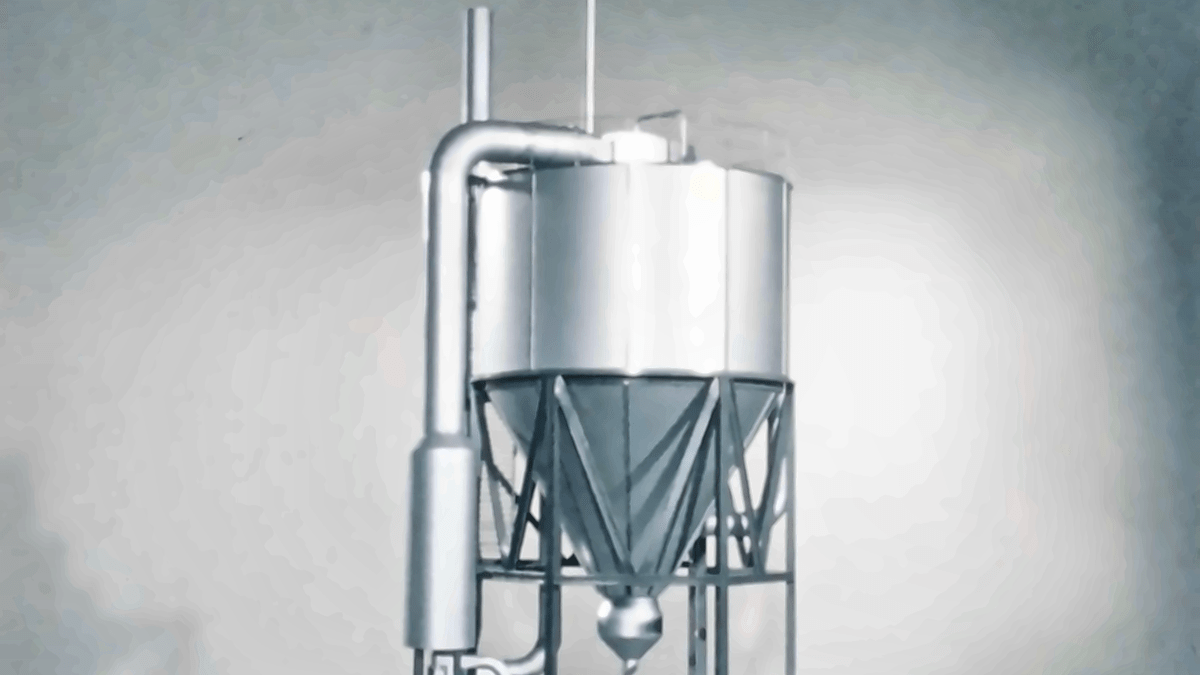
The breakthrough that changed spray drying
In 1976, NIRO engineers responded to a competitive challenge by rethinking what spray drying could do. Their idea became the multi-stage dryer MSD. Fifty years later, the same fundamental principle helps turn liquids into the powders used in essential nutrition products and important medicines around the world. Refined through decades of engineering expertise, customer insight and continuous development, MSD is a story of innovation with lasting impact.
Au-delà des machines : exploiter les gisements de performance des installations
Ce n'est pas parce que vous avez des machines efficaces que votre usine l'est. Une trajectoire d'amélioration efficace commence souvent par une analyse qui ne se limite pas aux équipements pris individuellement, et cherche à comprendre comment les processus, les systèmes énergétiques et les décisions opérationnelles s'influencent mutuellement. C'est une démarche holistique, conçue pour repérer des opportunités qui, sans cela, risqueraient de passer inaperçues.
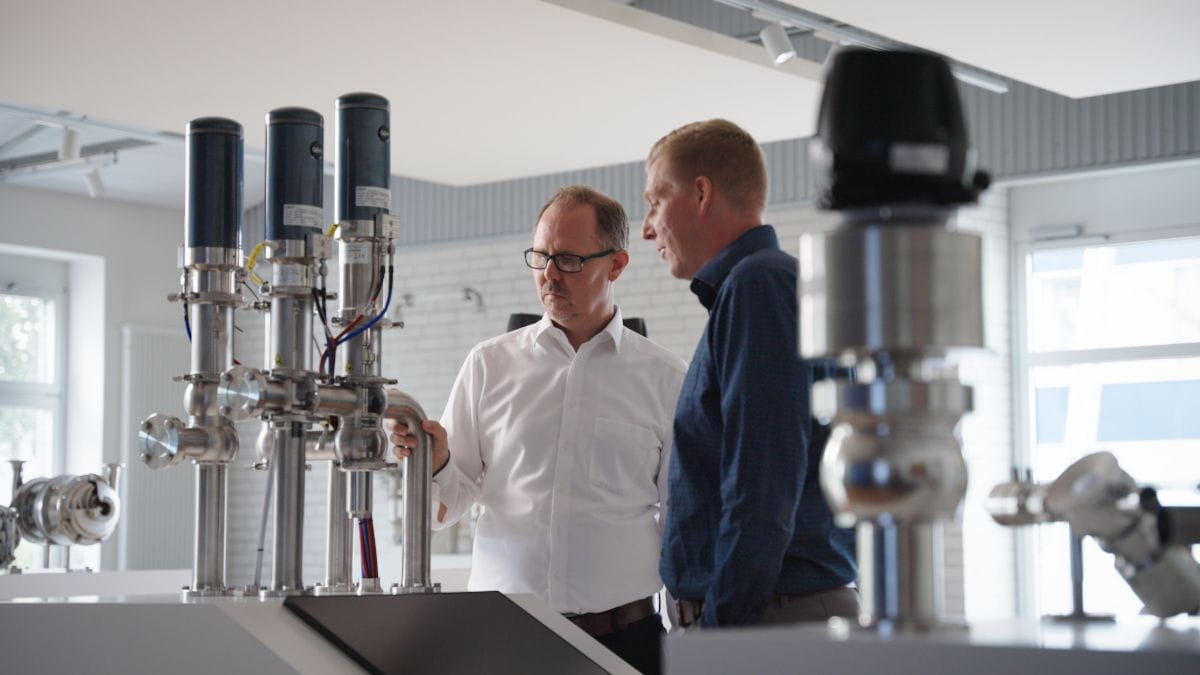
Comment une vanne révolutionne la production des aliments et des boissons
Dans les installations agroalimentaires, les vannes sont généralement actionnées en utilisant de l'air comprimé. La technologie d'actionnement GEA Hydract® Actuation Technology, quant à elle, actionne les vannes en utilisant de l'eau, au sein d'un circuit fermé à commande numérique. Résultat, une vanne peut être maintenue en place de manière exacte et réglée par petits paliers. Cela se traduit par une consommation d'énergie en baisse et un meilleur contrôle.
