
The chemicals market commonly imposes tight margins on manufacturers, who rely on robust production lines that offer reliable processing at high capacity. Our efficient static fluid bed technology gives you confidence in cost-effective, consistent drying, cooling and calcining for solid feeds of bulk powders, crystals and granules. We can configure the technology for just about any capacity from just a few kilograms, right up to the largest industrial size.
Static fluid bed technology
Designed to offer similar features to those of our GEA CONTACT FLUIDIZER platform, the static fluid bed platform is built on our proprietary GEA gill plate technology, which allows you to precisely direct airflow in the bed, for consistent, reproducible drying without altering particle size, morphology or crystal structure.
The static fluid bed technology can be ideal when your product exhibits a well-defined particle structure and narrow particle size distribution, supporting fluidization without the need for vibration and sifting. We can configure each static fluid bed to your specific application and particle properties, for a wide range of product particle sizes and structures.
For those products with relatively poor fluidization properties we also offer our VIBRO-FLUIDIZER® vibrating fluid bed.
Heat exchangers and pumps for added energy efficiency for fluid bed dryers
Direct fluid bed integration with upstream systems makes it possible to reuse waste heat, via a heat exchanger, for preheating the fluid bed dryer air/gas. Our static fluid bed systems can in principle also be configured with GEA AddCool® high temperature heat pump technology for energy efficient drying and cooling in one step.
Proprietary gill plates
GEA static fluid bed technology utilizes our unique non-sifting gill plates, which create a very even and gentle fluidization, with directional air flow. The gill plate design ensures that the fluidizing gas is evenly distributed across the area of the bed, and this supports highly consistent evaporation, while helping to ensure that crystals formed during upstream processing are not degraded during drying.
The very high heat and mass transfer rates obtained as a result of the intimate contact between individual particles and the fluidizing gas results in a comparatively energy efficient drying process.
Because we really get to understand the physical and behavioral properties of the product before we start configuring a system, we can fine tune the gill plate design and process parameters, including fluidization velocity and mixing, to give you faultless performance and results, at just about any capacity, 24/7.
GEA static fluid bed benefits and features:
- Proprietary GEA gill plates enable precise control of airflow and gentle evaporation
- Ideal for removal of surface and bound moisture in powder, crystalline or granular materials
- Good thermal efficiency
- Flexible/extended residence time and temperatures
- Design supports upstream/downstream system integration, with associated energy recycling
- Designed to self-clear product deposits, so cleaning between grades may be unnecessary
- High level of automation, requiring minimal hands-on time
- High inlet temperature reduces airflow requirements, and so emissions, and requires a smaller plant size, enabling lower capital investment and day-to-day operating costs
Dedicated test center for fluid bed drying
At our dedicated drying test center in Denmark, GEA experts can evaluate small quantities of your products on our laboratory-scale system to derive the data necessary to upscale and configure efficient full-scale technology, for just about any capacity.
There’s so much more we can tell you, so get in touch, and let’s get the conversation started.
Downloads
Related Products

VIBRO-FLUIDIZER® Fluid Bed
After treatment - secondary drying and cooling - constitutes an essential part of powder production. The VIBRO-FLUIDIZER™ Fluid Bed is recognized for its efficiency and gentle processing - whether it is a fine powder or an agglomerated product.

CONTACT FLUIDIZER Fluid Bed
The GEA CONTACT FLUIDIZER Fluid Bed is a compact, energy-saving industrial fluid bed drying platform for the largest bulk chemical powder applications.

SPRAY FLUIDIZER
The SPRAY FLUIDIZER System is the solution for making dust-free, free flowing, high density, compact granulates by solidification of solids from non-heat sensitive liquid feeds - be that solutions, suspensions, slurry or melt.

Conventional Spray Dryer
Cost effective single-stage dryer that can be upgraded to let you create a wide range of powders for industries as diverse chemicals and food ingredients
GEA Insights
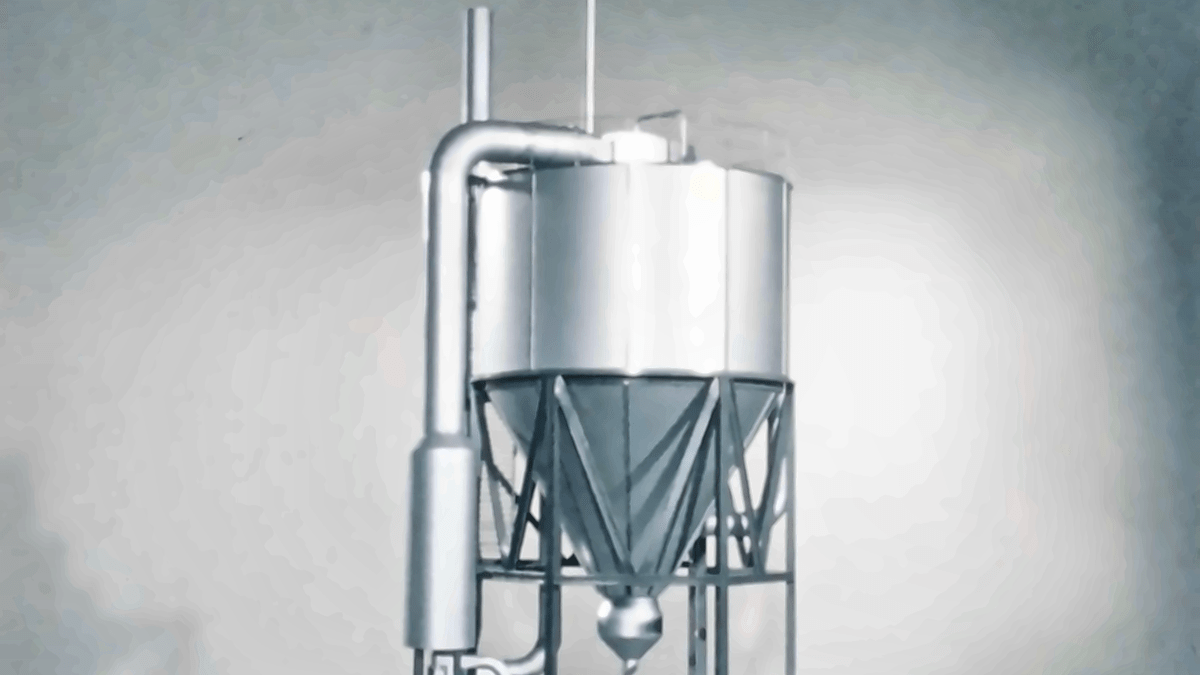
The breakthrough that changed spray drying
In 1976, NIRO engineers responded to a competitive challenge by rethinking what spray drying could do. Their idea became the multi-stage dryer MSD. Fifty years later, the same fundamental principle helps turn liquids into the powders used in essential nutrition products and important medicines around the world. Refined through decades of engineering expertise, customer insight and continuous development, MSD is a story of innovation with lasting impact.
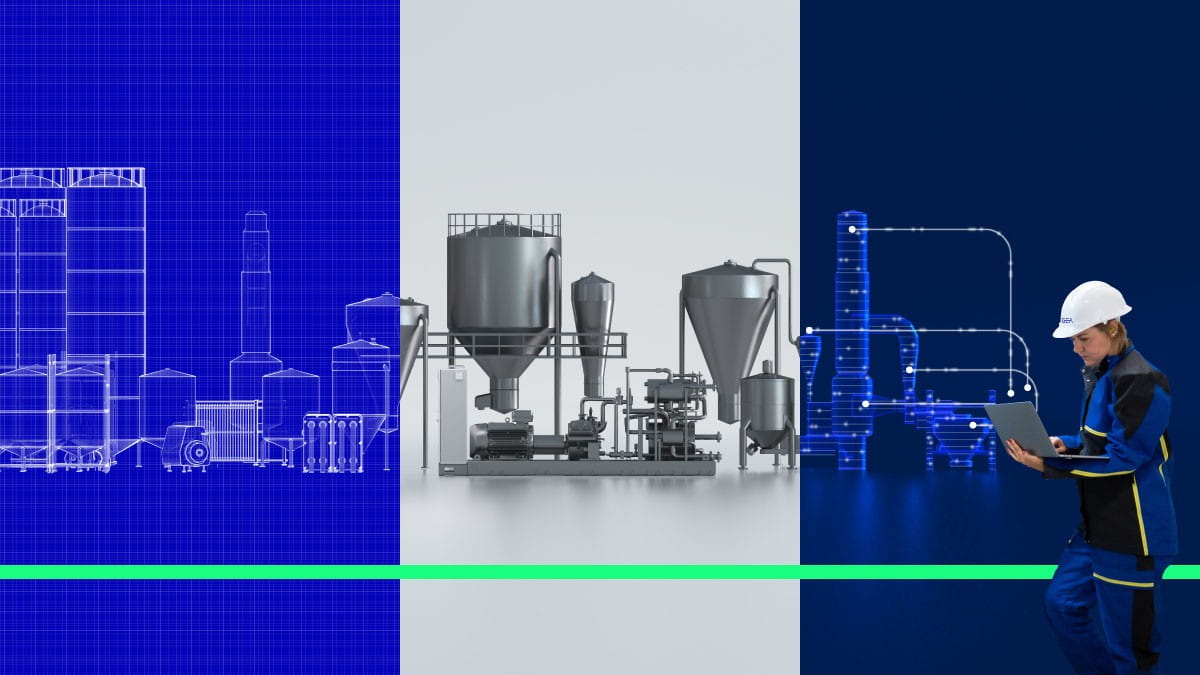
Beyond the machine: unlocking better plant performance
An efficient machine does not automatically make an efficient factory. Real improvement often starts by looking beyond individual equipment and understanding how processes, energy systems and operating decisions affect one another. It’s a holistic approach designed to uncover opportunities that might otherwise be missed.
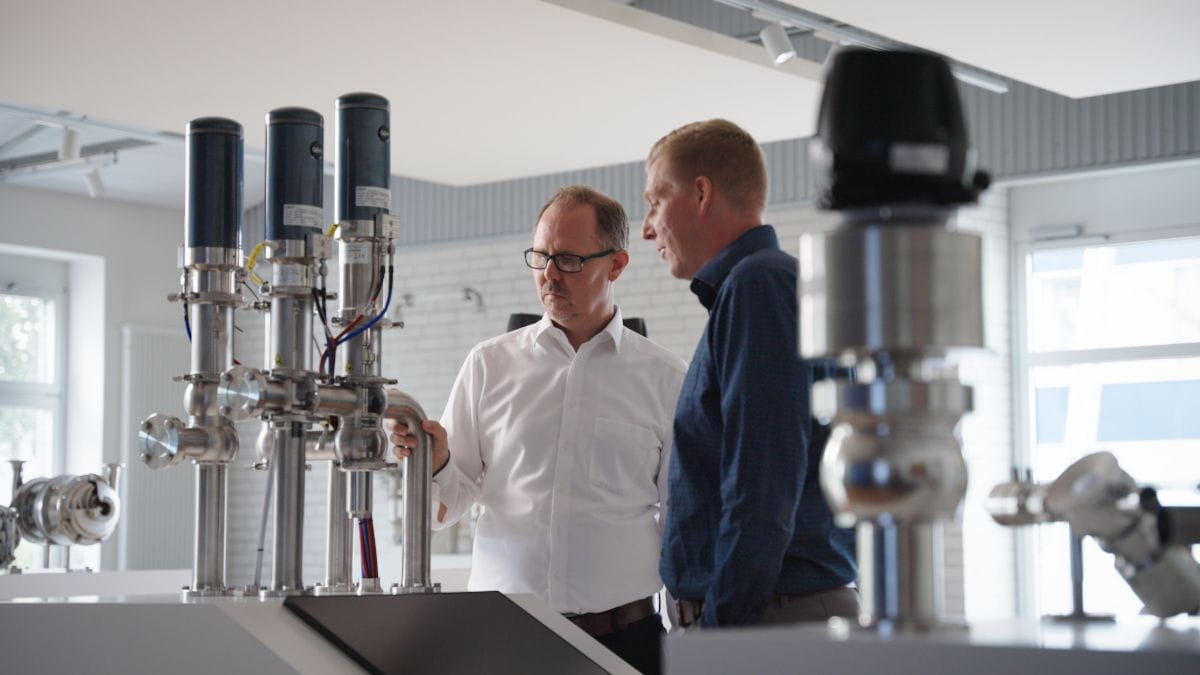
How a valve reshapes the way food and drinks are made
In food and beverage plants, valves are commonly operated using compressed air. GEA Hydract® Actuation Technology moves valves with water instead, in a closed, digitally controlled circuit. The result is a valve that can be held exactly in place and steered in fine-tuned steps. This results in lower energy use and greater control.
