

Energy-efficient evaporation for phosphate production
Phosphoric acid concentration is an energy-intensive step in phosphate and fertilizer production. ATMOS helps producers reduce steam consumption, lower cooling water demand and cut CO2 emissions by recovering energy from process vapors that would otherwise be lost.
Many existing phosphoric acid concentration units still operate as conventional single-effect evaporators. These systems can create several operational and environmental challenges:
- High steam consumption
- Excessive cooling water demand
- Contamination risks in cooling water circuits caused by fluorine and silica
- Limited opportunities for energy recovery
- Increasing compliance pressure due to environmental regulations and decarbonization targets
ATMOS addresses these challenges with a patented, energy-integrated evaporation concept that combines double-effect evaporation, vapor purification and fluorine capture in one practical solution.
What is ATMOS?
ATMOS is a patented evaporation technology developed by GEA in partnership with Yara International for energy-efficient phosphoric acid concentration. The technology is designed to help phosphate producers improve steam economy, reduce utility costs and modernize existing evaporation systems with minimal plant modifications.
The concept converts conventional single-effect evaporation systems into highly efficient double-effect evaporation units. This makes ATMOS suitable for:
- Existing plant revamps
- Capacity and efficiency upgrades
- New phosphoric acid concentration plants
- Decarbonization initiatives
- Energy optimization programs
With ATMOS, phosphate producers can improve the sustainability and competitiveness of phosphoric acid concentration without replacing existing evaporation assets.
Key benefits of ATMOS
- Up to 46% lower steam consumption
By recovering and reusing process vapors, ATMOS significantly reduces the amount of live steam required for concentration.
- 40% reduction in cooling water demand
Lower cooling requirements reduce operating costs and improve overall plant sustainability.
- Significant CO2 reduction potential
Improved steam efficiency directly lowers fuel consumption and associated emissions, supporting corporate decarbonization strategies.
- Enhanced resource efficiency
By recovering energy already available in the process, ATMOS helps maximize output from existing infrastructure while reducing utility demand.

ATMOS
1
Atmospheric Evaporator (1st Effect)
2
Vapor Scrubbing System
3
Vacuum Evaporator (2nd Effect)
5
Fluorosilicic Acid Recovery System
How does ATMOS work?
ATMOS is designed for merchant-grade phosphoric acid concentration and can support both revamp projects and new installations. ATMOS uses an integrated wash column to purify fluorine- and silica-containing vapors so they can be reused as a heating medium in a second evaporation effect.
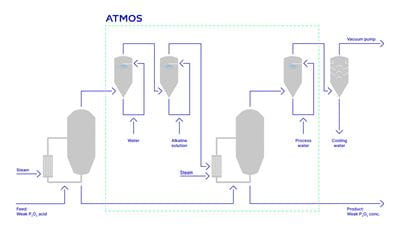
ATMOS flow scheme
Why choose ATMOS?
ATMOS gives phosphate producers a proven route to recover energy previously lost during phosphoric acid concentration and reduce the utility demand of existing or new evaporation systems.
- Up to 46% lower steam consumption
- 40% lower cooling water demand
- Improved sustainability and emissions reduction
- Minimal modifications to existing concentration lines
- Proven solution developed with Yara International
- Full GEA support from feasibility study to commissioning
- Pilot plant available for testing and validation.

Add Better Certified
A better future doesn't come with a price tag, but it does come with a label.
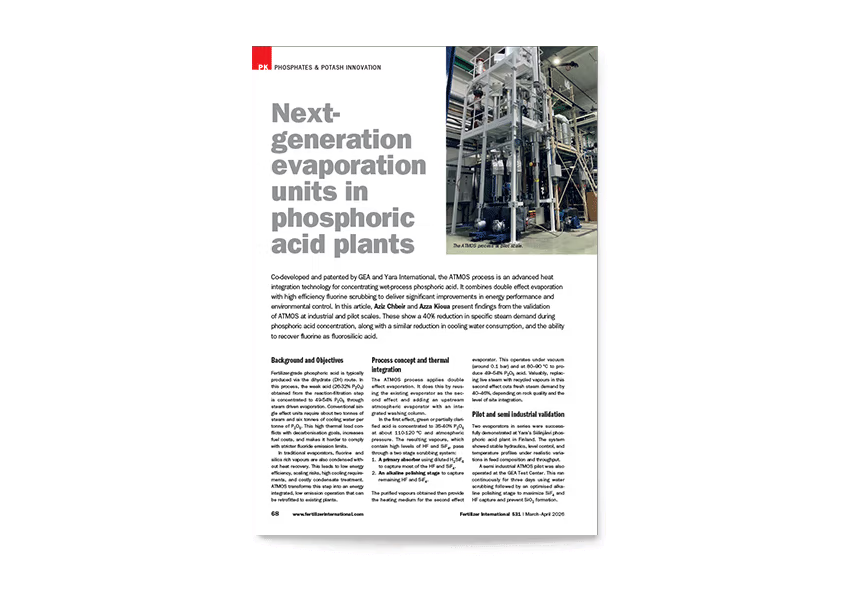
Get the ATMOS article
Improve energy performance and environmental control with ATMOS - the advanced heat integration technology for concentrating wet-process phosphoric acid.
Downloads
Powiązane produkty

Wyparka z obiegiem wymuszonym
Idealna do cieczy o dużej lepkości lub z tendencją do zanieczyszczania się. Optymalna do roztworów soli i innych zastosowań.

Płuczka kolumnowa z wypełnieniem
Najbardziej rozpowszechnione urządzenie do transferu masowego gazu/cieczy stosowane do oczyszczania gazów spalinowych poprzez absorpcję chemiczną lub fizyczną.

GEA Insights
Przełom, który odmienił suszenie rozpyłowe
W 1976 roku inżynierowie NIRO odpowiedzieli na wyzwanie ze strony konkurencji, na nowo definiując możliwości suszenia rozpyłowego. Ich pomysł dał początek wielostopniowej suszarce MSD. Pięćdziesiąt lat później ta sama podstawowa zasada pomaga przekształcać płyny w proszki wykorzystywane na całym świecie do produkcji niezbędnych produktów żywieniowych i ważnych leków. Historia MSD, doskonalonej przez dziesięciolecia dzięki wiedzy inżynieryjnej, doświadczeniom klientów i ciągłemu rozwojowi, to historia innowacji o trwałym znaczeniu.
Więcej niż maszyna: klucz do poprawy wydajności zakładu
Wydajność maszyny nie przekłada się automatycznie na wydajność fabryki. Prawdziwa poprawa często zaczyna się od wyjścia poza ramy poszczególnych urządzeń i zrozumienia, w jaki sposób wzajemnie na siebie oddziałują procesy, systemy energetyczne i decyzje operacyjne. Jest to podejście kompleksowe, mające na celu odkrycie możliwości, które w przeciwnym razie mogłyby zostać przeoczone.
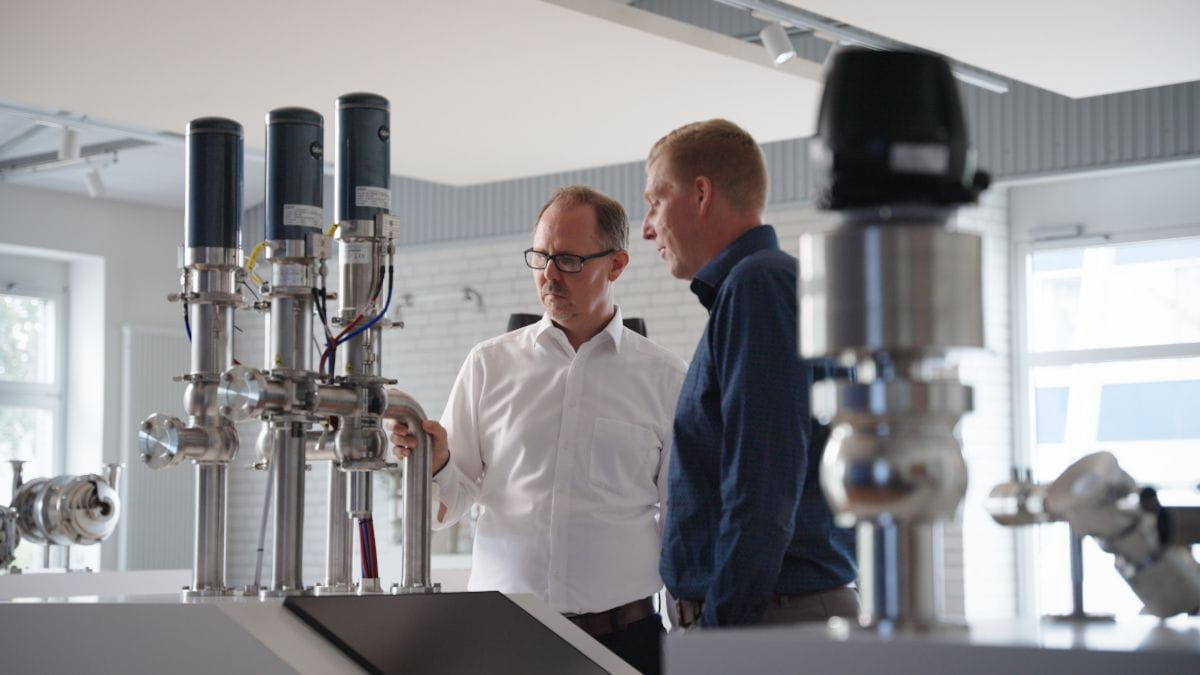
W jaki sposób zawór może wpływać na sposób produkcji żywności i napojów
Zazwyczaj w zakładach produkujących żywność i napoje zawory są uruchamiane za pomocą sprężonego powietrza. Tymczasem w GEA Hydract® Actuation Technology do sterowania zaworami wykorzystuje się wodę w zamkniętym obiegu sterowanym cyfrowo. W rezultacie otrzymujemy zawór, który można precyzyjnie utrzymać w odpowiednim położeniu i sterować nim z dużą dokładnością. Skutkuje to mniejszym zużyciem energii i większą kontrolą.
