
Scope
Created for reliable, high-output operation in a competitive industry, the PERFORMA D has been designed to offer the smallest footprint per tablet produced in the market. This double-sided rotary tablet press from GEA is easy to maintain, clean and operate, and ensures the cost-effective and energy efficient production of both single and bilayer tablets.
The PERFORMA D features a large turret containing up to 106 stations, making it capable of producing up to 1,140,000 tablets per hour. It is the machine of choice for high-volume applications when minimal downtime and high quality are key.
Unique to the PERFORMA D and a key differentiator from other available tablet presses is the turret enclosure. The exchangeable turret is encased in a barrier system that, compared with standard machines, provides higher levels of operator protection, enables rapid changeovers and also supports GMP-compatible production. A further benefit is the ability to perform intermediate dry cleans during extended manufacturing campaigns.
Featuring a longer, PAT-compatible double-paddle forced powder infeed system that maximizes output, the PERFORMA D also benefits from an anti-bridging agitator that keeps the powder column above the paddle feeder constant, resulting in a uniform pressure and reduced weight variation.
The press comes fitted with a three- or four-way tablet chute for both manual and automated station sampling. The design is offering easy, tool-free removal that facilitates both cleaning and changeovers.
Features
- Turret enclosure concept
- Multiple compression modes
- Programmable dwell times at pre-compression and main compression
- Weight control by displacement or force measurement
- Maximized length of the powder feeding unit
- Bilayer production capable
- Small footprint
Main Benefits
- Robust, flexible and reliable, high-output operation
- Fast and easy (interbatch) cleaning
- Higher levels of operator protection
- Enhanced tablet quality
- Reduced weight variation (resulting in a more consistent drug delivery)
- Individual weight control for both layers of a bilayer tablet
- User friendly, intuitive MC5 operating system
Bilayer Production: The GEA Way
The PERFORMA D manufactures bilayer tablets using a unique GEA process: it measures the weight of each layer independently to ensure the correct drug delivery profile; however, most tablet presses can only accurately assess weight when a high force is applied. High forces result in dense tablets that are difficult to bond together, making separation of the layers, or capping, almost inevitable.
GEA’s double-sided tablet presses have been specifically designed and developed for the high-speed production of quality bilayer tablets and provide
- displacement weight monitoring/control for the accurate and independent weight control of the individual layers
- low compression force exerted on the first layer to avoid capping and separation of the two individual layers
- increased dwell time at pre-compression of both first and second layer to provide better de-aeration and defined hardness at maximum turret speed
- maximum prevention of cross-contamination between the two layers
- a clear visual separation between the two layers
- maximized yield.
Data Collection
The MULTI-CONTROL 5 (MC5) is the latest GEA control system for rotary presses. The system’s hardware and software are designed to allow for full compliancy with the 21 CFR PART 11 guideline. It is a fully automated monitoring, control and reporting system based on a PLC/PC hardware configuration. MC5 features include
- standalone PC application (all-in-one), independent from Windows operating system
- Microsoft Windows 10 operating system
- 21.5” HD multi-touch widescreen
- industrial IPC
- Siemens PLC (S7-1500) for machine control
- software design and lifecycle management according to GAMP and internal ISO procedures (QMS)
- integrated help system, with user manual, machine operation manual, mechanical and electrical drawings.
The HMI panel can be moved to either side of the unit for increased flexibility and positioning.
Technical Specifications
The PERFORMA D is available for D35, D, B, BB, BBS and A2D tooling
| Tooling (EUR or TSM) | D35 | D | B | BB | BBS | A2D |
| Max. tablet diameter/lenght [mm] | 35 | 25,4 | 16 (L=19) | 13 (L=14,3) | 11 | 11 |
| Punch body diameter [mm] | 35 | 25,4 | 19 | 19 | 19 | 12 |
| Outside die diameter [mm] | 52 | 38,1 | 30,16 | 24 | 22 | 38,1 |
| Die height [mm] | 23,81 | 23,81 | 22,22 | 22,22 | 22,22 | 23,81 |
| Number of punch positions | 39 | 53 | 67 | 81 | 89 | 106 |
| Max. fill depth [mm] | 20 (25) | 20 | 19 | 19 | 19 | 19 |
| Top punch penetration [mm] | 1 to 4 | |||||
| Max. pre-compression force [kN] | 10 (under extended dwell time) | |||||
| Max. main compression force [kN] | 100 | |||||
| Max. output capacity [tab/h] | 350.000 | 540.000 | 722.000 | 875.000 | 1.069.000 | 1.272.000 |
| Electrical requirements | 3phase+PE – 380 / 400 / 415 / 460 / 480 V – 50Hz / 60Hz
(nominal consumption 16 kVa; power installed 32,4 kVA) | |||||
| Compressed air requirements | clean & dry - 7-8 bar - 500Nl/min peak - 100 Nl/min average | |||||
| Dust extraction requirements | 150 m³/h at 15 mbar (single layer) - 230 m3/h at 50 mbar (bi-layer) | |||||
| Operating conditions | temperature 15 - 40 °C ; relative humidity < 60% | |||||
| Machine dimensions & weight | W = 1.450 mm x D = 1.450 mm (+ max 865 extended HMI arm) x H = 2.245 m – 5.700 kg
(excluding electrical cabinet: W 810 x D 510 x H 2.150 ; weight +/- 300 kg) | |||||
Downloads
Produits associés

NexGen Press® 30
Combining the best features of the MODUL-P and PERFORMA-P, the NexGen Press® 30 is ideally suited for formulation development, clinical trial production and small batch/multi-product production. It is modular by design and can be configured to fit specific applications, such as bi-layer compression, MUPS, micro-tablets, OEB levels from 1 to 5, wi...

NexGen Press® 45
The NexGen Press® 45 represents the ultimate combination of modular design, digitization, safety, ease of use and ergonomic functionality, while providing high throughputs for larger tablet production campaigns.
NexGen Press® range
Featuring an innovative design that promotes operator (and environmental) safety and ease of use, the NexGen Press® range is modular, intuitive and cost-effective to run, combining unrivaled containment with fast product changeovers and the best price-performance tableting system..
Vidéos associées
PERFORMA D Versatile compression technology
GEA Insights
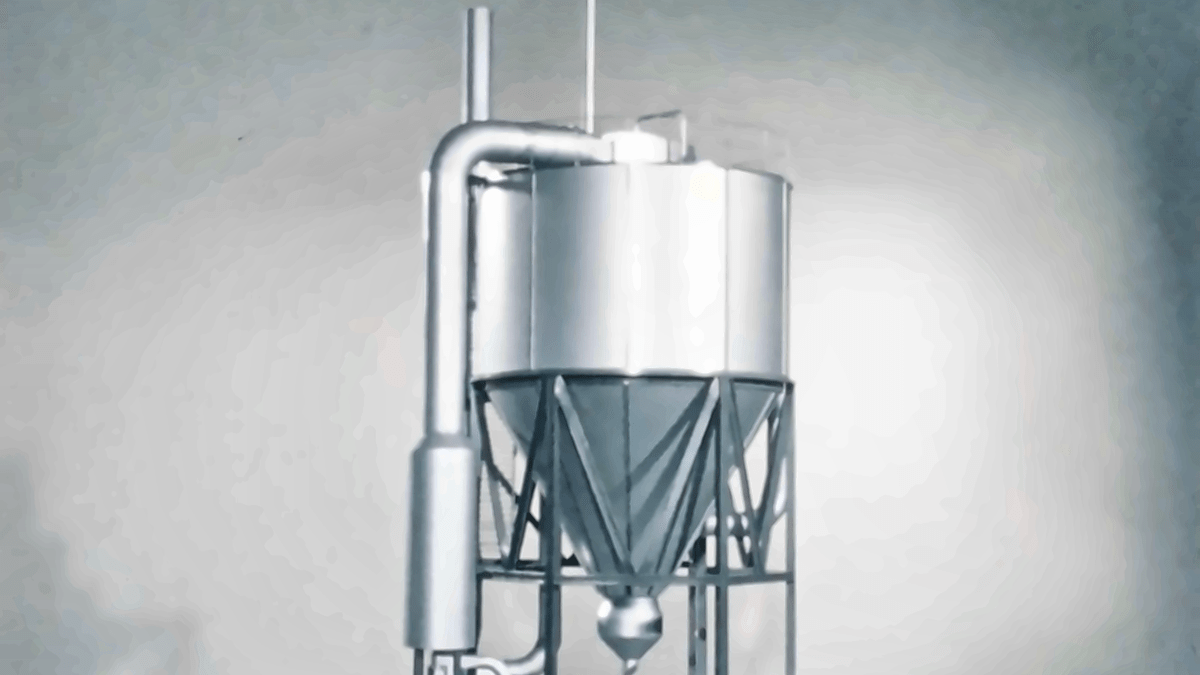
La percée qui a révolutionné le séchage par atomisation
En 1976, les ingénieurs de NIRO répondaient à un défi concurrentiel en repensant ce que pouvait faire le séchage par atomisation. Leur idée est à l'origine du sécheur-atomiseur à plusieurs étages MSD. Cinquante ans plus tard, ce même principe fondamental aide à transformer les liquides en poudres, qui sont utilisées dans des produits nutritionnels essentiels et des médicaments importants partout dans le monde. Perfectionné au cours de plusieurs décennies d'expertise technique, d'enquêtes clientèle et de développement continu, le MSD est une histoire d'innovation aux retombées durables.

Au-delà des machines : exploiter les gisements de performance des installations
Ce n'est pas parce que vous avez des machines efficaces que votre usine l'est. Une trajectoire d'amélioration efficace commence souvent par une analyse qui ne se limite pas aux équipements pris individuellement, et cherche à comprendre comment les processus, les systèmes énergétiques et les décisions opérationnelles s'influencent mutuellement. C'est une démarche holistique, conçue pour repérer des opportunités qui, sans cela, risqueraient de passer inaperçues.

Comment une vanne révolutionne la production des aliments et des boissons
Dans les installations agroalimentaires, les vannes sont généralement actionnées en utilisant de l'air comprimé. La technologie d'actionnement GEA Hydract® Actuation Technology, quant à elle, actionne les vannes en utilisant de l'eau, au sein d'un circuit fermé à commande numérique. Résultat, une vanne peut être maintenue en place de manière exacte et réglée par petits paliers. Cela se traduit par une consommation d'énergie en baisse et un meilleur contrôle.
