

In the current economy, manufacturing facilities are required to be more flexible, handle smaller batch sizes, increase performance while reducing the costs, deliver higher quality products with less waste and achieve shorter times to market.
The way to achieve these goals is to implement an MES that allows you to digitalize your production processes and manage them in real-time.
The MES acts as a central hub for the collection and management of data, facilitating efficient vertical integration between the business systems and the shop floor, and horizontal integration along the entire supply chain from raw material to finished goods.
Yet, each customer and every plant have different requirements as such there are many paths to ensuring business success.
Key benefits
- Modular and scalable system that allows customers to select what they need
- Reliable solutions optimized for plant operation
- Reporting that’s targeted to different plant operation staff such as operators, maintenance staff and managers, and supports flawless decision making
- Compliant with standard ISA-95
- Helps with regulatory compliance (if required, agencies can access information)
- Secure by design
- Seamlessly integrates with GEA Codex® Process Control, providing consistent operation with a common look and feel.
User-defined software requirements
For customers who need a highly customized solution that integrates with existing or proprietary systems, GEA has the expertise to design and implement projects according to individual user requirements.
With an extensive team of engineers specializing in MES/IT and digital product development, GEA has the process knowledge and understanding of international standards to design operation management systems to enterprise level.
The company offers a flexible and scalable solution that provides total control of plant processes.
Downloads
Produits associés

GEA Codex® Recipe Advanced
Gérez vos recettes maître avec aisance (ingrédients, points d'accès, mode d’emploi)

GEA Codex® Report
Avec ce module de production et de rapports NEP prêt-à-l’emploi, les états de lots vous tiennent complètement informés de vos procédés et produits.

GEA Codex® Plant Playback
Offrant une visualisation « live » ou par intervalle (« time-lapse »), ce modèle anime vos données SCADA Historian pour améliorer à la fois la production et la sécurité. Révélant les dépendances, les causes premières des problèmes ou les anomalies, il est facile à utiliser et est utile dans le cadre de la formation des opérateurs et du dépannage.

GEA Codex® Historian
GEA Codex® Historian est un enregistreur de données riche de fonctionnalités, qui accroît la transparence de chaque procédé. Il prend en charge divers formats de présentation.

GEA Insights
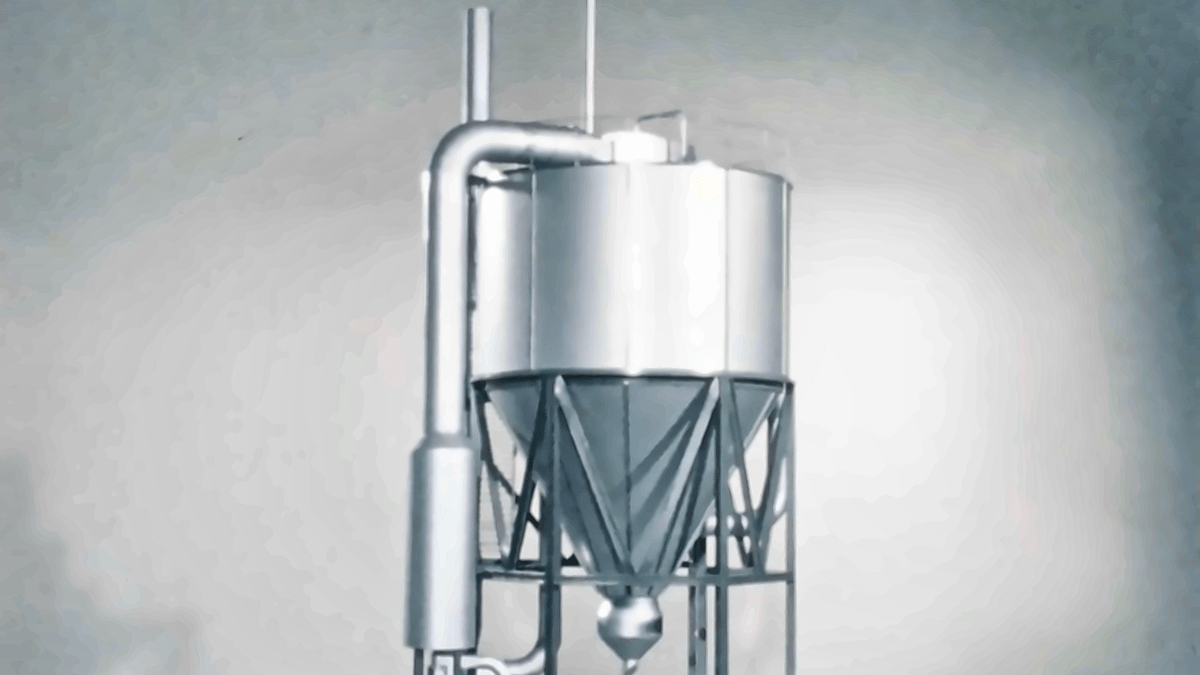
The breakthrough that changed spray drying
In 1976, NIRO engineers responded to a competitive challenge by rethinking what spray drying could do. Their idea became the multi-stage dryer MSD. Fifty years later, the same fundamental principle helps turn liquids into the powders used in essential nutrition products and important medicines around the world. Refined through decades of engineering expertise, customer insight and continuous development, MSD is a story of innovation with lasting impact.

Au-delà des machines : exploiter les gisements de performance des installations
Ce n'est pas parce que vous avez des machines efficaces que votre usine l'est. Une trajectoire d'amélioration efficace commence souvent par une analyse qui ne se limite pas aux équipements pris individuellement, et cherche à comprendre comment les processus, les systèmes énergétiques et les décisions opérationnelles s'influencent mutuellement. C'est une démarche holistique, conçue pour repérer des opportunités qui, sans cela, risqueraient de passer inaperçues.

Comment une vanne révolutionne la production des aliments et des boissons
Dans les installations agroalimentaires, les vannes sont généralement actionnées en utilisant de l'air comprimé. La technologie d'actionnement GEA Hydract® Actuation Technology, quant à elle, actionne les vannes en utilisant de l'eau, au sein d'un circuit fermé à commande numérique. Résultat, une vanne peut être maintenue en place de manière exacte et réglée par petits paliers. Cela se traduit par une consommation d'énergie en baisse et un meilleur contrôle.
