

As energy prices rise and environmental regulations tighten worldwide, the dairy industry must adopt more efficient and environmentally responsible technologies - and GEA Econhex delivers precisely that. By smartly integrating Reverse Osmosis (RO) into a traditional dairy powder production line, this system achieves exceptional efficiency, reducing both energy consumption and initial capital expenditure while maintaining the highest product quality standards.
An innovative combination of technologies
At the heart of the GEA Econhex system is the seamless integration of GEA reverse osmosis, GEA heat treatment, GEA falling film evaporation and a GEA spray drying.
Reverse osmosis membranes pre-concentrate skim milk from 9% total solids up to a maximum of 36% total solids. This pre-concentration, prior to heat treatment, reduces the volume and so the steam and energy demand required.
Once pre-concentrated through reverse osmosis, the milk moves to the heat treatment section where the product is heated (to between 90-127°C depending on production capabilities) to achieve higher microbiological quality.
By combining this low-energy heat-treatment, with a reverse osmosis, GEA has created an energy efficient, electrically driven, resource efficient process.
Following heat treatment - which is typically integrated within the evaporator for even better efficiency, the product is further concentrated in the falling film evaporator, removing water up to final concentration prior to transportation to the GEA spray dryer. The evaporator can be of either the TVR (thermal vapor recompression) or MVR (mechanical vapor recompression) type.
The product is then spray dried in a GEA spray dryer where powders of precisely-defined characteristics can be produced reliably.

GEA Econhex - solution overview
GEA Econhex also supports advanced heat treatment technologies such as Direct Steam Injection (DSI) and UHT Infusion, depending on the production need and capability. This helps minimize fouling and scorching while ensuring optimal microbial reduction. This capability enhances the system’s performance and ensures long-term reliability and product consistency.
Economic efficiency and optimized total cost of ownership
GEA Econhex provides impressive economic benefits through both optimized capital expenditure and lowered operational costs. Reverse osmosis technology typically requires a substantially lower capital expenditure compared with traditional falling film evaporators for the same water removal capacity. This makes the initial cost of implementing GEA Econhex more attractive for dairy producers seeking efficient and cost-effective solutions.
The system’s built-in energy efficiency also reduces operational expenses (OPEX). Reverse Osmosis has a very low specific energy requirement per ton of water removed. By combining RO, heat treatment and falling film evaporation, GEA Econhex uses less steam and electricity overall. This translates into lower energy costs over time, without compromising product quality. Depending on energy costs and milk processing capacity, this solution could deliver up to 20% savings in both CAPEX and OPEX.
Uncompromised product quality and flexibility
Despite its efficiency and cost-effectiveness, GEA Econhex maintains the highest product quality standards. The system handles a wide range of heat treatments, enabling producers to achieve diverse powder qualities, from low-heat to high-heat treatment options. This flexibility ensures that the final product meets stringent microbiological standards and aligns with the various market requirements for texture, flavor, and nutritional value.
GEA technologies used:
Productos relacionados

Dairy Evaporation Plants
Nuestras soluciones de evaporación para la industria láctea abarcan todo el proceso, desde el pretratamiento, el tratamiento térmico y la propia etapa de evaporación, hasta la separación y el tratamiento posterior

Sistema GEA UHT de infusión directa
La infusión GEA UHT utiliza el calentamiento rápido por vapor para reducir la carga térmica en comparación con los métodos indirectos, conservando las proteínas, los nutrientes, el sabor y el color para obtener un producto más fresco y nutritivo.

Torre de atomización MSD®
La torre de atomización MSD® es la opción preferida para muchos productos lácteos, como leche en polvo y fórmulas nutricionales, para las que hay una gran demanda de productos en polvo uniforme, grueso, aglomerado, suelto y exento de finos.

Plantas de Filtración Diseñadas a Medida
GEA diseña sistemas de filtración por membrana a medida que hacen un uso óptimo de tecnologías de microfiltración, ultrafiltración, nanofiltración y ósmosis inversa de acuerdo con las aplicaciones específicas del cliente.
GEA Insights
El avance que revolucionó el secado por atomización
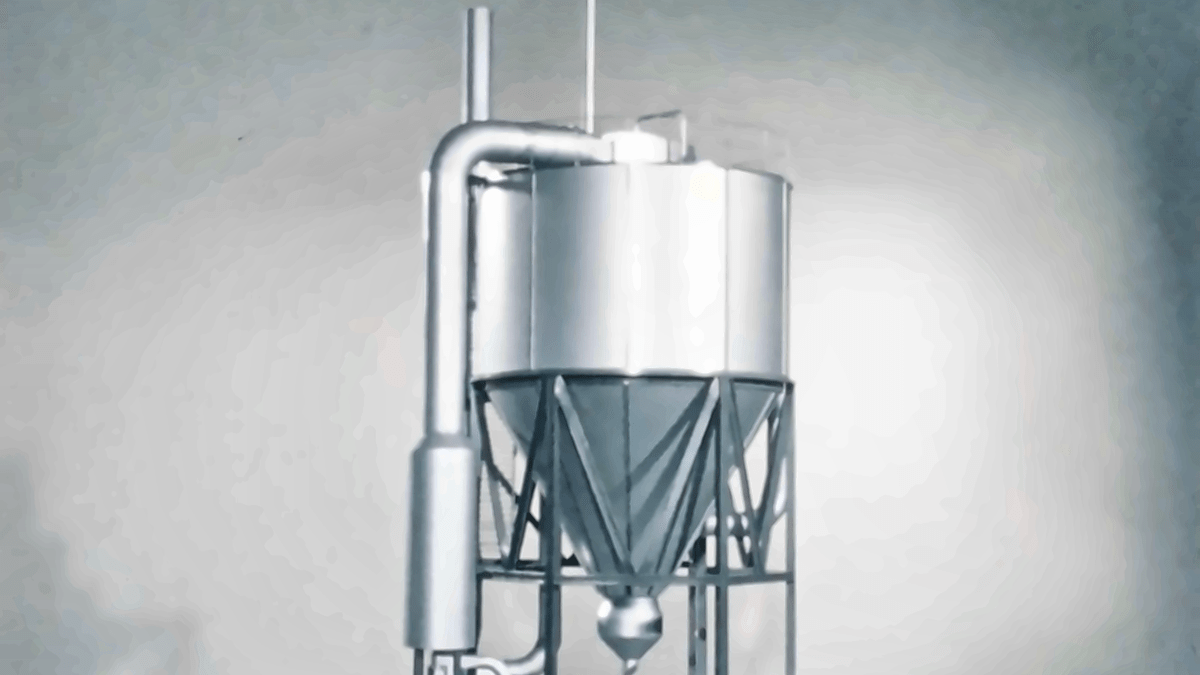
En 1976, los ingenieros de NIRO respondieron a un reto competitivo replanteándose las posibilidades del secado por atomización. Su idea se materializó en la torre multietapa MSD. Cincuenta años después, ese mismo principio fundamental contribuye a transformar los líquidos en los productos en polvo que se utilizan en productos nutricionales esenciales y en medicamentos importantes en todo el mundo. Perfeccionada a lo largo de décadas de experiencia en ingeniería, conocimiento de las necesidades de los clientes y desarrollo continuo, la torre de atomización MSD es una historia de innovación con un impacto duradero.
Más allá de la máquina: cómo potenciar el rendimiento de la planta
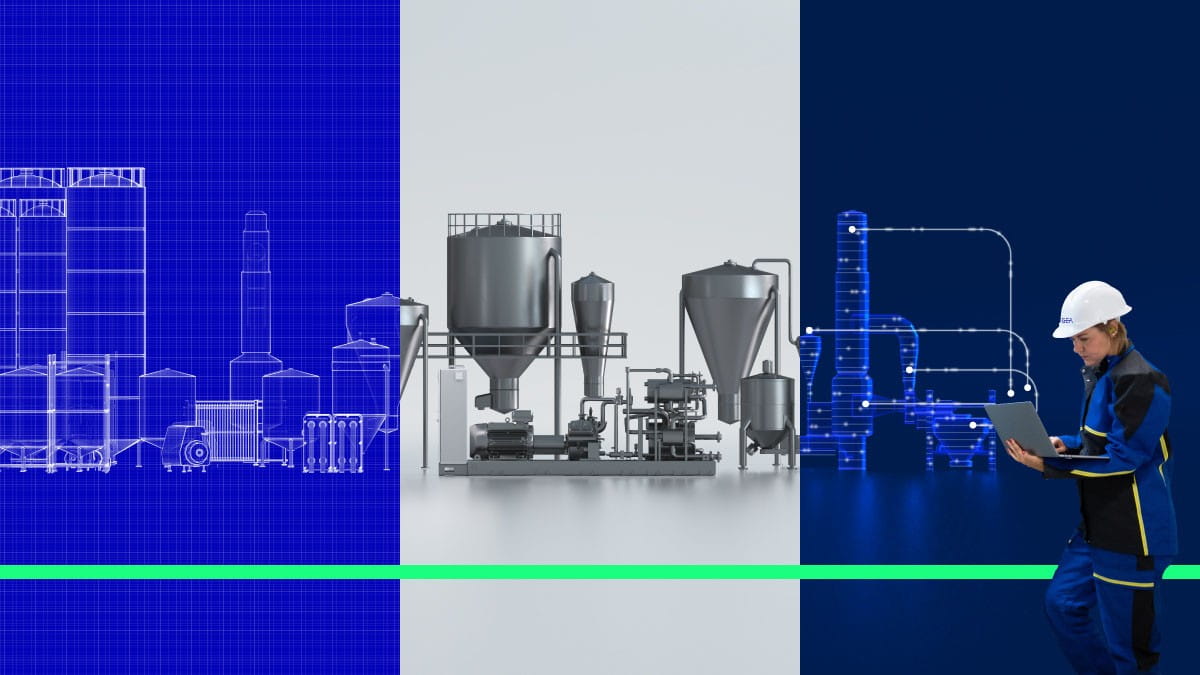
El hecho de que una máquina sea eficiente no significa que la fábrica lo sea. La mejora real suele comenzar por ir más allá de los equipos individuales y comprender cómo los procesos, los sistemas energéticos y las decisiones operativas se influyen mutuamente. Se trata de un enfoque holístico diseñado para descubrir oportunidades que, de otro modo, podrían pasarse por alto.
Cómo una válvula transforma la manera de elaborar alimentos y bebidas
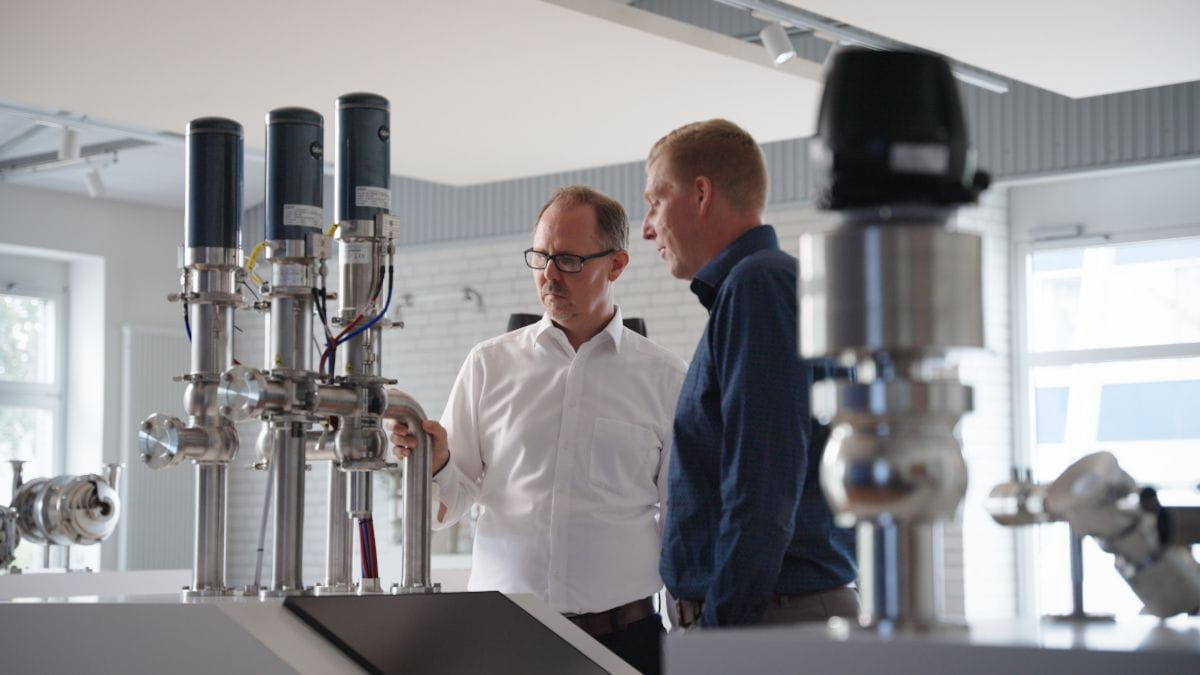
En las plantas de alimentación y bebidas, las válvulas suelen accionarse mediante aire comprimido. GEA Hydract® Actuation Technology mueve las válvulas mediante agua, en un circuito cerrado controlado digitalmente. El resultado es una válvula que puede mantenerse en su sitio con exactitud y regularse con precisión. Esto se traduce en un menor consumo energético y un mayor control.
