

NICA Spheronizer Process
The NICA Spheronizer consists of a horizontal spinning wheel with a special friction pattern machined on its top surface; it rotates within a cylindrical bowl. Spaghetti-like extrudates are batched and dropped onto the spinning wheel where they are fractured into short lengths. Interactions between the spinning wheel, the wall and the pellets themselves cause the extrudate to be worked into spheres.
Operating Principles
The size distribution and surface characteristics of the spheres are controlled by the batch size, speed, process time and, most importantly, by the characteristics of the extruded mass. The NICA Spheronizer has a patented 'smooth edge' on the friction wheel to eliminate 'milling' of the developing pellets, ensuring a narrow size distribution. Different friction wheel patterns can be interchanged to suit particular requirements. For continuous production, multiple units can be combined with appropriate up and downstream equipment to form an extremely compact and flexible package (such as the NICA IPS range of integrated pelletizing systems).
NICA Range
NICA Spheronizers are available in three sizes: S250, S450 and S700. The NICA S250 is only available as part of the integrated IPS5 system, a process module available exclusively with the GEA PharmaConnect® product. The S450 is available as a standalone machine and, with a batch capacity of 2 kg, is suitable for both product development and small-scale production purposes. The S450 is often integrated with a NICA E140 Extruder to form the IPS25 and IPS50 machines.
The S700 Spheronizer has a typical product capacity of up to 10 kg, providing high throughput capabilities when linked to the NICA E220 Extruder in the form of the IPS100 and IPS200 machines. All units feature variable speed inverter drives and the S450 and S700 are both fitted with pneumatic discharge as standard, allowing remote operation and plant integration.
Features
- Patented 'smooth edge' wheel design
- Low attrition for maximum yield
- Reduced spheronization time
- Interchangeable friction discs for process optimisation
- Easy operation: both operator safety and ease of cleaning
- Air purge conditioning of the product
- Air extraction connection
- Pneumatic discharge valve
- Electronic speed control.
Options
- Interchangeable friction wheel patterns
- Jacketing systems for temperature control.
Typical Capabilities
| 0S25 | S450 | S700 |
| 0.1–0.5 kg | 0.4–2.0 kg | 2–10 kg |
Downloads
Productos relacionados

NICA Extruder System
The NICA Extruder is a low shear extruder that has been designed to offer low temperature handling of even the most sensitive products.

NICA Integrated Pelletizing Systems
Developed specifically for the Pharmaceutical industry, the NICA Integrated Pelletizing Systems (IPS) fuses NICA Extrusion and Spheronization technologies to create a range of compact, continuous systems for the production of spherical pellets.
GEA Insights
El avance que revolucionó el secado por atomización
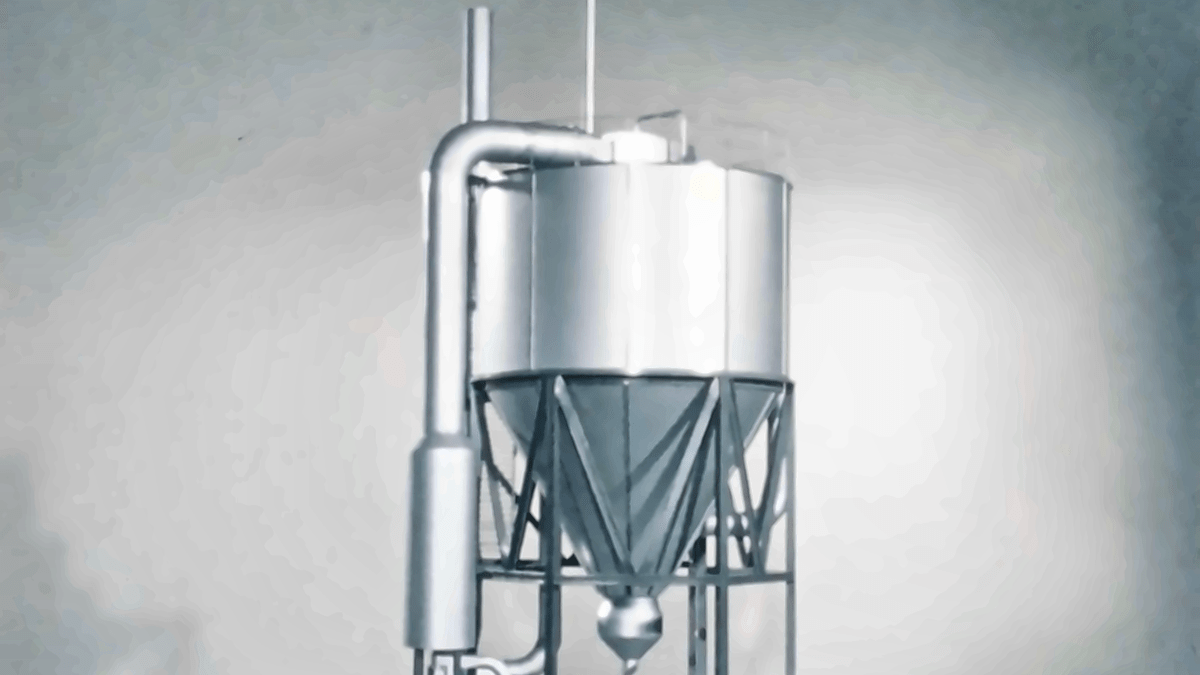
En 1976, los ingenieros de NIRO respondieron a un reto competitivo replanteándose las posibilidades del secado por atomización. Su idea se materializó en la torre multietapa MSD. Cincuenta años después, ese mismo principio fundamental contribuye a transformar los líquidos en los productos en polvo que se utilizan en productos nutricionales esenciales y en medicamentos importantes en todo el mundo. Perfeccionada a lo largo de décadas de experiencia en ingeniería, conocimiento de las necesidades de los clientes y desarrollo continuo, la torre de atomización MSD es una historia de innovación con un impacto duradero.

Más allá de la máquina: cómo potenciar el rendimiento de la planta
El hecho de que una máquina sea eficiente no significa que la fábrica lo sea. La mejora real suele comenzar por ir más allá de los equipos individuales y comprender cómo los procesos, los sistemas energéticos y las decisiones operativas se influyen mutuamente. Se trata de un enfoque holístico diseñado para descubrir oportunidades que, de otro modo, podrían pasarse por alto.

Cómo una válvula transforma la manera de elaborar alimentos y bebidas
En las plantas de alimentación y bebidas, las válvulas suelen accionarse mediante aire comprimido. GEA Hydract® Actuation Technology mueve las válvulas mediante agua, en un circuito cerrado controlado digitalmente. El resultado es una válvula que puede mantenerse en su sitio con exactitud y regularse con precisión. Esto se traduce en un menor consumo energético y un mayor control.
