

Give your brew the spin it deserves
The game-changing GEA plug & win i beer centrifuge is now better than ever. This brewery centrifuge features a sustainable direct drive and with automated valves to maintain the perfect look, feel, and quality of your beer with safety and ease, batch after batch!
Resource efficient solution
As one of our most resource-efficient solutions, our GEA plug & win i separator skid carries the GEA Add Better label.* The high-efficiency motor transfers energy directly to the bowl without the use of belts and clutches. This reduces the energy consumption of the GEA plug & win i by up to 10% compared to the predecessor model.
The GEA plug & win i has also service intervals extended by 100% and a noise level reduced to below 76 dB(A) during operation.

Milestones on the way to a greener future
Add Better Certified
This product carries the Add Better label – because it’s significantly more efficient and environmentally friendly than its predecessor.
A better future doesn’t come with a price tag, but it does come with a label
Your advantages at a glance:
- up to 10 percent less energy consumption
- convenient noise level below 76 dB(A) during operation
- about 30 percent less machine footprint
- up to 100 percent longer service intervals – less downtimes, more availability
More beer in less time while safeguarding consistent quality.
- 5 to 10 percent more beer from the same amount of raw ingredients (depending on beer recipe and brewing process)
- Same amounts of beer brewed with decisively reduced effort (less energy and hours of work)
- Multi-purpose applications in the brewing process to take your business to the next level!
- Reproducible quality: Comprehensive automation options make sure your beer comes out right every time.
No oxygen pick-up
Safe inline carbonation as an option
The plug & win i centrifuge skid offers an optional carbonation extension, eliminating the need for a separate unit and tank. This inline carbonation, combined with the beer centrifuge, significantly reduces process time and tank usage. It´s ideal for quick packaging and for smaller breweries managing frequent batch changes, ensuring consistent carbonation every time. Inline carbonation provides exceptionally precise control that ensures consistency across batches, no matter the size of the brewery. Packaging is possible shortly after inline carbonation and separation.

What is a beer centrifuge – and why breweries use it?
A beer centrifuge (also beer separator or brewery centrifuge) is a high-speed separation machine designed to remove unwanted solids—such as yeast, hop particles, trub, and proteins—from beer or wort. Unlike traditional gravity settling, which can take days, a centrifuge for breweries uses powerful centrifugal forces (often several thousand times stronger than gravity) to accelerate the separation process dramatically.
The technology is based on a disc stack separator: beer is spun at high speed inside a rotating bowl, forcing denser solids outward to the bowl wall while clarified beer remains closer to the center. This allows breweries to achieve beer clarification and beer recovery in a fraction of the time, with minimal product loss and no oxygen pick-up when using hermetic designs.
Brewing centrifuges are used throughout the brewing process—from hot wort separation and green beer clarification to polishing before filtration and beer recovery from tank bottoms. They help craft brewers and large-scale breweries alike to boost yield, improve consistency, and maintain the flavor and aroma profile of their beer.
How a beer centrifuge works in your brewing process
The principle: disc stack separation
Every beer centrifuge is essentially an accelerated settling tank. In a traditional fermenter, gravity slowly pulls yeast and hop solids to the bottom. A centrifuge speeds this up in two ways:
Increased force: By spinning beer in a cylindrical bowl at thousands of rpm, the centrifuge generates centrifugal forces many times stronger than gravity, forcing denser particles (yeast, hops, trub) outward to the bowl wall.
Increased settling area: Inside the bowl, a disc stack—a vertical arrangement of cone-shaped plates—creates many shallow settling surfaces. Solids accumulate on these discs and are directed to discharge ports, while clarified beer flows out separately. This disc stack design not only speeds separation but also provides precise control over turbidity and haze, making it possible to produce crystal-clear lagers or controlled-haze IPAs from the same machine.
Typical applications in the brewhouse
Brewery centrifuges are versatile and can be deployed at multiple points in the brewing process:
- Hot wort separation: Removing trub after the kettle, similar to a whirlpool but faster and more efficient.
- Green beer clarification: Separating yeast and hop solids after primary fermentation, before maturation or conditioning.
- Polishing before filtration: Final clarification to reduce turbidity, improve shelf life, and ensure consistent quality.
- Beer recovery: Reclaiming valuable beer from tank bottoms and yeast slurry, which would otherwise be lost. Studies show that 5–10% more beer can be recovered per batch compared to traditional gravity settling.
Gentle clarification, controlled turbidity and haze
Modern beer centrifuges allow brewers to dial in the exact level of clarity they need. For crystal-clear pilsners and lagers, the centrifuge can remove nearly all suspended solids. For hazy IPAs and New England-style beers, the same machine can be adjusted to leave desirable haze while removing particles that cause poor shelf life and off-flavors.
This flexibility—combined with minimal oxygen pick-up (often below 3–10 ppb with hermetic designs)—helps preserve hop aromas, volatile compounds, and flavor stability, giving brewers full control over their beer's character.
Beer centrifuge vs. filtration: What’s the difference?
Both centrifugation and filtration are used to clarify beer, but they work in fundamentally different ways—and each has its place in the brewery.
Centrifugation separates particles by weight (density) using centrifugal force. Heavier solids like yeast, hop particles, and proteins are spun out, while lighter liquid phases remain. Centrifuges are fast, continuous, and preserve hop oils and volatile aromatics because they don't force beer through a physical filter medium.
Filtration separates particles by size, using media like diatomaceous earth (DE), cartridge filters, or membranes. Filtration can achieve very fine clarity but may strip away desirable hop flavors and aromas. It also requires consumables (filter media) and generates waste that must be disposed of.
In practice, the two technologies complement each other. Many breweries use a beer centrifuge first to remove the bulk of solids, then follow with filtration for ultra-fine polishing—especially for beers destined for long shelf life or export. For unfiltered beers with fast inventory turnover, a centrifuge alone is often the ideal solution: it delivers clarity and stability while preserving the full flavor and aroma profile.
Unlike filtration, centrifuging beer doesn't require diatomaceous earth disposal, doesn't clog, and operates continuously with minimal downtime—making it a more sustainable and efficient choice for many breweries.
Which breweries benefit most from a beer centrifuge skid?
Beer centrifuges are no longer just for large industrial breweries. Today's compact, plug-and-play centrifuge skids are designed specifically for craft breweries, microbreweries, and brewpubs of all sizes.
- Brewpubs and small microbreweries (producing up to ~15 hl/h) benefit from compact models that fit tight spaces, require minimal operator intervention, and deliver fast payback through increased yield and faster tank turnover.
- Growing craft breweries (15–60 hl/h) often choose mid-range brewery centrifuges that handle higher throughput while maintaining low oxygen pick-up and flexible turbidity control—essential for producing a wide range of beer styles.
- Regional and mid-size breweries (60–300+ hl/h) rely on larger, fully automated centrifuge skids with inline carbonation options, CIP integration, and advanced process control to maximize efficiency, consistency, and profitability.
No matter the size, breweries that use high hop loads (like IPA-focused brewers), produce unfiltered beers, or want to maximize beer recovery from tank bottoms see the fastest return on investment. A well-chosen beer centrifuge can increase production capacity by 30–50% without adding fermentation tanks or labor—simply by reclaiming lost beer and reducing batch times.
Return on investment: more beer, faster tank turns
Investing in a beer centrifuge delivers measurable financial benefits that go straight to your bottom line.
Increased yield: By recovering beer from tank bottoms, yeast slurry, and hop solids, breweries typically gain 5–10% more packaged beer per batch compared to traditional gravity settling. For a brewery producing 3,500 hl per year, that's an extra 175–350 hl of saleable beer annually—without buying more malt, hops, or yeast.
Faster tank turnover: Centrifugation dramatically reduces the time beer spends in fermentation and conditioning tanks. Instead of waiting days or weeks for yeast to settle, brewers can clarify and transfer beer in hours. This means more batches per tank per year, effectively increasing your production capacity without capital investment in new tanks.
Reduced waste and labor: Centrifuges eliminate the need for diatomaceous earth and reduce filter maintenance. They operate continuously and are self-cleaning, freeing up staff time and reducing consumable costs.
Real-world payback: Industry data shows that many craft breweries recover their investment in a beer centrifuge within 9–18 months, depending on production volume, beer styles, and pricing. For example, a brewery producing 3,500 hl/year with a beer sales price of €3 per liter can achieve payback in as little as 9 months with the right centrifuge model.
The combination of higher yield, faster throughput, and lower operating costs makes a brewery centrifuge one of the smartest investments for breweries looking to scale profitably.
Frequently asked questions about beer centrifuges
Not necessarily—and that's a good thing. Modern brewery centrifuges offer precise turbidity control. You can adjust bowl speed, disc configuration, and discharge settings to achieve crystal-clear beer (for lagers and pilsners) or leave controlled haze (for hazy IPAs and unfiltered styles). The key is removing particles that cause instability and off-flavors while keeping the haze and mouthfeel you want.
Breweries typically consider a beer centrifuge when they face one or more of these challenges: high product loss from hop solids, yeast, and trub in tank bottoms; long tank occupancy times due to slow sedimentation, which limits production capacity; inconsistent clarity or quality from batch to batch; a desire to produce unfiltered beers without sacrificing shelf life or stability; or the need to scale production without adding fermentation tanks. Even small brewpubs producing 1,000–3,000 hl per year can achieve a fast return on investment, especially if they brew hop-forward styles or aim to maximize yield.
Absolutely. Compact centrifuge skids designed for craft brewers are available in sizes as small as 10–15 hl/h, with plug-and-play installation, low maintenance, and minimal space requirements. These systems are specifically engineered for the needs of small breweries: low oxygen pick-up, easy operation, and fast ROI through increased yield and faster tank turnover.
Most modern beer centrifuge skids are designed as plug-and-play systems with integrated piping, valves, automation, and CIP (clean-in-place) capability. They can be installed inline between fermentation and bright tanks, before a filter, or as a standalone polishing step before packaging. Many models also offer optional inline carbonation, eliminating the need for a separate carbonation tank and further streamlining your process. Your centrifuge supplier will work with you to design the optimal integration for your specific brewery layout and workflow.
Watch GEA plug & win i performing at Pott’s brewery
Productos relacionados

Clarificadores para bebidas
Clarificadores de alto rendimiento de GEA para bebidas con funcionamiento continuo y automático en diseño higiénico.

Automation & Controls Separation
Even the best centrifuges cannot function optimally if they are not partnered with control systems of equal quality. For their range of separators and decanters, GEA offers standardized as well as tailor-made solutions for machine automation with many features to meet customer requirements.

Plataforma separadora GEA brewpub
Más cerveza con una calidad constante, lote por lote
GEA Insights
The breakthrough that changed spray drying
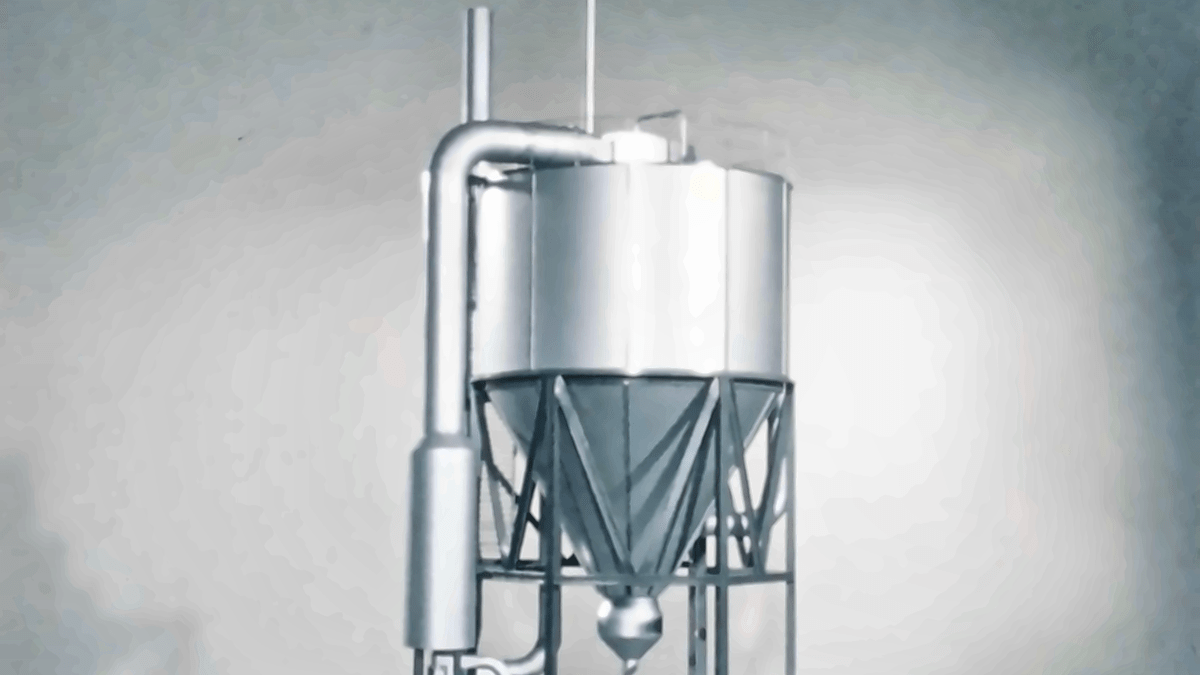
In 1976, NIRO engineers responded to a competitive challenge by rethinking what spray drying could do. Their idea became the multi-stage dryer MSD. Fifty years later, the same fundamental principle helps turn liquids into the powders used in essential nutrition products and important medicines around the world. Refined through decades of engineering expertise, customer insight and continuous development, MSD is a story of innovation with lasting impact.
Más allá de la máquina: cómo potenciar el rendimiento de la planta
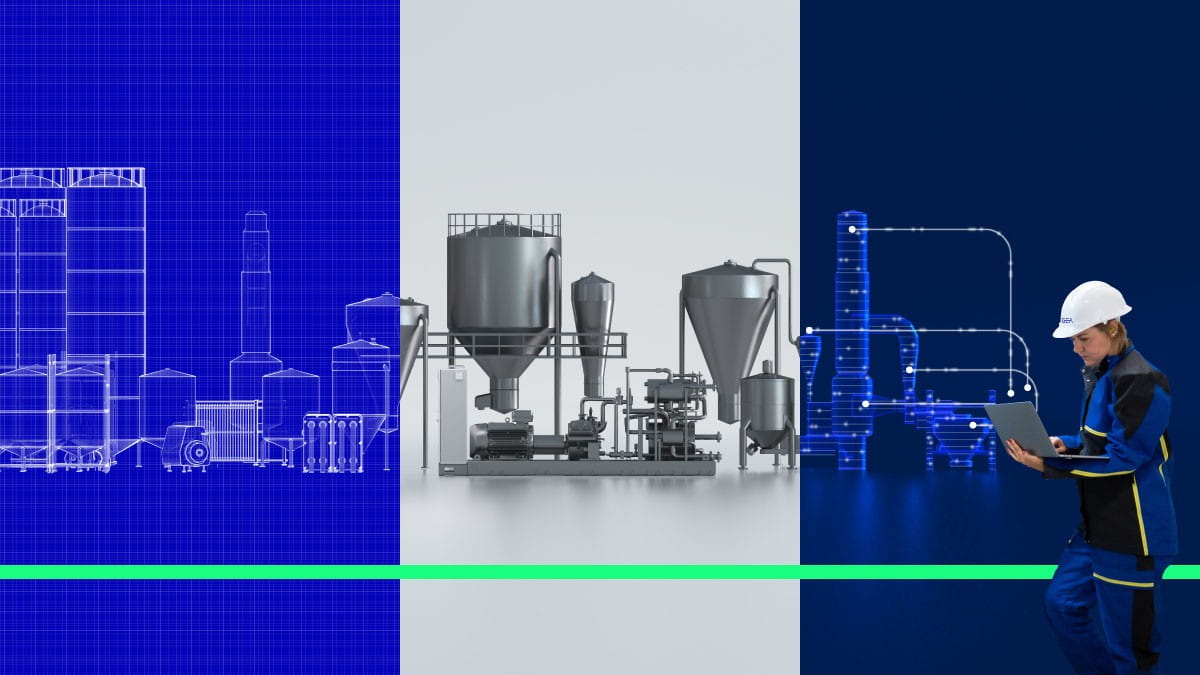
El hecho de que una máquina sea eficiente no significa que la fábrica lo sea. La mejora real suele comenzar por ir más allá de los equipos individuales y comprender cómo los procesos, los sistemas energéticos y las decisiones operativas se influyen mutuamente. Se trata de un enfoque holístico diseñado para descubrir oportunidades que, de otro modo, podrían pasarse por alto.
Cómo una válvula transforma la manera de elaborar alimentos y bebidas
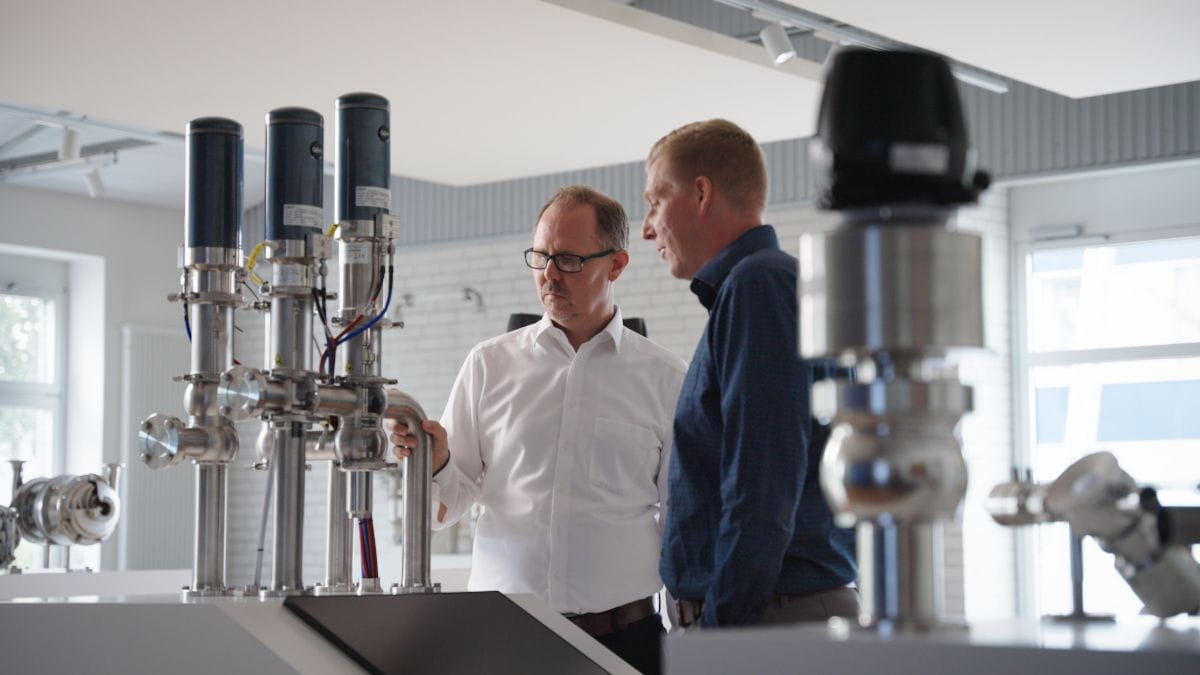
En las plantas de alimentación y bebidas, las válvulas suelen accionarse mediante aire comprimido. GEA Hydract® Actuation Technology mueve las válvulas mediante agua, en un circuito cerrado controlado digitalmente. El resultado es una válvula que puede mantenerse en su sitio con exactitud y regularse con precisión. Esto se traduce en un menor consumo energético y un mayor control.
