
Evaporation plants are required whenever water or any other liquid needs to be removed, concentration must be increased or volume reduced, in an industrial process.
To meet any spectrum of specifications and requirements, GEA designs plant solutions offer their different evaporator types, plant layouts and heating options. Each evaporator type and heating option offers its own benefits, the best suited for every commission are selected according to the main process parameters.
Thanks to ongoing research, development work throughout more than a hundred years and the experience of several thousand installed plants, GEA continues to provide the broadest technical expertise, delivering the best solution for almost any product, evaporation rate, operating condition or application.
Key Features
Evaporation Plants can be found in thousands of installations around the globe serving to diverse industrial processes that include but are not limited to:
- Inorganic chemicals and salts
- Fertilizers
- Organic chemicals
- Industrial wastewater
- Organic and inorganic effluents
- Stillage, steep and stick water, DDGS-effluents
- Fiber board press water
- Caprolactam, kaolin
- Coffee and Tea extract, Coffee wastewater
- Tabaco extract
- Food and dairy products
- Extracts and hydrolysates
- Starch and protein products
- Food ingredients
- Meat and bone extract
- Texturizers, Gelatin and sweeteners
- Beverages
- Juice concentrates, malt extract
- Fermentation products

GEA meVap® Evaporation
By electrifying steam generation, GEA meVap® Evaporation serves as a key tool in supporting low-emission industrial operations.
GEA meVap® Evaporation supports industrial customers in:
- Reducing energy consumption and lowering dependency on fossil fuels.
- Reusing process heat for internal steam demands.
Heating options for thermal separation plants
Today, almost all new evaporation plants are equipped with mechanical vapor recompression (MVR). Traditionally, evaporators are heated using live steam. However, in addition to MVR, waste heat can also serve as an energy source, provided it supplies the energy required for the thermal separation process. Learn more about the available heating options for thermal separation plants.
Products
Showing 4 of 7

CompaCon® Evaporators
Skid-mounted Falling Film and Forced Circulation Evaporators for small-scale production. Compact, easy to transport and quick to assemble.

Evaporation Test Facilities at Karlsruhe R&D Center
Own state-of-the-art test facilities for laboratory and pilot plant testing in the hands of our skilled R&D engineers. Backed by the solid expertise won over many decades of innovation pursuit.

Falling Film Evaporator
Best suited for temperature-sensitive products and liquids with small amounts of solids and going up to high concentrations

Forced Circulation Evaporator
Ideal for highly viscous liquids or with a tendency to fouling. Optimal for saline solutions among other applications.
Downloads

GEA Insights
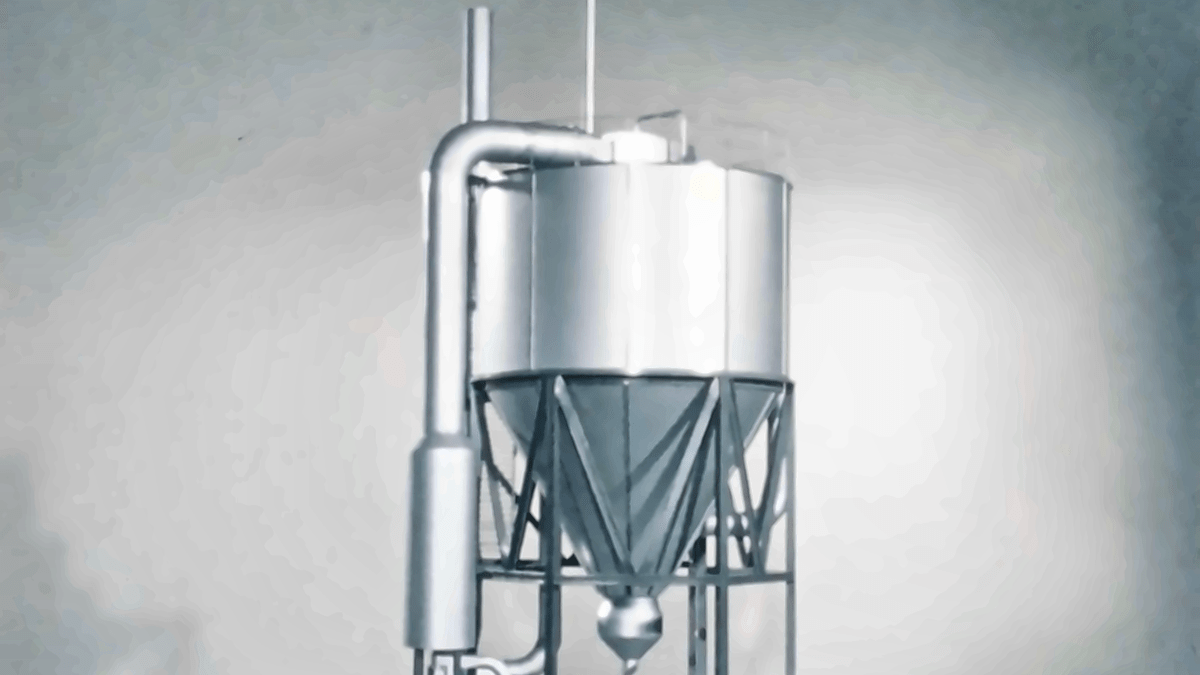
The breakthrough that changed spray drying
In 1976, NIRO engineers responded to a competitive challenge by rethinking what spray drying could do. Their idea became the multi-stage dryer MSD. Fifty years later, the same fundamental principle helps turn liquids into the powders used in essential nutrition products and important medicines around the world. Refined through decades of engineering expertise, customer insight and continuous development, MSD is a story of innovation with lasting impact.

Beyond the machine: unlocking better plant performance
An efficient machine does not automatically make an efficient factory. Real improvement often starts by looking beyond individual equipment and understanding how processes, energy systems and operating decisions affect one another. It’s a holistic approach designed to uncover opportunities that might otherwise be missed.

How a valve reshapes the way food and drinks are made
In food and beverage plants, valves are commonly operated using compressed air. GEA Hydract® Actuation Technology moves valves with water instead, in a closed, digitally controlled circuit. The result is a valve that can be held exactly in place and steered in fine-tuned steps. This results in lower energy use and greater control.
