

The LYONOVA® solid-state microwave-assisted lab-scale freeze dryer enables significantly faster lyophilization while preserving product quality.
It allows direct comparison of conventional and microwave-assisted freeze-drying cycles on the same system — making it ideal for product development, feasibility studies and technology evaluation before scale-up.
Why choose LYONOVA®?
Up to 60–80% shorter drying times
Microwave-assisted energy input significantly accelerates the drying phase, depending on the product.
Homogeneous drying without rotation
Dynamic microwave field control eliminates the need for a turntable while ensuring uniform energy distribution.
Freeze and dry in one chamber
Temperature-controlled shelf enables in-chamber freezing and drying.
True A/B comparison
Run conventional freeze drying and microwave-assisted cycles on the same machine under comparable conditions.
Bridge to continuous processing
Chamber design corresponds to a segment of a tunnel concept, supporting future micro-continuous lyophilization.
Test before you invest
Products can be evaluated in dedicated GEA labs prior to equipment purchase.
Microwave-assisted lyophilization — controlled and reproducible
LYONOVA® uses two 250 W solid-state microwave sources, each connected to an individually controlled antenna.
Independent frequency and phase control (2.4–2.5 GHz) allows the electromagnetic field inside the chamber to be actively shaped and dynamically varied over time.
This continuously changing field pattern:
- ensures uniform, volumetric heating of the frozen product
- reduces the risk of local overheating or cold spots
- maintains full control of product temperature
Unlike conventional systems that rely mainly on conductive heat transfer from the shelf, microwave-assisted freeze drying enables faster and more efficient energy delivery throughout the product cake.
Fully functional one-shelf freeze dryer
LYONOVA® is not a microwave add-on but a complete laboratory freeze dryer:
- One temperature-controlled product shelf (–60 °C to +60 °C)
- Shelf size 400 × 270 mm, compatible with standard GORE® LYOGUARD® freeze-drying trays
- Operation as: conventional freeze dryer, or microwave-assisted freeze dryer with additional energy input
This dual-mode design enables reliable process development and technology evaluation.
Process Control & PAT
To support robust process understanding, LYONOVA® integrates advanced monitoring options:
- Infrared camera for real-time surface temperature visualization and early detection of hot or cold spots
- Fiber optic product temperature sensors (optional). Suitable for microwave environments and ideal for dynamic process adjustment
These tools support documentation, risk assessment and quality assurance in R&D settings.
Designed for today’s development and tomorrow’s production
The chamber geometry of LYONOVA® reflects a segment of a future tunnel dryer, making the system a development platform for batch and continuous freeze-drying concepts.
Benefits include:
- shorter development cycles
- lower energy demand
- smaller production footprints
- support of sustainability and ESG goals
- Shelf area: 400 × 270 mm
- Shelf temperature range: –60 to +60 °C
- Ice condenser: < –75 °C, 5 kg
- Microwave system: 2 × 250 W solid-state, two antennas
- Frequency range: 2400–2500 MHz (1 MHz steps)
- Vacuum range: 0.005–1.000 mbar
- Optional: IR camera, fiber optic sensors, stoppering under partial vacuum
LYONOVA® is available for feasibility testing and development trials in GEA’s laboratory in Elsdorf, Germany. All testing costs are fully credited when purchasing the system. Contact GEA to discover how microwave-assisted freeze drying can accelerate your lyophilization processes and support future production concepts.
Downloads
Related Products

LYOVAC® Pharma Freeze Dryer
GEA’s LYOVAC® industrial-scale freeze dryers are built to customer specifications and are available with production areas of 1–60 m² and condenser capacities of more than 1000 kg.

LYOVAC® Small-Scale Freeze Dryers
Extending its range of LYOVAC™ Freeze Dryers, GEA now offers both integrated and standalone equipment for the production of small-scale batches and formulation or process development.

LYOVAC® Freeze dryers for small scale production modules
LYOVAC® Freeze dryers for small scale production modules

SMART LYO® Pharma Freeze Dryer
SMART LYO™ Freeze Dryers help reduce the cost of freeze drying while maintaining quality and performance, making validation and documentation easier and reducing delivery times.
GEA Insights
The breakthrough that changed spray drying
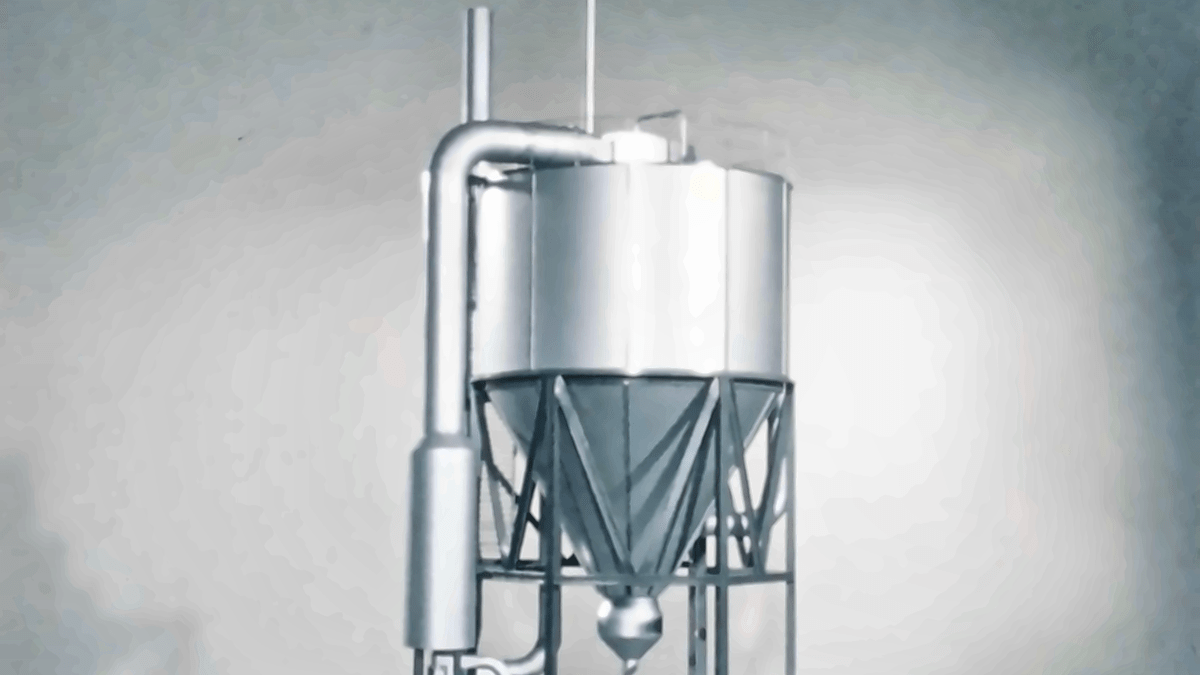
In 1976, NIRO engineers responded to a competitive challenge by rethinking what spray drying could do. Their idea became the multi-stage dryer MSD. Fifty years later, the same fundamental principle helps turn liquids into the powders used in essential nutrition products and important medicines around the world. Refined through decades of engineering expertise, customer insight and continuous development, MSD is a story of innovation with lasting impact.

Beyond the machine: unlocking better plant performance
An efficient machine does not automatically make an efficient factory. Real improvement often starts by looking beyond individual equipment and understanding how processes, energy systems and operating decisions affect one another. It’s a holistic approach designed to uncover opportunities that might otherwise be missed.
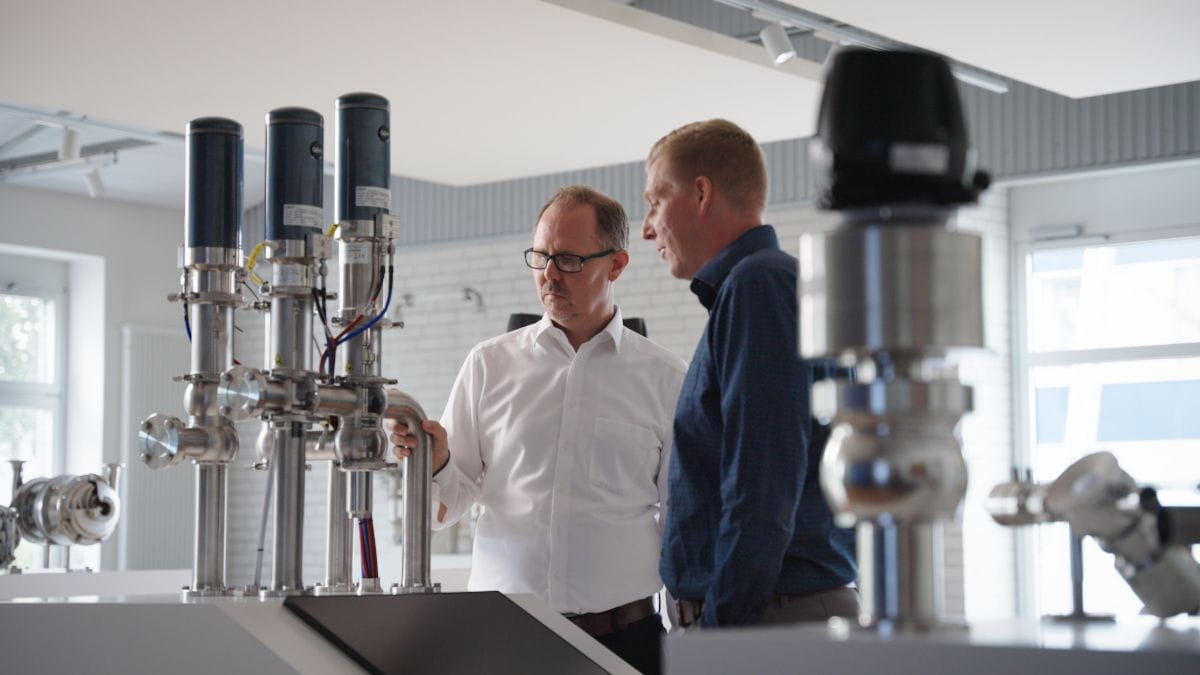
How a valve reshapes the way food and drinks are made
In food and beverage plants, valves are commonly operated using compressed air. GEA Hydract® Actuation Technology moves valves with water instead, in a closed, digitally controlled circuit. The result is a valve that can be held exactly in place and steered in fine-tuned steps. This results in lower energy use and greater control.
