
Flexible separation solutions for multi-product manufacturing.
Unlike continuous distillation processes designed for constant feed and product streams, batch distillation is ideally suited for applications involving multiple products, varying feed compositions, frequent recipe changes, or smaller production volumes.
GEA designs and supplies tailor-made batch distillation plants that deliver reliable separation performance while providing the operational flexibility required in modern production environments. Whether the objective is solvent recovery, product purification, fractionation, or the recovery of valuable intermediates, GEA combines process expertise with proven distillation technology to create application-specific solutions.
From laboratory-scale production to full industrial manufacturing, our batch distillation enable precise control of product quality, yield, and operating efficiency.
Why choose batch distillation?
Batch distillation is often the preferred solution when process flexibility is more important than maximum throughput.
Key benefits
- Flexible production for multiple products
- Ideal for changing feed compositions
- Excellent product purity and fractionation performance
- Suitable for specialty and high-value products
- Ability to recover multiple fractions from a single batch
- Easy adaptation to future product requirements
This flexibility makes batch distillation particularly attractive for companies producing specialty chemicals, pharmaceutical intermediates, flavors, fragrances, and other products requiring frequent campaign changes.
Batch distillation
GEA Batch Distillation systems provide flexible and reliable separation of liquid mixtures, making them ideal for multi-product plants, specialty chemicals, pharmaceuticals, flavors and fragrances, and other applications requiring frequent product changeovers.
Designed for high product quality and operational flexibility, GEA Batch Distillation solutions enable the processing of varying feed compositions while maintaining precise separation performance. Advanced process control and optimized column designsupport yield, product purity, and efficient energy use.
Key advantages
- High operational flexibility for multiple products and recipes
- Excellent product purity and separation performance
- Suitable for small to medium production volumes and specialty products
- Efficient handling of varying feed compositions
- Reliable and proven technology with advanced process control
- Easy cleaning and product changeover for minimized downtime
GEA meVap® Distillation
Continuous Recycling of Energy Streams. Energy costs are often the largest operating expense in a distillation process. GEA meVap® Distillation utilizes mechanical vapor recompression (MVR) technology to recover and reuse latent heat from process vapors.
Instead of rejecting thermal energy to cooling systems, the vapor is compressed to a higher pressure and temperature level and reused as a heating source within the process. This enables the reuse of process heat and can help reduce steam demand and operating costs, depending on the process configuration.
Benefits
- Reduced steam consumption through process heat reuse
- Lower CO2 emissions
- Reduced utility costs
- Gentle product treatment through low temperature differences
- Lifecycle cost benefits for suitable new installations and revamps

Key applications
Food, beverage and ingredients
Solvent recovery and recycling
Chemical product purification
Flavors, fragrances and essential oils
Pharmaceutical manufacturing
Bio-based chemicals
How does continuous distillation work?
Discover the art of whisky distilling with GEA’s Process Line Tour:
Join us for an exclusive tour of GEA’s whisky distilling process line and explore how our advanced technologies help producers craft exceptional whisky—from raw ingredients to refined spirit. Whether you're a seasoned distiller or just curious about the craft, this deep dive reveals the precision, efficiency, and passion behind the gold liquid.

Why partner with GEA?
GEA helps customers reduce environmental impact through innovative thermal process technologies by integrating Mechanical Vapor Recompression (MVR) and advanced Heat Recovery concepts.
Process expertise across the entire separation chain
GEA combines decades of experience in thermal separation technologies with comprehensive process engineering know-how.
Our customers benefit from:
- Customized plant design
- Proven distillation expertise
- Advanced energy-saving technologies
- Flexible production concepts
- Global engineering and service support
- Lifecycle service and modernization concepts
Whether you need a pilot unit, a multi-purpose production plant, or a highly specialized purification system, GEA can provide a batch distillation solution tailored to your process requirements. Even batch processes can benefit from advanced energy recovery technologies.
GEA’s expertise in process design and vapor recompression technologies enables the recovery and reuse of thermal energy throughout the distillation process. These solutions can help reduce steam demand and support the management of operating costs while maintaining separation performance and product purity.
Looking to optimize your separation process?
Contact our distillation experts to learn how GEA Batch Distillation plants can improve product quality, maximize solvent recovery, and support efficient production with opportunities for thermal energy recovery.
Downloads
Related Products

Dehydration and Purification
Where product purities superior to feasible concentrations through rectification are required, one of these technologies come to operation: Molecular Sieve Technology, Distillation with Entrainer, and Pervaporation through Hydrophilic Membranes.

Reboiler for Distillation Plants
GEA uses different types of reboilers for the energy input to the distillation columns. The choice of the suitable type depends on surrounding process and product parameters.

MVR / TVR heated Distillation Plants
The thermal vapor recompression applies steam jets to raise the temperature level of vapor flows in the plant. Condensation of these boosted flows is then used for the heating or evaporating of lower temperature process flows. Thereby the steam consumption is minimized.

Process Integration
Production lines with optimized integrated process steps.
GEA Insights
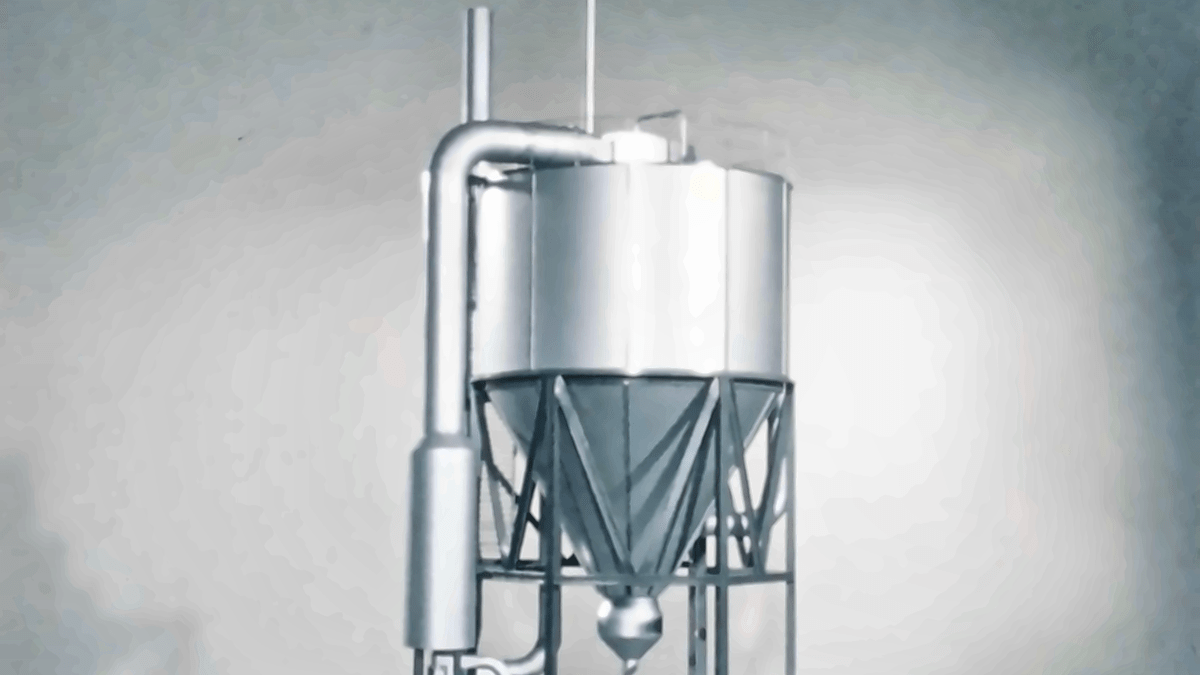
The breakthrough that changed spray drying
In 1976, NIRO engineers responded to a competitive challenge by rethinking what spray drying could do. Their idea became the multi-stage dryer MSD. Fifty years later, the same fundamental principle helps turn liquids into the powders used in essential nutrition products and important medicines around the world. Refined through decades of engineering expertise, customer insight and continuous development, MSD is a story of innovation with lasting impact.
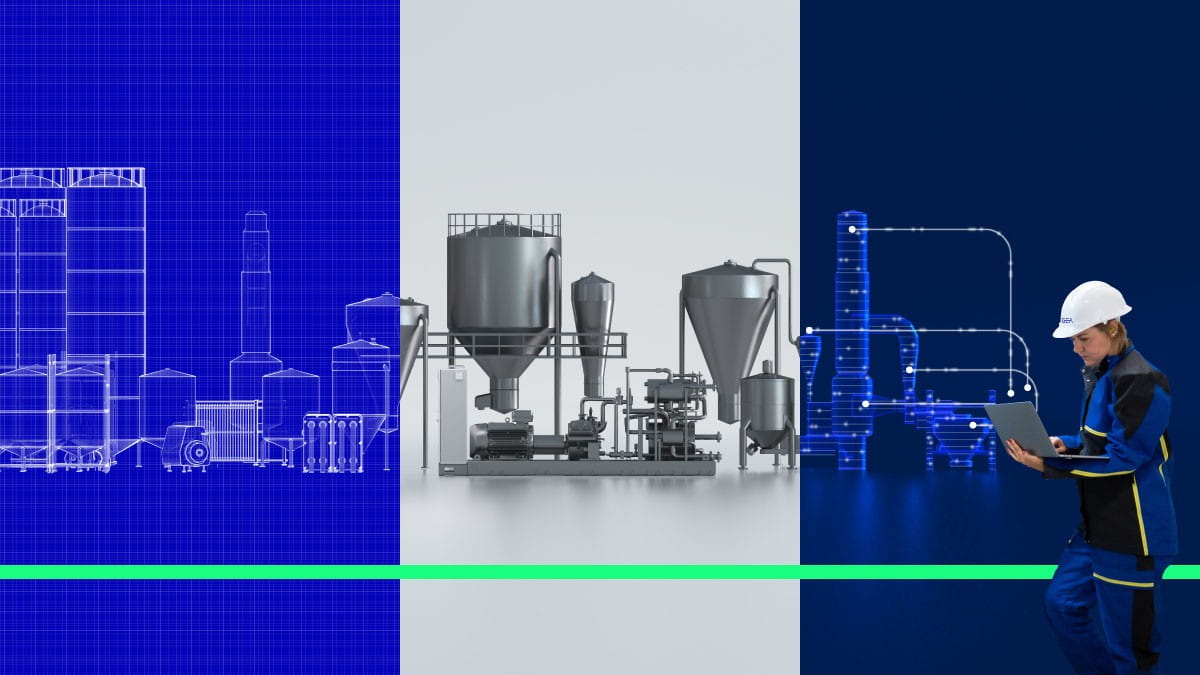
Beyond the machine: unlocking better plant performance
An efficient machine does not automatically make an efficient factory. Real improvement often starts by looking beyond individual equipment and understanding how processes, energy systems and operating decisions affect one another. It’s a holistic approach designed to uncover opportunities that might otherwise be missed.
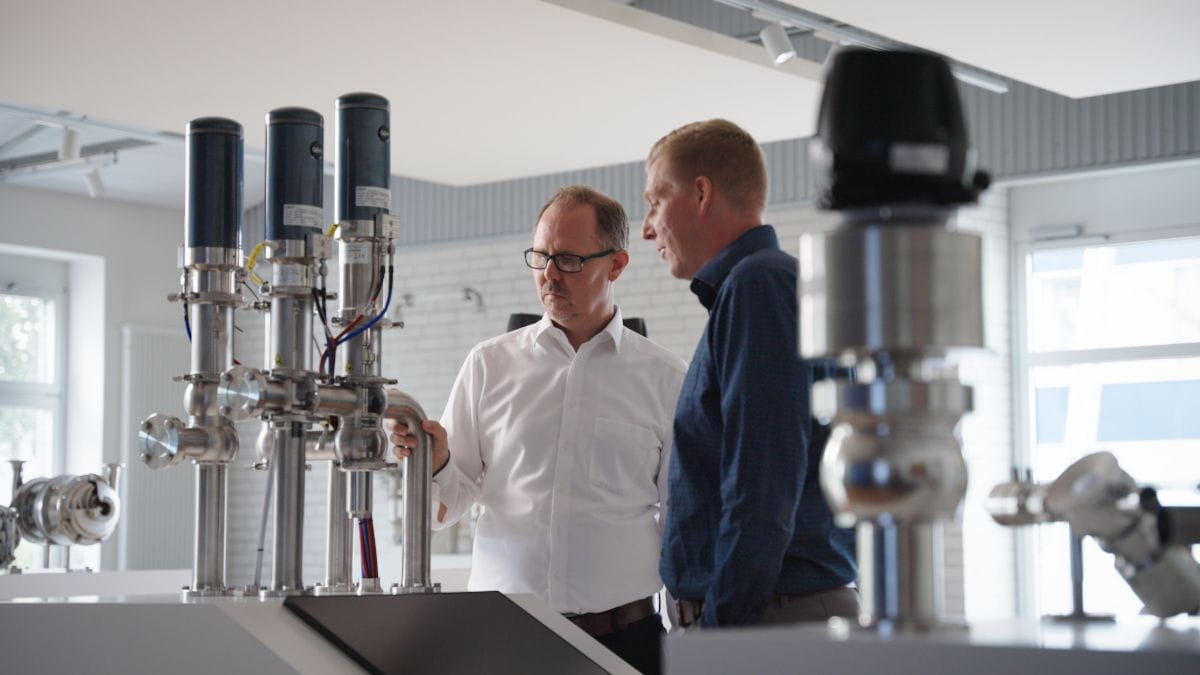
How a valve reshapes the way food and drinks are made
In food and beverage plants, valves are commonly operated using compressed air. GEA Hydract® Actuation Technology moves valves with water instead, in a closed, digitally controlled circuit. The result is a valve that can be held exactly in place and steered in fine-tuned steps. This results in lower energy use and greater control.
