

The world’s leading manufacturers of premium instant coffee rely on GEA CONRAD® freeze dryers for processing the highestquality freeze-dried coffee, at the largestindustrial scales. With a proven track record spanning more than 30 years, ourefficient, robust and reliable CONRAD® technology locks in key aromas and flavorsto create great-tasting coffees that command a premium price in competitive markets.
Proven technology for freeze dried coffee
As the only continuous technology available commercially for freeze drying coffee at large industrial scale, GEA CONRAD® freeze dryers deliver faultless processing for our customers worldwide, from Brazil to India, and Vietnam to Colombia. In fact, we’ve estimated that about 95% of freeze-dried coffee produced worldwide is processed on CONRAD® machines.
Built on GEA expertise and engineering excellence, GEA CONRAD® technology is a first choice for customers looking to branch out from the competitive spray-dried instant coffee market into the premium freeze-dried market. And if you want to make the leap from importing freeze-dried coffee to manufacturing the highest quality product in house, we can deliver CONRAD® technology configured to your exact needs, that we believe will give you unrivalled results. Our customers commonly say they can achieve return on their CONRAD® investment within just 3 years.

End to end freeze dried coffee line
GEA can work with you to design, configure and install a complete end to end freeze-dried coffee line from the ground up. Upstream of freeze drying we offer high-performing coffee extraction equipment, in the form of our FIC®, CARINE® or CONTEX systems, alongside technologies for clarifying and aroma recovery, and aroma concentration using either falling film evaporator or our innovative ICECON® freeze concentration systems. Downstream of freeze drying on the CONRAD® system we offer product handling and packaging, to complete the process line. The CONRAD® equipment integrates seamlessly with upstream and downstream GEA technologies, and we can also install our freeze dryer technology alongside third party extraction equipment.
We also offer all sizes of the CONRAD® plants as ECO versions, which feature a greater respective condenser surface area compared with that of the regular model, and operate at -45°C . These features could save you 10% on power consumption for the refrigeration plant, and so help reduce your carbon footprint. Importantly, we design and configure all GEA CONRAD® systems to comply with the most stringent European regulatory standards, so wherever you are building your plant, you will have the assurance of the highest level of safety.

Benefits of processing freeze-dried coffee on the GEA CONRAD®:
- Maximized uptime enabled by continuous, 24/7 processing - 8000 hours per year
- Preservation of key aromas
- Even heat transfer to the product
- Uniform final product quality
- Minimal product loss – less than 0.1% - during drying
- Low comparative energy consumption
- Compact design thanks to internal condenser system
- High efficiency
- GEA CONRAD® ECO models offer even greater energy efficiency
So how does freeze drying of coffee work?
Freeze drying typically creates higher quality instant coffee than spray drying, because freeze drying is carried out at very low temperatures (-50°C in a vacuum), which preserves much more – up to 90% - of the volatile coffee aromas. In contrast, spray drying uses high heat, which can degrade aromatic compounds and sensitive coffee oils.
The freeze drying process is carried out in stages. Precisely weighed, preprepared frozen coffee extract granules are loaded onto trays, which are introduced into the freeze drying chamber via an airlock. The pressure in the chamber is constantly kept low and heat applied to the trays via heating plates, which causes the ice to turn directly into vapour, a process called sublimation. This water vapor is collected in a condenser and removed. In a secondary drying phase the temperature is further increased to remove remaining water in the frozen coffee extract. The drying conditions, including temperature, pressure, and residence time, are precisely adjusted in each zone of the CONRAD® to create a final premium quality product with exactly the right residual moisture content.
Technology of choice for high capacity coffee freeze drying
The CONRAD® technology enables continuous processing at high capacity.
Continuously, trays filled with frozen coffee granulates are stacked and pushed through sequential drying zones for primary and secondary drying. Trays arriving at the dryer exit are then unloaded through an airlock, and the product is emptied from the trays, which are returned to the start. GEA CONRAD® freeze dryers are equipped with an internal vapor condenser system that features our unique, continuous de-icing technology, enabling automated condenser de-icing without loss of operating vacuum. It’s this technology that lets the CONRAD® carry out continuous, rather than batch-process freeze drying. Compared with external condenser systems our space-saving technology is also more reliable, minimizes product loss to 0.1%, and uses less energy, for more efficient, productive manufacturing.
At our test center, working with your product we can measure extraction yield, identify optimal drying conditions, and simulate the full evaporation and freeze drying process as part of a complete line evaluation, from roasted beans to final product.
Downloads
Related Products

RAY® Freeze Dryer
The RAY® batch freeze drying plant is designed for production of small-to-medium-volume products such as instant coffee and tea, freeze dried fruit, vegetables, meat, seafood and prepared meals. It is also available in a fully sanitary design for freeze drying of bacteria, enzymes, and other bioactive products.

CARINE® Extractor
The GEA CARINE® coffee extractor system has been specifically designed to deliver the highest possible yield while ensuring the preservation of delicate coffee aroma compounds.

RAY® Plus Pilot Plant Freeze Dryer
GEA’s RAY® Plus Pilot Plant is a batch-based freeze dryer designed to process general food products such as instant coffee, fruit, vegetables, meat, seafood and pet food, as well as very sensitive products such as probiotics.

GEA MicroWet grinding system
GEA has developed a wet grinding technique for adding Roast and Ground (R&G) coffee to coffee extract. The process preserves the coffee flavor and aromas much more effectively than dry grinding and increases your drying capacity. It’s called MicroWet.
GEA Insights
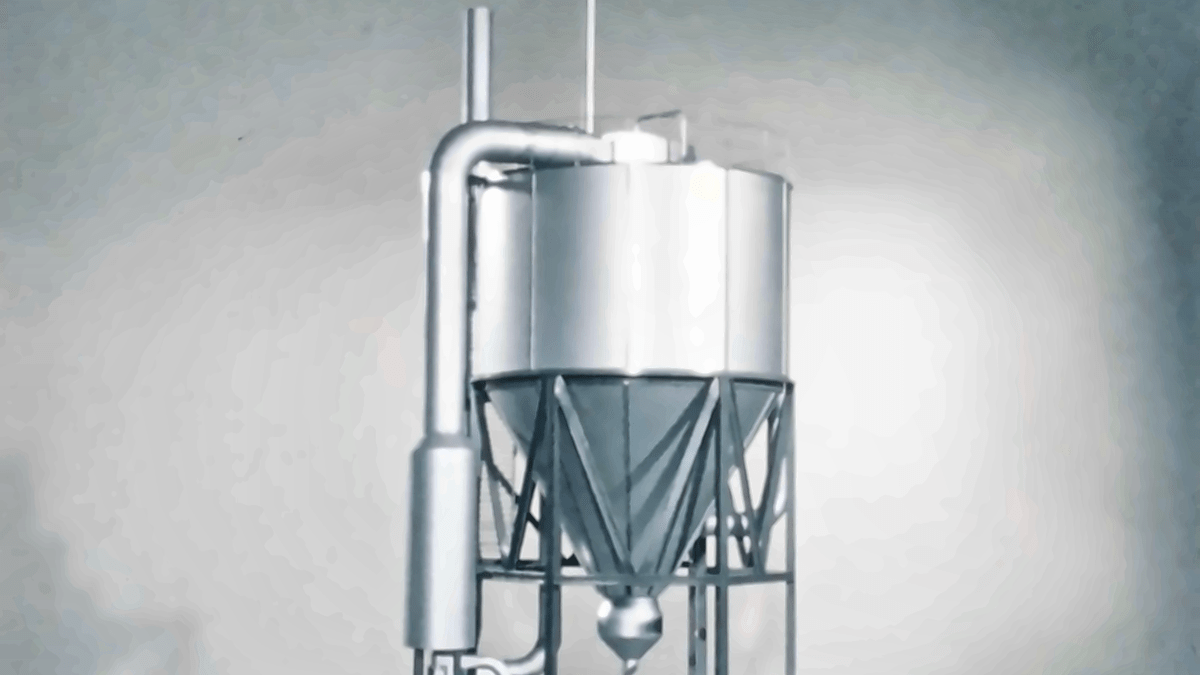
The breakthrough that changed spray drying
In 1976, NIRO engineers responded to a competitive challenge by rethinking what spray drying could do. Their idea became the multi-stage dryer MSD. Fifty years later, the same fundamental principle helps turn liquids into the powders used in essential nutrition products and important medicines around the world. Refined through decades of engineering expertise, customer insight and continuous development, MSD is a story of innovation with lasting impact.
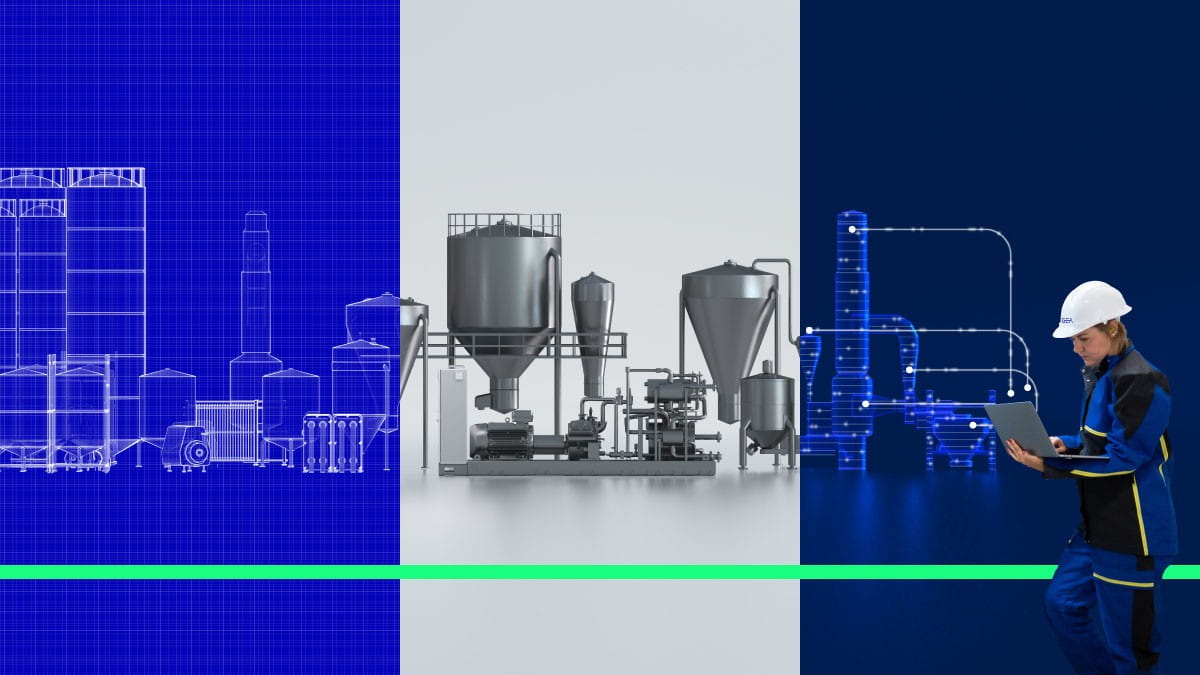
Beyond the machine: unlocking better plant performance
An efficient machine does not automatically make an efficient factory. Real improvement often starts by looking beyond individual equipment and understanding how processes, energy systems and operating decisions affect one another. It’s a holistic approach designed to uncover opportunities that might otherwise be missed.
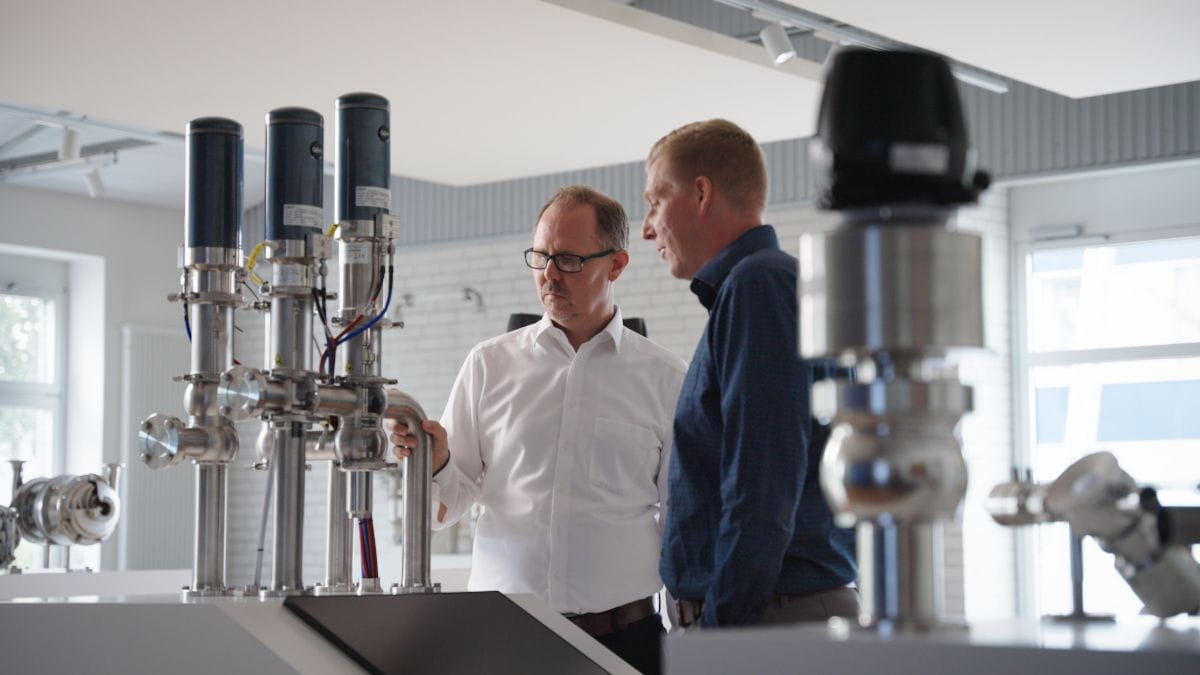
How a valve reshapes the way food and drinks are made
In food and beverage plants, valves are commonly operated using compressed air. GEA Hydract® Actuation Technology moves valves with water instead, in a closed, digitally controlled circuit. The result is a valve that can be held exactly in place and steered in fine-tuned steps. This results in lower energy use and greater control.
