
The patented innovation comprises a sensor that provides a constant reading (compared with a baseline) of any product exposure at the sampling point. Adjustable to suit a specific particle size distribution if required, the information is relayed to a control system that initiates an alarm or corrective action if out-of-specification data is received.
Modern pharmaceutical equipment is designed to operate in a completely dust-tight manner; but, it’s absolutely critical to be fully prepared for worst-case scenarios, such as an unexpected containment breach. As the level of potentially dangerous airborne particles is often far below what can be seen with the naked eye, the Digital Canary is designed to be a fully integrated and reassuring part of your production line.
When the sensor detects powder levels that are above the allowed limit, a warning is sent to the operators. This enables them to leave the contaminated area as soon as possible. Once the concentration of airborne particles has returned to an acceptable level, the system will inform the operators.
Compatible with a wide range of new and existing solid dosage applications, the Digital Canary reduces the need for industrial hygiene testing. It also provides an audit trail in terms of cross-contamination risk and regulatory compliance, and acts as a trigger for preventive maintenance — potentially reducing the need for secondary personal protection equipment (PPE) — by offering real-time containment monitoring.
Product loss and downtime can be costly. More seriously, exposing personnel to toxic or highly potent dust could be catastrophic. The GEA BUCK® Digital Canary is designed to prevent this.
Find out more
If you want to learn more about the GEA BUCK® Digital Canary, follow this link to view the recording of the presentation by Dr. Jim Holman on this topic.
Downloads
Produits associés

BUCK® MC Containment Valves
BUCK® valves were the first commercially available split valves on the market. Used for the contained transfer of active powders from one vessel to another in pharmaceutical production, BUCK® technology is the result of thousands of successful applications worldwide and more than 15 years of experience.

Hicoflex® Single Use Containment System
A disposable high containment Interface for the safe & dust-free transfer of solid dosage material to fully protect your operator, your product and the environment.
Powder Sampling for Contained Systems
GEA offers a range of contained sampling devices for the pharmaceutical industry. These devices are build around the Buck® valve technologies.
GEA Insights
La percée qui a révolutionné le séchage par atomisation
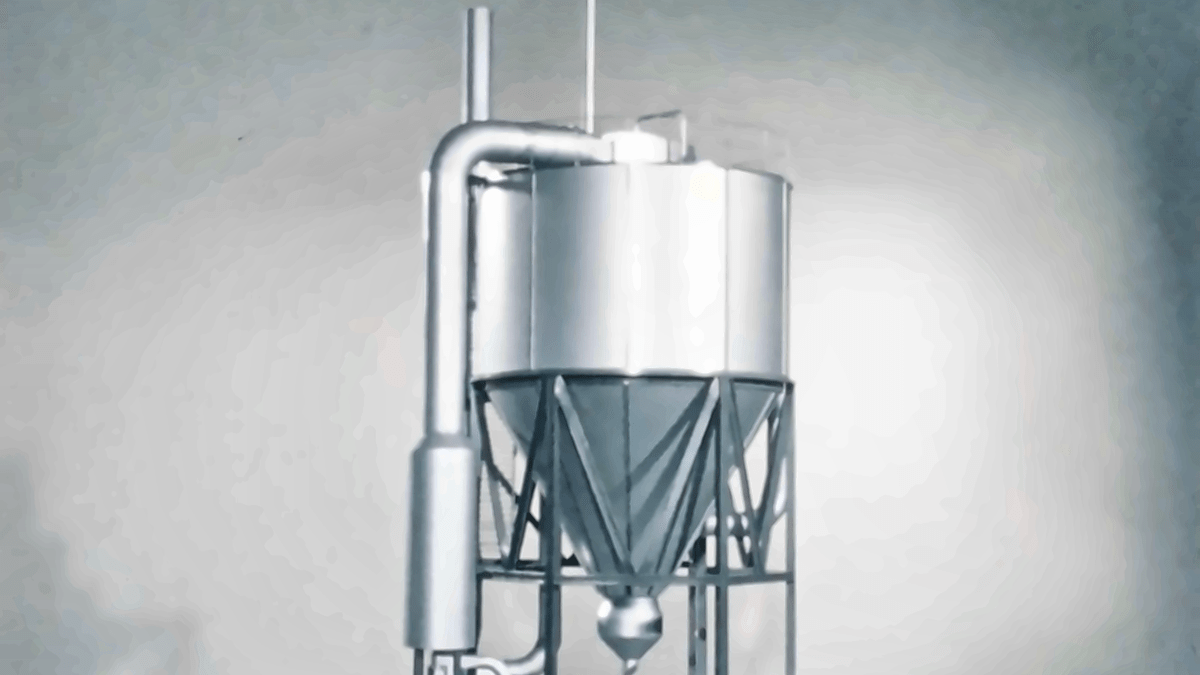
En 1976, les ingénieurs de NIRO répondaient à un défi concurrentiel en repensant ce que pouvait faire le séchage par atomisation. Leur idée est à l'origine du sécheur-atomiseur à plusieurs étages MSD. Cinquante ans plus tard, ce même principe fondamental aide à transformer les liquides en poudres, qui sont utilisées dans des produits nutritionnels essentiels et des médicaments importants partout dans le monde. Perfectionné au cours de plusieurs décennies d'expertise technique, d'enquêtes clientèle et de développement continu, le MSD est une histoire d'innovation aux retombées durables.

Au-delà des machines : exploiter les gisements de performance des installations
Ce n'est pas parce que vous avez des machines efficaces que votre usine l'est. Une trajectoire d'amélioration efficace commence souvent par une analyse qui ne se limite pas aux équipements pris individuellement, et cherche à comprendre comment les processus, les systèmes énergétiques et les décisions opérationnelles s'influencent mutuellement. C'est une démarche holistique, conçue pour repérer des opportunités qui, sans cela, risqueraient de passer inaperçues.

Comment une vanne révolutionne la production des aliments et des boissons
Dans les installations agroalimentaires, les vannes sont généralement actionnées en utilisant de l'air comprimé. La technologie d'actionnement GEA Hydract® Actuation Technology, quant à elle, actionne les vannes en utilisant de l'eau, au sein d'un circuit fermé à commande numérique. Résultat, une vanne peut être maintenue en place de manière exacte et réglée par petits paliers. Cela se traduit par une consommation d'énergie en baisse et un meilleur contrôle.
