

Available in 3 standard sizes, depending on the desired throughput (from 10 to 200 kg/h or 20,000 to 400,000 tablets/h, to be verified by testing), the systems can be customized with a number of options to suit customer needs.
The Conductor software ensures seamless control of the entire process and full reporting. Tracking of OOS and material genealogy can be integrated into the controls.
Mainly targeted towards generics, nutraceuticals, OTC production and CMOs, the systems are designed to handle easy-to-blend and high-throughput DC formulations.
Standard Configuration
- 2 to 4 loss-in-weight feeders
- 1 ribbon blender
- GEA compression system
Available Options
- Choice of feeder (GEA or qualified third-party supplier)
- Set-up of blender: continuous flow or mini-batch
- Blend uniformity measurement with Lighthouse Probe®
- Material handling system including containment features
Main Benefits
- Flexible batch size
- Small footprint
- Eliminate work in progress
- Adaptable to blending of even fragile particles such as MUPS
- Higher blend homogeneity – all powder particles go through the same mixing event
- Higher material yield
- High flexibility from very low to very high API content
- In-process blend uniformity control – second-by-second
- Adaption to variable throughput capacities
- No hold-up issues
Read more about how GEA and its partners are implementing this technology to lead the way toward smaller, more flexible, continuous processing technologies that are transforming the future of pharmaceutical development and manufacturing.
Downloads
Productos relacionados

ConsiGma® Direct Compression with Linear Blending (DC-LB) Lines
A highly integrated solution for continuous linear blending and direct compression, the ConsiGma® DC-LB lines offer all the advantages of continuous manufacturing: supply chain agility, small footprint, controlled blending and compression and improved quality.

ConsiGma® Film Coater
The ConsiGma® Film Coater is based on the GEA high-performance tablet coating technology that gently and accurately deposits controlled amounts of coating materials onto tablet cores — even if they are hygroscopic or friable.

Lighthouse Probe® - online measurement
The Lighthouse Probe® can be used for real-time monitoring of chemical and pharmaceutical processes and provides in-process window cleaning at any time, recalibration during the process, full CIP (cleaning) of wash housing and seal, and a clear view inside – even in difficult conditions.

ConsiGma® 1 - R&D Granulation and Drying
The ConsiGma® 1 offers standalone continuous twin-screw granulation and drying for small-scale R&D operations. It allows users to develop the process and achieve high granule quality on a compact unit.
GEA Insights
El avance que revolucionó el secado por atomización
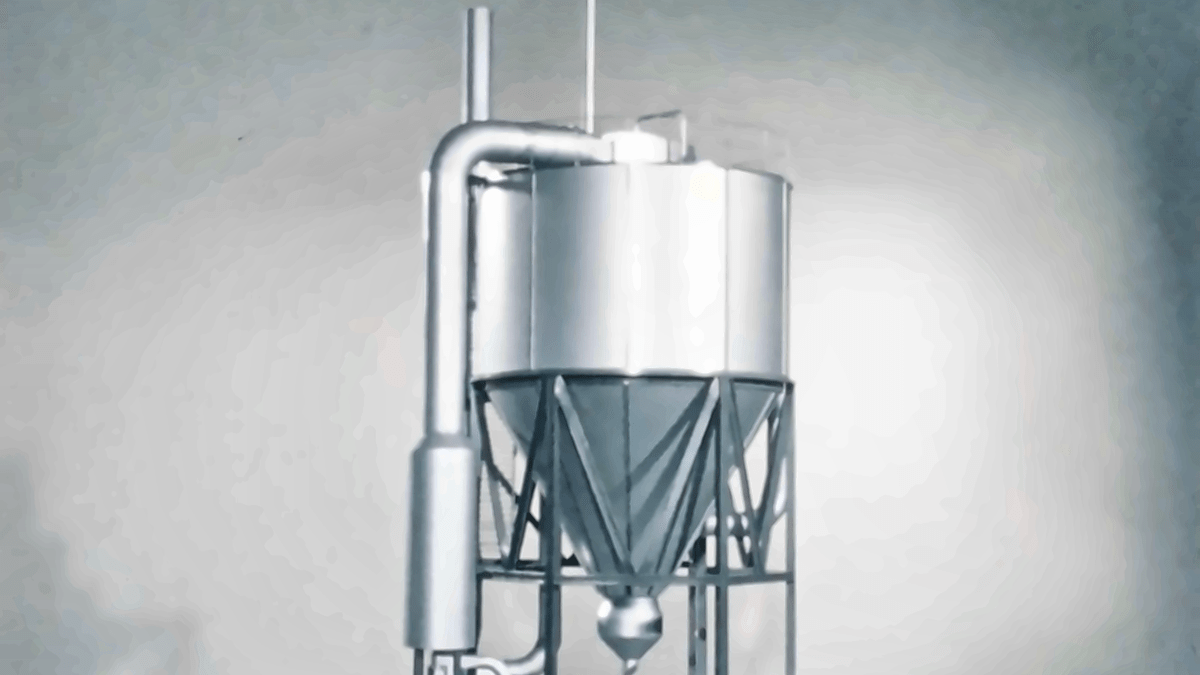
En 1976, los ingenieros de NIRO respondieron a un reto competitivo replanteándose las posibilidades del secado por atomización. Su idea se materializó en la torre multietapa MSD. Cincuenta años después, ese mismo principio fundamental contribuye a transformar los líquidos en los productos en polvo que se utilizan en productos nutricionales esenciales y en medicamentos importantes en todo el mundo. Perfeccionada a lo largo de décadas de experiencia en ingeniería, conocimiento de las necesidades de los clientes y desarrollo continuo, la torre de atomización MSD es una historia de innovación con un impacto duradero.

Más allá de la máquina: cómo potenciar el rendimiento de la planta
El hecho de que una máquina sea eficiente no significa que la fábrica lo sea. La mejora real suele comenzar por ir más allá de los equipos individuales y comprender cómo los procesos, los sistemas energéticos y las decisiones operativas se influyen mutuamente. Se trata de un enfoque holístico diseñado para descubrir oportunidades que, de otro modo, podrían pasarse por alto.

Cómo una válvula transforma la manera de elaborar alimentos y bebidas
En las plantas de alimentación y bebidas, las válvulas suelen accionarse mediante aire comprimido. GEA Hydract® Actuation Technology mueve las válvulas mediante agua, en un circuito cerrado controlado digitalmente. El resultado es una válvula que puede mantenerse en su sitio con exactitud y regularse con precisión. Esto se traduce en un menor consumo energético y un mayor control.
