
GEA is, among others, a single-source supplier of cost effective, energy efficient and reliable wastewater evaporator systems, based on using spray drying evaporation.
Drying of salt and solid-containing effluents from various industrial processes, including wastewater streams from wet type FGD (flue-gas desulfurization), is efficiently enabled using the well-proven GEA spray drying technology and proprietary equipment. The heat of the hot flue gas from the industrial process is used to evaporate the water in the effluent, leaving a dry powder to be collected in a downstream filter with no liquid effluent discharge at all.
Spray drying is a mature technology that was developed over a century ago. GEA has successfully delivered installations worldwide across many different spray drying applications in the power, waste to energy, sinter & metallurgical and glass industries — to name some.
Key features
- Mature and well-proven technology.
- Unmatched rotary atomizer.
- Excellent performance and with outstanding distribution of droplets' size.
- Flexible process.
- The heat source for effluent evaporation can be hot flue gas or pre-heated combustion air.
- Dried salts and solids can be collected either in an optional particular filter or in the main dust collector.
- Can be adapted for large variations of hot gas temperatures and ash load.
- Full ranges of atomizer sizes for different effluent capacities.
- System simplicity. Carbon steel construction with high degree of local supply.
Working Principle
Working Principle of Spray Drying Evaporation
The GEA spray drying evaporation process is highly efficient yet very simple, as it basically consists of the spray dryer evaporator module and a down-stream filter.
A slipstream of hot flue gas is fed into a spray-drying chamber where it immediately comes in contact with a fine spray from atomization of the discharged scrubber liquid of a wet FGD (WFGD) system.
There is a precise control of the gas distribution, the WFGD scrubber liquid flow rate and droplet size to ensure that all droplets are converted into a fine dry powder.
The flue gas further flows into an optional dust collector or the main filter where any remaining suspended solids are removed. The filtered flue gases are then fed to the wet FGD for acid gases removal.
Downloads

GEA Insights
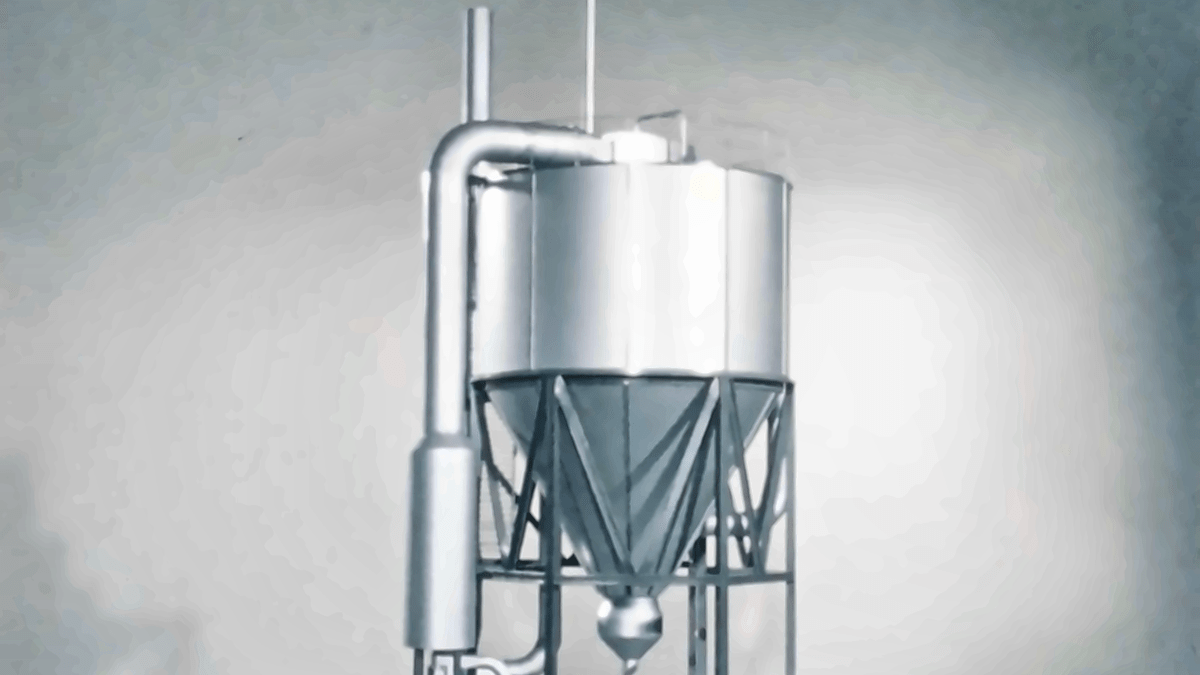
El avance que revolucionó el secado por atomización
En 1976, los ingenieros de NIRO respondieron a un reto competitivo replanteándose las posibilidades del secado por atomización. Su idea se materializó en la torre multietapa MSD. Cincuenta años después, ese mismo principio fundamental contribuye a transformar los líquidos en los productos en polvo que se utilizan en productos nutricionales esenciales y en medicamentos importantes en todo el mundo. Perfeccionada a lo largo de décadas de experiencia en ingeniería, conocimiento de las necesidades de los clientes y desarrollo continuo, la torre de atomización MSD es una historia de innovación con un impacto duradero.

Más allá de la máquina: cómo potenciar el rendimiento de la planta
El hecho de que una máquina sea eficiente no significa que la fábrica lo sea. La mejora real suele comenzar por ir más allá de los equipos individuales y comprender cómo los procesos, los sistemas energéticos y las decisiones operativas se influyen mutuamente. Se trata de un enfoque holístico diseñado para descubrir oportunidades que, de otro modo, podrían pasarse por alto.

Cómo una válvula transforma la manera de elaborar alimentos y bebidas
En las plantas de alimentación y bebidas, las válvulas suelen accionarse mediante aire comprimido. GEA Hydract® Actuation Technology mueve las válvulas mediante agua, en un circuito cerrado controlado digitalmente. El resultado es una válvula que puede mantenerse en su sitio con exactitud y regularse con precisión. Esto se traduce en un menor consumo energético y un mayor control.
