
Future-proofing the cold chain with advanced refrigeration technology
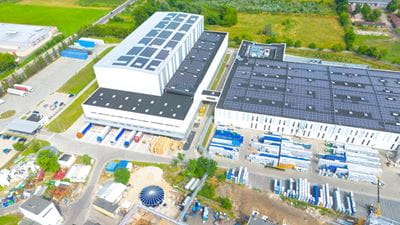
The importance of quality cold chain management cannot be underestimated. Ensuring that perishable foodstuffs are safe and of high quality at the point of consumption is a tremendous responsibility for those operating cold chain facilities. GEA provides refrigeration technology for cold storage and distribution centers designed to support customers to reduce energy consumption and carbon emissions for their facilities*.
Cold chain facilities play a vital role in safeguarding public health by preventing the degradation of perishable products. Failing to keep product at the correct temperatures can result in textural degradation, discoloring, bruising and microbial growth. The larger the facility, the greater the impact any deviation will have. Nevertheless, it’s estimated that approximately one-third of perishable goods worldwide do not reach the consumer due to inadequate cold storage or distribution. On top of this, food production will need to increase drastically, as the earth’s population continues to swell. Keeping post-harvest losses to a minimum has never been more important.
Meanwhile, there is a growing focus on practices intended to reduce the environmental impact of cold chain operations. Companies are adopting measures such as alternative fuels, electric vehicles and renewable energy sources, with the aim of reducing operational carbon emissions.
Aiming high in storage capacity and carbon footprint reduction
The latest cold chain facilities are addressing these challenges by using a high bay design. Using space vertically – sometimes up to 50 meters high and 100 or more meters wide – to stack products allows for greater storage capacity in a smaller footprint, with high bay facilities potentially housing more than 100,000 pallets. Because high bay storage normally uses an automated storage and retrieval system (AS/RS), which involves automated robotic stacking of items, the only movement within the store is the stacking crane going up and down. As a result, air turbulence within the space is kept to a minimum, allowing a more natural flow of air around the building and thus a more consistent temperature throughout.
As well as enabling all of the goods to be maintained at an even temperature, the high bay automated model also helps to reduce energy bills. In the traditional cold storage model, infiltration of outside air through the structure and door openings of the building can sometimes account for around 50% of the refrigeration load. This requires compressor power, and when compressors are running, the condensers also need to run. An oxygen reduction system is also needed, adding a further cost.
Using a “cold lake” model with high racking and stringent control, outside-air infiltration and interior air turbulence are reduced, which can reduce the refrigeration capacity needed to compensate for temperature disruption. GEA and many cold chain customers are convinced that this model, alongside digitization and automation, represents an important development in cold-chain design.
The reduced energy usage is also equivalent to a reduction in emissions*. GEA is proud to support its customer Magnavale in the development of one of the most efficient high bay cold store facilities in Europe. At 47 meters high, the Lincolnshire, U.K., site will be the tallest high bay cold store in the U.K. and will be powered using 100% renewable sources, featuring a fully ammonia-based refrigeration plant from GEA.
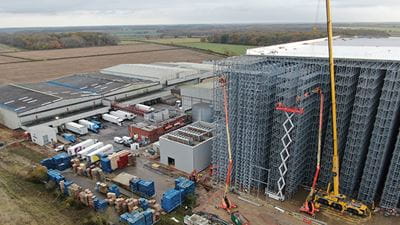
Cranes lift materials into place during construction of the Magnavale, Lincolnshire, high-bay warehouse in the U.K. (Photo: Magnavale)
Working in conjunction with the customer, GEA developed a bespoke refrigeration solution for the new facility, which was designed with the capability to reach minus 28 degrees Celsius, so it can be used for storing a wide range of products including fish and ice cream. GEA’s in-house computational fluid dynamics (CFD) simulations illustrated the air flow and temperature profile based on the cold lake principle and demonstrated its superior efficiency compared to conventional refrigeration methods.
Smarter energy hub with heating and cooling combined
GEA installations at high bay cold storage projects such as Magnavale’s Lincolnshire site are part of an emerging and exciting trend in the cold chain industry. With our growing population, environmental protection, financial stability and energy efficiency are vital. Moving beyond just the cold storage and distribution of food, some of the latest cold chain facilities are also combining refrigeration with heat recovery as part of a wider energy hub concept.
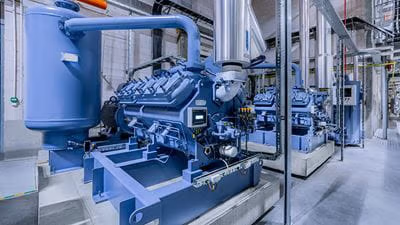
In GEA's integrated refrigeration and heat pump machine rooms, different types of equipment work side-by-side.
At SmartParc SEGRO in Derby, U.K., food is being brought to consumers in a way that is faster and fresher than ever before. The processing, packing and logistics of food (and potentially other products) is joined up seamlessly on one site in a convenient location with easy access to major transport networks. Designed to improve site-wide energy use by sharing centralized heating and refrigeration infrastructure, SmartParc has had a centralized heating and refrigeration plant installed by GEA, which is also maintained by the company’s engineers. Waste heat from the refrigeration plant is recovered and boosted, using an ammonia-based heat pump. It is then redistributed throughout the site, providing heating and vastly reducing electricity use and carbon emissions.
Natural refrigerant, the natural choice
With an increasing number of countries around the world banning the use of certain chemical substances that damage the environment, installing a natural refrigerant-based refrigeration and heat pump system for customers will future-proof their facilities for decades to come. Ammonia is used as the refrigerant in systems designed for long-term operation and energy-efficient performance.
When the Godden Food Group in Australia relocated and built a 27,000 m3 insulated store, they selected GEA to supply a low-charge ammonia refrigeration system designed for safe operation and long-term service. GEA recommended a centralized low-charge ammonia refrigeration system because of the significant long-term savings on energy costs that could be achieved.
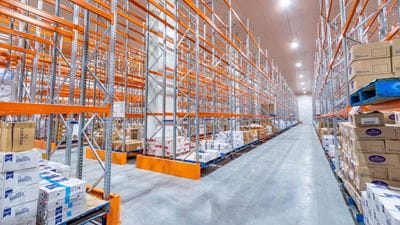
In the Godden Food distribution center, GEA refrigeration equipment provides -23°C for frozen storage and 2°C - 4°C for a chilled area.
The main benefit of a centralized low-charge ammonia refrigeration system is that it contains very little ammonia, around four to five times lower than a conventional liquid overfeed system. The system runs at a much lower refrigerant pipeline pressure drop, making it very energy efficient (which is where most of the energy savings are achieved).
The plant’s energy use is estimated to be around two-thirds lower than the modelled energy use of the specified air-cooled hydrofluorocarbon-based reference system under equivalent operating conditions.Based on the project’s financial assumptions, the company projected an eight-year payback period and annual maintenance costs of around 2% of the initial capital cost. Considering that such technology, if correctly maintained, will provide 30 to 40 years of faithful service – that’s one very rapid and very persuasive return on investment.
Reducing waste, carbon footprint and costs
Because a high percentage of the energy consumption of cold stores is linked to cooling and heating, preventing that excess heat from being lost to the environment saves energy and reduces operational costs for GEA’s customers. By improving cold-store energy performance using solutions tailored to individual operating needs, food can be maintained at the required storage temperature while reducing refrigeration-related energy use.
