


Distinguishing features of VARIVENT® Control Valves
VARIVENT® control valves are available in two designs. While type S uses a diaphragm actuator in combination with a positioner, type P is equipped with a VARIVENT® air/spring actuator and the T.VIS® P-15 positioner. Both variants differ exclusively in the actuator's design. All components are based on the VARIVENT® modular system principle. This provides the option to convert either the type S or the type P control valve to the particular other valve type at a later time.
The type S control valve was designed for fast, high-precision process controls. Due to a different operating principle, the type P control valve works at a slightly slower speed. It is not possible to offer a delimitation according to simple or difficult control tasks or applications, since the control quality must always be considered individually in connection with the superordinate process control. However, both series can be differentiated based on their options. Process-related requirements toward the valve can have a decisive effect on the selection.
Differentiation of VARIVENT® Control Valves
Both control valves can be differentiated according to their options. Doing so, process related requirements could have an influence on the decision.
| Type S | Type P | |
| Actuator type | Diaphragm actuator | VARIVENT® air/spring actuator |
| Positioner | Samson positioner | T.VIS® P-15 |
| Pressure gauge for air pressure: | v | - |
| Emergency handwheel | v | - |
| Protection class | IP66 NEMA 4X | IP 66 / IP 67 / IP 69K |
| ATEX approvals | v | - |
| Pneumatic command variable | v | - |
| BUS / HART communication | v | - |
| Position transmitter 4-20mA | Optional | Standard |
| Troubleshooting functions | v | - |
| Split range | v | - |
General Advantages
- Proven seal technology
- Dead-zone-free VARIVENT® housing
- Maximum cleaning efficiency
- Low spare part stocks
- Positioner for a large variety of requirements
Valve Function
Control valves serve as actuators in control loops. In this process, the particular control valve works as a throttle device that sets the desired flow rate by changing the pressure loss in a pipeline.
Technical Design
The linear or equal percentage control cone and the corresponding valve seat are located in the completely cleanable, dead zone-free VARIVENT® housing. The exchangeable seat ring with an associated control cone allows the selection of several KVS values (= discharge coefficient) per nominal width; subsequent adjustments to changes in the operating conditions are possible at any time. All control cones are available in either a soft- or a metallic-sealing version.
The open lantern allows easy detection of potential leakages due to a defective stem seal.
Detachable clamp connections between the individual modules enable the control valve's quick assembly and maintenance. The valves are available in both effective directions, spring-to-close (NC) and spring-to-open (NO).
Positioners determine the valve's stroke with a high level of accuracy; a variety of designs allows for ideal integration into the process control.
Application Examples
The need for strict adherence to standards in food production requires that control valves be designed to comply with the food and beverage industry’s maximum hygiene demands.
In the manufacture of drugs by the pharmaceutical industry and in chemical process systems or in the technical use of enzymes, cells and microorganisms, any contamination would endanger the process results as well. Therefore, the application of dead zone-free control valves is required, which can be cleaned efficiently and without leaving residue.
VARIVENT® valves enable germ-free processes. The control valves meet high hygiene requirements and allow the cleaning of pipes according to the efficient CIP or SIP procedure.
Control valves are used for pressure regulation, flow control, or for the mixing of liquids. Typical applications include: Temperature control in heat exchangers, tank pressure control, wort aeration, or the dosing of a variety of different media. A number of different control valves is available that are adjusted to various control tasks.
Special Features
- Modular design for flexible adaptation to application conditions
- Linear and equal percentage control cones
- Soft- or metal-sealing valve discs
- Low maintenance and assembly due to detachable clamp connections
- Positioner for a large variety of requirements
Downloads
GEA Insights
The breakthrough that changed spray drying
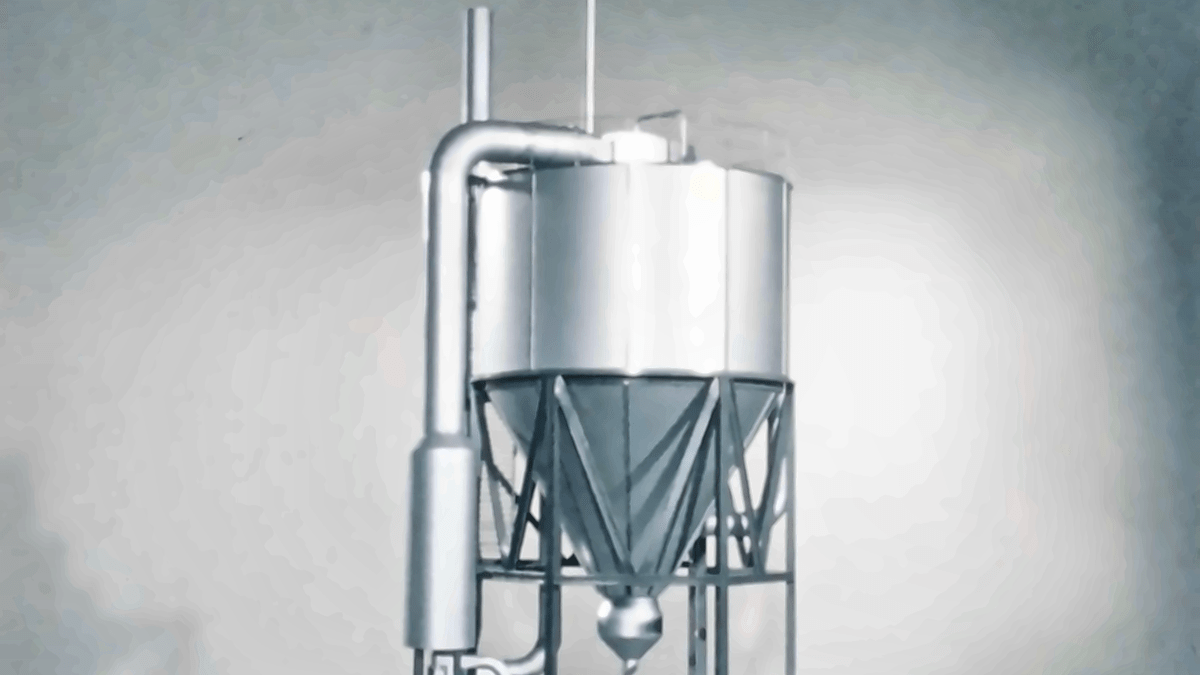
In 1976, NIRO engineers responded to a competitive challenge by rethinking what spray drying could do. Their idea became the multi-stage dryer MSD. Fifty years later, the same fundamental principle helps turn liquids into the powders used in essential nutrition products and important medicines around the world. Refined through decades of engineering expertise, customer insight and continuous development, MSD is a story of innovation with lasting impact.
Beyond the machine: unlocking better plant performance
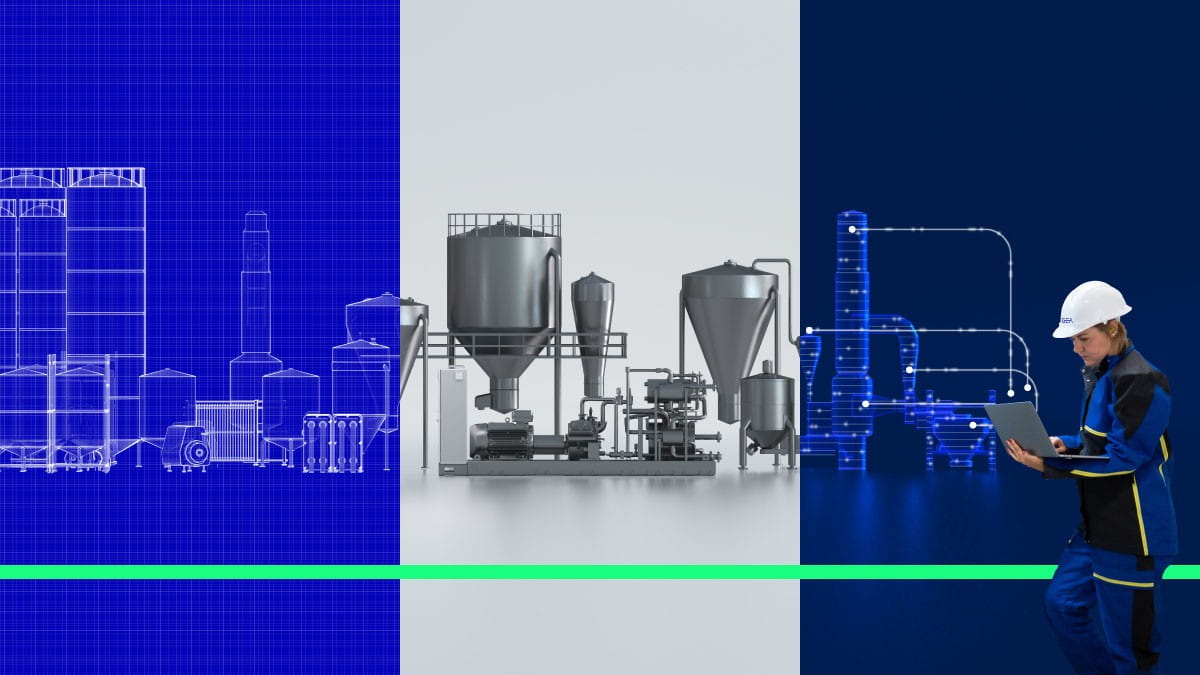
An efficient machine does not automatically make an efficient factory. Real improvement often starts by looking beyond individual equipment and understanding how processes, energy systems and operating decisions affect one another. It’s a holistic approach designed to uncover opportunities that might otherwise be missed.
How a valve reshapes the way food and drinks are made
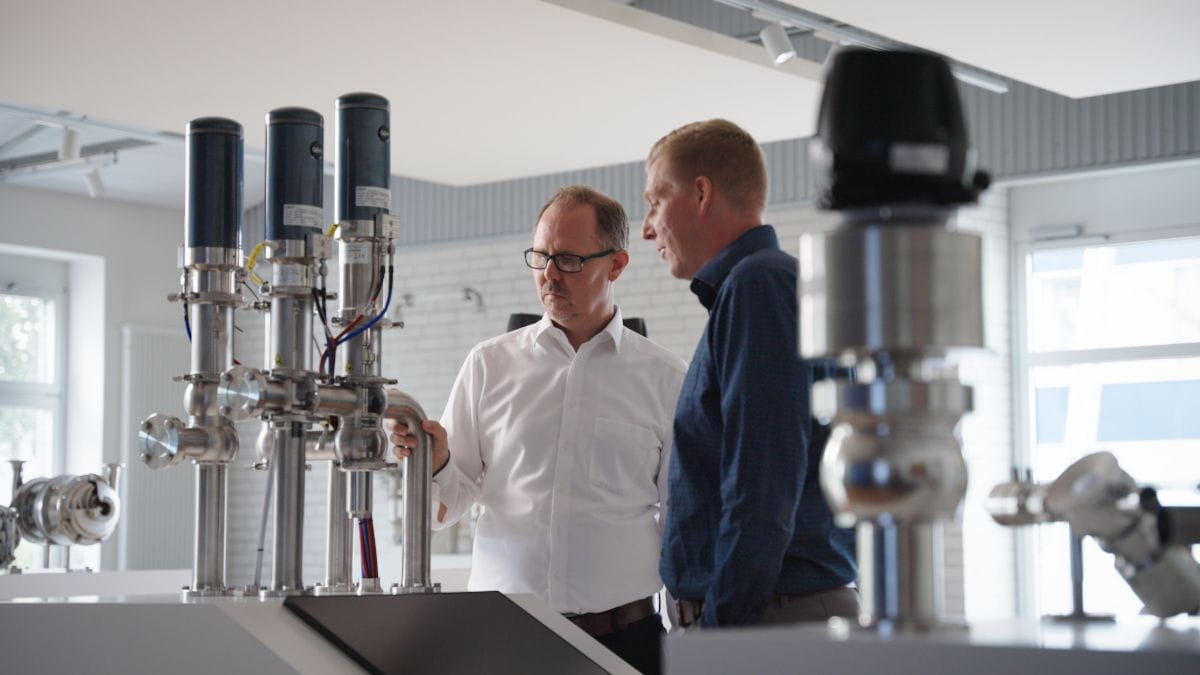
In food and beverage plants, valves are commonly operated using compressed air. GEA Hydract® Actuation Technology moves valves with water instead, in a closed, digitally controlled circuit. The result is a valve that can be held exactly in place and steered in fine-tuned steps. This results in lower energy use and greater control.
