
Function
As soon as the product pressure operating on the ring face of the valve disc is higher than the closing force set through the air supply pressure of the piston, the VARIVENT® constant pressure valve opens. If the product pressure decreases, the valve automatically closes and creates a constant pressure in the inlet nozzle.
Additionally the lower part of the valve disc is provided with a control cone to optimize the valve characteristics.
The valve disc of the constant pressure valve is made of PTFE, which has a good resistance against aggressive media and only has a low friction during the movement.
Special Features
- Mechanically stops of the valve disc
- PTFE valve disk with low friction
- Easy maintenance, only two gaskets
- Good control characteristics
- Different Kvs-values depending on the flow rate
- Hygienic design
- 3A certified
Application Examples
In practice VARIVENT® constant pressure valves are used to keep a constant product pressure at the outlet of a separator. At this juncture the self-regulating VARIVENT® constant pressure valve is a lower priced alternative to a modulating control valve. Since the valve operates automatically after setting the demanded product pressure, no additional pressure transmitter is necessary.
The VARIVENT® constant pressure valve is additionally used to keep the demanded product pressure in heat exchangers.
Extra Equipment
The valve can optionally be equipped with a quick-air-exhaust or a precision pressure regulator. Via the supply- or exhaust air quantity a precise setting of the air supply pressure above the piston surface is possible, which allows the regulation of the demanded constant product pressure at the inlet side of the valve.
Picture 1 (left): The PTFE valve disk is raised by the product flow
Picture 2 (right): Quick air exhaust valve with noise dampener
Technical Data
Technical DataContant Pressure Valve| Recommended flow direction | From top to bottom |
| Housing material | 1.4404 / AISI 316 L |
| Valve disc material | PTFE (FDA) |
| Seal material in contact with the product | EPDM, FKM , HNBR |
| Ambient temperature | 0 to 45°C |
| Air supply pressure | Max. 8 bar (116 psi) |
| Product pressure | Max. 10 bar (145 psi) |
| Surface in contact with the product | Ra ≤ 0,8 μm |
| External housing surface | Matte blasted |
| Connection fittings | Welding end |
| Identification | Adhesive ID tag |
Downloads
Related Products

VARIVENT® Vacuum valve
VARIVENT® vacuum valves are designed to hygienically protect tanks against vacuums. A protection is already ensured when a vacuum surpasses -2.5 mbarÜ. To minimize the cleaning effort and to protect the valve disc against conglutination, the seat ring is non-stick coated.

VARIVENT® Safety valves
VARIVENT® Safety valves were specially developed for the food, beverage, and pharmaceutical industries and meet all the relevant standards and regulations such as DIN 11866 or ASME BPE.
GEA Insights
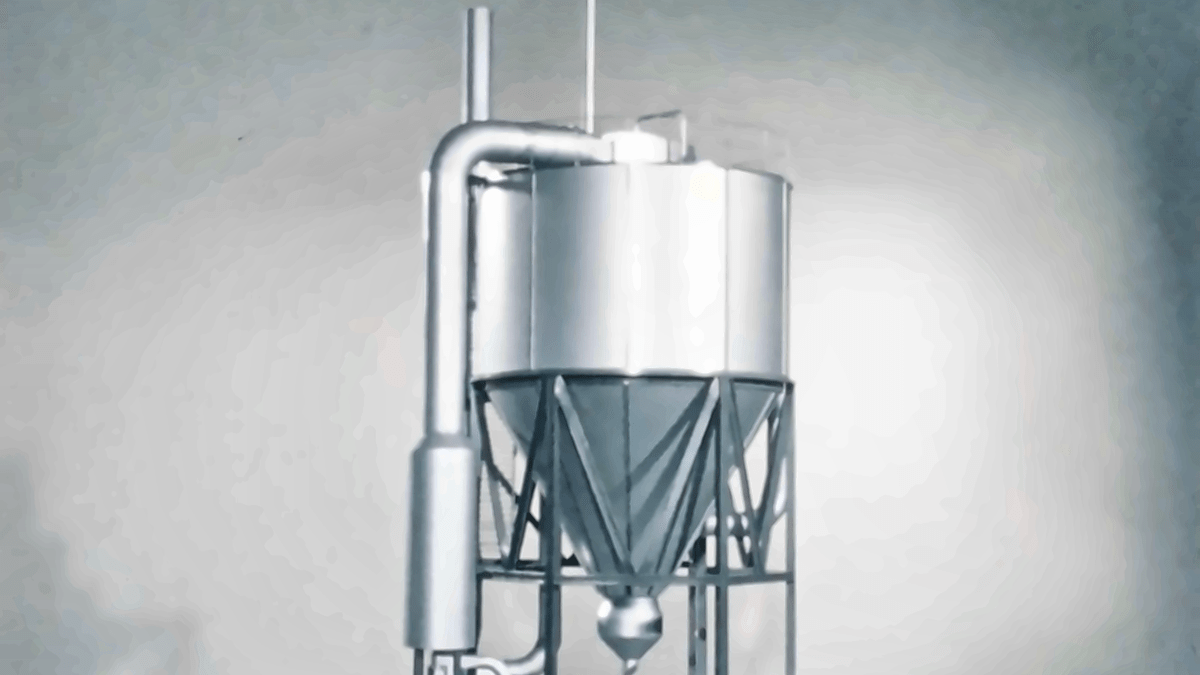
The breakthrough that changed spray drying
In 1976, NIRO engineers responded to a competitive challenge by rethinking what spray drying could do. Their idea became the multi-stage dryer MSD. Fifty years later, the same fundamental principle helps turn liquids into the powders used in essential nutrition products and important medicines around the world. Refined through decades of engineering expertise, customer insight and continuous development, MSD is a story of innovation with lasting impact.

Beyond the machine: unlocking better plant performance
An efficient machine does not automatically make an efficient factory. Real improvement often starts by looking beyond individual equipment and understanding how processes, energy systems and operating decisions affect one another. It’s a holistic approach designed to uncover opportunities that might otherwise be missed.

How a valve reshapes the way food and drinks are made
In food and beverage plants, valves are commonly operated using compressed air. GEA Hydract® Actuation Technology moves valves with water instead, in a closed, digitally controlled circuit. The result is a valve that can be held exactly in place and steered in fine-tuned steps. This results in lower energy use and greater control.
