Water hydraulic valve actuation for hygienic processing
Precision valve control. Lower energy consumption. More sustainable processing.

GEA Hydract® actuation technology is an innovative water-hydraulic valve actuation solution integrated into the VARIVENT® modular valve portfolio. Designed for manufacturers seeking greater sustainability, precision and operational efficiency, hydraulic valve actuation reduces electrical energy consumption for valve actuation by up to 95% while significantly lowering associated CO₂ emissions. The technology delivers highly accurate valve positioning of up to ±0.05 mm for exceptional process stability and repeatability, while advanced digital integration enables real-time monitoring and predictive maintenance. By combining sustainability, precision control and digitalization in a single solution, GEA Hydract® actuation technology helps food, beverage, dairy and pharmaceutical manufacturers optimize production performance and unlock new opportunities for more efficient and flexible plant design.


Reducing energy consumption is no longer optional. In hygienic processing plants, compressed air systems are among the most energy-intensive utilities. By replacing compressed air actuation with water-hydraulic technology, GEA Hydract® actuation technology dramatically reduces the energy required for valve operation.
At Carlsberg Fredericia, Denmark, more than 700 Hydraulic valves have been operating since 2016, contributing to substantial reductions in energy consumption while enabling innovative inline blending processes.

While hydraulic valves typically require a higher initial investment than pneumatic alternatives, the total cost of ownership can be significantly lower.
Benefits include:
For many applications, return on investment can be achieved within approximately 5–6 years depending on operating conditions and plant configuration.
Hydraulic actuation behaves fundamentally differently from pneumatic systems.
Hydract® actuation leverages the incompressible nature of water to deliver precise, stable, and repeatable valve positioning. Unlike pneumatic systems, valve performance is not affected by pressure fluctuations, eliminating drift and valve flutter. The result is reliable process control and consistent product quality. These benefits make Hydract® actuation technology the ideal solution for critical applications such as inline blending, ingredient dosing, dairy standardization, high-gravity brewing, and pharmaceutical proportioning.
Real-world testing has demonstrated significantly higher positioning accuracy compared with conventional solutions.


Carlsberg Fredericia Brewery, Denmark
Anders Kokholm
Brewing Director, Carlsberg Supply Company Denmark
Manufacturers are increasingly exploring hydraulic valve actuation because it offers:
Hydraulic actuation is particularly attractive for breweries, beverage plants, dairy processors and manufacturers pursuing sustainability and operational excellence initiatives.
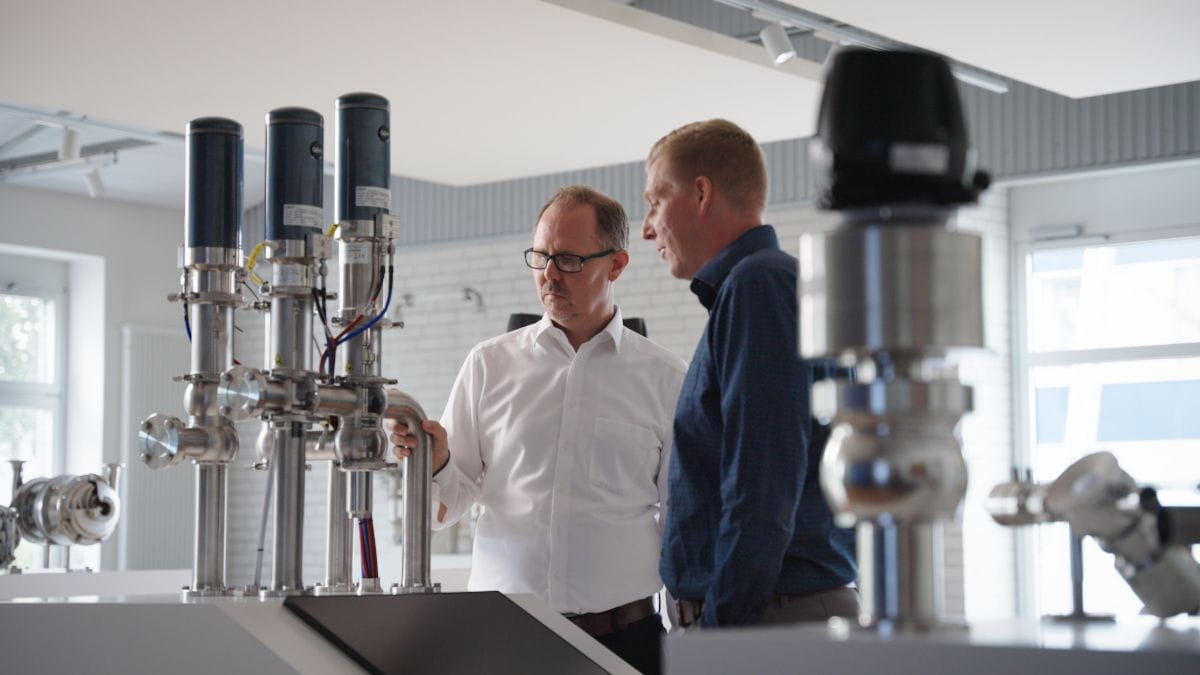
GEA Hydract® Actuation Technology is a water-hydraulic valve actuation system integrated into the VARIVENT® modular valve portfolio. Instead of using compressed air to operate process valves, Hydract® uses water as the actuation medium. The technology combines high-precision valve control, process stability, energy efficiency, and advanced digital capabilities while maintaining the same engineering, automation, and service interfaces used across the VARIVENT® platform. Hydraulic and pneumatic valves can operate side by side within the same installation, giving manufacturers greater flexibility when selecting the most suitable actuation technology for a specific application.
GEA Hydract® combines sustainability, precision, and digitalization within the proven VARIVENT® valve platform.
Hydraulic actuation eliminates the need for energy-intensive compressed-air systems to operate process valves. By replacing compressed air with water-hydraulic actuation, manufacturers can reduce electrical energy consumption for valve actuation by more than 90%, depending on the installation and operating conditions. This reduction contributes directly to lower operating costs and improved resource efficiency. In facilities with a large number of process valves, the cumulative impact can be significant over the lifetime of the plant.
Hydraulic valve actuation can reduce electrical energy consumption for valve operation by more than 90%.
Hydraulic valve actuation supports more sustainable production by reducing energy consumption, decreasing reliance on compressed-air systems, and lowering associated CO₂ emissions. Because compressed-air generation is typically one of the most energy-intensive utility processes in manufacturing plants, reducing this requirement can significantly improve overall plant efficiency. Hydraulic actuation also supports resource-efficient production by improving process stability and helping manufacturers meet corporate sustainability objectives.
Hydraulic valve actuation helps reduce energy use, lower CO₂ emissions, and support long-term sustainability goals.
The exact reduction depends on the energy mix, plant design, and operating profile. However, because hydraulic actuation can reduce electrical energy consumption for valve operation by more than 90%, it can also significantly reduce the carbon footprint linked to valve actuation. For manufacturers pursuing decarbonization strategies, hydraulic actuation offers a practical opportunity to lower operational emissions without compromising process performance.
Lower energy consumption translates directly into a lower CO₂ footprint for valve actuation.
Water is incompressible, while compressed air is compressible. This fundamental difference enables hydraulic systems to maintain exact valve positions regardless of pressure fluctuations in the process line. Pneumatic systems can experience position deviations, drift, or valve flutter under changing conditions, whereas hydraulic actuation keeps the valve securely locked in its programmed position. GEA Hydract® achieves positioning accuracy of ±0.05 mm, providing highly repeatable process control.
Hydraulic actuation delivers stable, repeatable valve positioning with accuracy of up to ±0.05 mm.
GEA Hydract® valves achieve digital positioning accuracy of ±0.05 mm. Because the hydraulic fluid is incompressible, the actuator maintains the target position without deviation caused by changing process pressures or system fluctuations. This high level of precision is particularly valuable in blending, dosing, standardization, and other applications requiring consistent product quality.
Hydract® provides exceptional positioning precision for highly controlled hygienic processing applications.
Hydraulic locking prevents unintended valve movement and eliminates valve flutter. As a result, process parameters remain stable even under fluctuating operating conditions. This improves repeatability, supports consistent product quality, and reduces process variability. In demanding applications such as inline blending, ingredient dosing, and standardization, this level of control enables manufacturers to achieve highly predictable production results.
Stable valve positioning creates more stable processes and more consistent products.
Yes. Hydraulic locking ensures that valves remain securely in their intended position, even under high process pressure differentials. This helps prevent unintended mixing of product streams and supports process safety in hygienic food, beverage, dairy, and pharmaceutical applications. The technology is fully integrated into the hygienic VARIVENT® valve portfolio.
Hydraulic locking improves process security and helps prevent unintended product mixing.
Pneumatic systems use compressed air as the actuation medium, while water-hydraulic systems use pressurized water. Because water is incompressible, hydraulic actuation provides greater positioning accuracy, improved process stability, and reduced sensitivity to pressure fluctuations. Pneumatic actuation remains the preferred solution for many standard applications, while hydraulic actuation offers additional benefits for processes where precision, energy efficiency, and digital control are critical.
Hydraulic actuation offers higher precision and energy efficiency, while pneumatic actuation remains the industry standard for many applications.
No. GEA Hydract® is designed as a complementary actuation technology rather than a replacement for pneumatic systems. Pneumatic valves remain the industry standard across many hygienic processing applications. Hydract® provides an additional option for manufacturers seeking greater precision, process stability, sustainability, or advanced digital integration.
Hydract® complements pneumatic technology and expands customer choice without changing suppliers or systems.
Hydraulic valve actuation is used in brewing, beverage production, dairy processing, food manufacturing, and selected pharmaceutical applications. It is particularly valuable in processes requiring precise flow regulation, stable dosing, standardization, and inline blending. The technology is best suited for operations where precision, energy efficiency, and process consistency are critical performance requirements.
Hydract® is ideal for high-precision hygienic processing applications across food, beverage, dairy, and pharma industries.
In breweries and beverage plants, hydraulic valve actuation supports inline blending and high-gravity brewing processes. Products can be blended directly in the production line to their final specification without requiring intermediate blending tanks. This enables more flexible production, shorter lead times, and improved operational efficiency while maintaining accurate blend ratios.
Hydraulic valve actuation enables precise inline blending and more flexible beverage production.
In dairy and food processing, hydraulic valve actuation is used wherever highly stable flow control and accurate dosing are required. Typical applications include milk standardization, ingredient dosing, blending, and proportioning processes. Precise valve positioning helps maintain product quality while reducing variability in production.
Hydract® supports highly repeatable production and product consistency in dairy and food manufacturing.
While hydraulic valves typically require a higher initial investment than pneumatic alternatives, they can deliver substantial long-term value. Savings may result from lower energy consumption, reduced compressor demand, improved process stability, reduced cleaning requirements, and greater production efficiency. Depending on the application and plant operating conditions, return on investment can often be achieved within approximately five to six years.
Higher initial investment can be offset through long-term energy and operational savings.
Yes. Since process valves no longer require compressed air for operation, overall demand on the plant's compressed-air system can be significantly reduced. While compressors may still be necessary for other equipment, hydraulic valve technology can lower compressor loads, reduce energy consumption, and potentially simplify future plant expansions.
Fewer air-operated valves can mean lower compressor demand and lower utility costs.
Yes. GEA Hydract® valves are fully programmable and provide real-time position feedback through fieldbus systems, WiFi, and Bluetooth connectivity. Intelligent diagnostics and digital seal monitoring support predictive maintenance strategies and provide greater transparency into plant operations.
Hydract® combines precise valve control with advanced digital monitoring and predictive maintenance capabilities.
No. Hydract® is fully integrated into the VARIVENT® modular valve system. Customers continue to use the same engineering approach, automation interfaces, service organization, and supplier relationship. Hydraulic actuation simply becomes an additional technology option within the existing portfolio.
Hydract® integrates seamlessly into existing VARIVENT® environments without changing suppliers or workflows.
Yes. Carlsberg's brewery in Fredericia, Denmark, has operated more than 700 GEA Hydract® valves in production since 2016. The installation demonstrates the technology's ability to support continuous industrial operation while delivering energy savings, process stability, and innovative production concepts such as inline blending.
Hydract® has been proven in large-scale industrial production for nearly a decade.
Breweries are under pressure to improve sustainability, reduce operating costs, and increase production flexibility. Hydraulic valve actuation addresses all three objectives. The technology enables highly accurate inline blending, supports high-gravity brewing concepts, reduces energy consumption, and can help simplify plant layouts by reducing the need for intermediate blending tanks.
Hydraulic valve actuation enables more sustainable, flexible, and efficient brewery operations.
Brewing, beverage, dairy, food, and selected pharmaceutical industries benefit most from hydraulic valve actuation. Applications requiring high positioning accuracy, stable flow regulation, inline blending, dosing, or sustainability improvements are particularly well suited for the technology.
The greatest benefits are achieved in precision-critical and energy-conscious processing environments.
Hydraulic valve technology contributes to Environmental, Social, and Governance (ESG) objectives by improving energy efficiency, reducing operational emissions, supporting resource-efficient production, and enhancing process transparency through digital monitoring. Reduced energy consumption directly supports environmental targets, while improved process control can lower waste and improve resource utilization. In addition, reduced compressed-air leaks and a quieter working environment can contribute positively to workplace conditions.
Hydract® helps manufacturers reduce emissions, improve efficiency, and advance ESG performance goals.

Thermoforming has long played a central role in food packaging. Now it is facing a major shift. As regulations tighten, materials evolve and costs rise, form fill seal lines must do more than run reliably – they now shape how food stays fresh, affordable and recyclable. Take a look at the key thermoforming trends informing the food packaging and delivery landscape.

From the orchards of the Cape to store shelves across 40 countries, the South African packhouse Betko has built a business on freshness, timing and reliability. With GEA’s controlled atmosphere refrigeration technology, the company can now store apples and pears for up to 14 months and cut energy consumption by 20%, with a partnership of more than 30 years at the heart of it all.