

The other 50 percent: processing animal by-products
Processing the co-products or by-products from livestock breeding is not only economically reasonable, but also highly sustainable and can be seen as true recycling. Without rendering roughly 50 percent of every meat animal would be wasted, valuable resources lost with an enormous strain on our waste management systems as well as the environment.
In Europe alone roughly 18 million tons of animal by-products are collected from the meat and livestock industry each year and processed into valuable resources for food, feed and biofuels (source: EFPRA). In North America the rendering industry divert 62 billion pounds of food waste from landfill recycling these raw materials into 29 billion pounds of fat, oil and protein (source: NARA).

GEA has the right technology and expertise to help processing animal by-products into valuable food, petfood or feed ingredients or into feedstock for biofuels like HVO or SAF.
Thus, the food processors and renderers play an important part in our economies and societies: they take care of the proper management of by-products but also fallen animals to prevent health and food risks and they save millions of tons of valuable resources every year from becoming food waste.
Processed animal by-products - what are they used for?
In principle, proteins and fats can be extracted and purified by further processing from animal by-products, which are then used as ingredients or feedstock for
- Food
- Pet food
- Livestock, poultry feed
- Aquafeed
- Fertilizers
- Oleic acid, glycerin, stearic acid, linolic acid
- Biofuels, i.e. HVO (hydrated vegetable oil) or SAF (sustainable aviation fuel)

Whether on the plate or in the tank, rendering options are diverse.
GEA technology and expertise to process animal by-products
GEA supports the food processing and rendering industry with
- Centrifugal separation technology
- Membrane filtration
- Evaporators
- Sterilization units
- Heat treatment and pasteurization
- Spray dryers
- Spray congealers
- CIP systems
GEA technologies and process expertise are used for the production and processing of
- Rendered fats – edible and non-edible
- Collagen
- Bone and meat meals
- Protein hydrolysates
- Gelatine
- Blood plasma and blood meal
Products & technologies
Showing 3 of 3

Centrifugal Separator
GEA separators are designed for liquid-based applications. Using centrifugal force, they are used for separating suspensions consisting of two or more phases of different densities, i.e. they can be used for liquid-liquid separation, for liquid-liquid-solid separation or for liquid-solid separation. They are equally as effective at separating liq...

Decanter Centrifuge
The decanter’s hour has come as soon as the solids content in the suspension to be processed is particularly high. These machines provide the benefits of high clarifying efficiency and maximum dewatering as well as the separation of liquids with the simultaneous removal of solids. The main requirements in this respect include a high bowl speed, a...

Tubular Heat Exchangers
Tubular heat exchangers are at the heart of all process plants for heating, cooling, pasteurizing or UHT heating.
GEA Insights
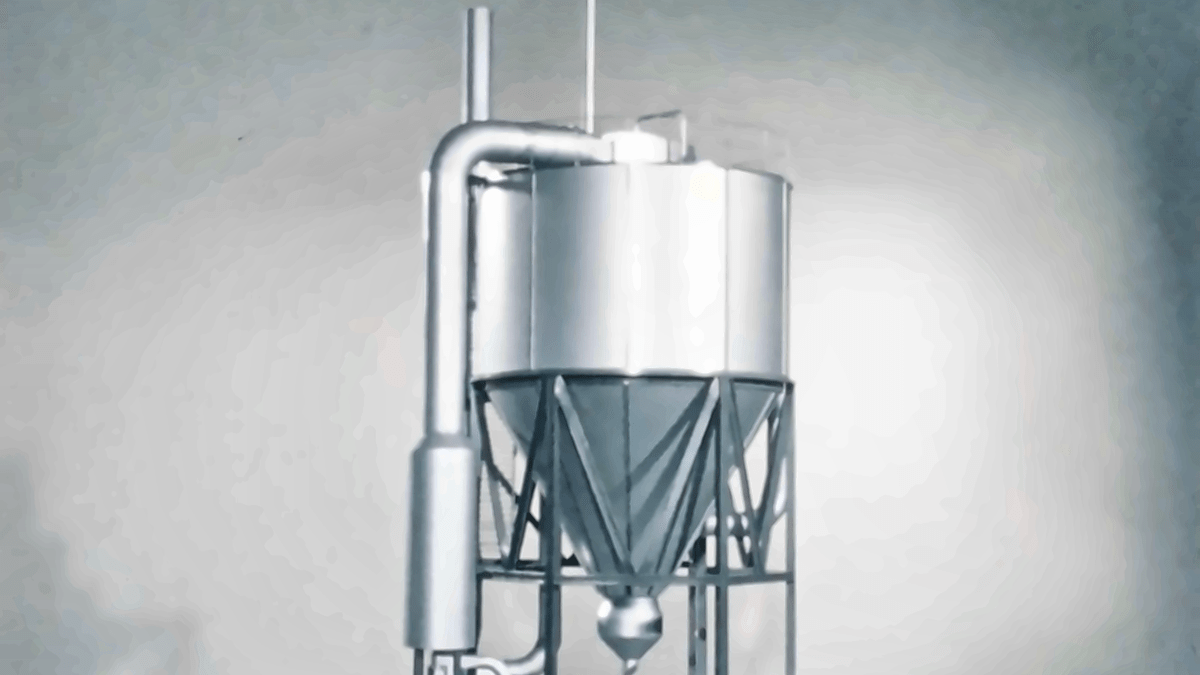
The breakthrough that changed spray drying
In 1976, NIRO engineers responded to a competitive challenge by rethinking what spray drying could do. Their idea became the multi-stage dryer MSD. Fifty years later, the same fundamental principle helps turn liquids into the powders used in essential nutrition products and important medicines around the world. Refined through decades of engineering expertise, customer insight and continuous development, MSD is a story of innovation with lasting impact.

Beyond the machine: unlocking better plant performance
An efficient machine does not automatically make an efficient factory. Real improvement often starts by looking beyond individual equipment and understanding how processes, energy systems and operating decisions affect one another. It’s a holistic approach designed to uncover opportunities that might otherwise be missed.

How a valve reshapes the way food and drinks are made
In food and beverage plants, valves are commonly operated using compressed air. GEA Hydract® Actuation Technology moves valves with water instead, in a closed, digitally controlled circuit. The result is a valve that can be held exactly in place and steered in fine-tuned steps. This results in lower energy use and greater control.
