

Challenge 1: Balancing competing KPIs
Food processors constantly balance food safety, quality, yield, throughput and efficiency.
Improving one often impacts another. The challenge is not maximizing a single KPI. It is optimizing the system as a whole.
Challenge 2: Moving beyond trial-and-error
Many production decisions still rely heavily on experience.
Experience remains valuable, but today's operating environment requires a more structured understanding of how temperature, humidity, airflow and time interact.
Challenge 3: Managing variability under production pressure
No two chicken breasts are identical.
At the same time, processors face constant pressure to maintain throughput and quality targets. Successfully handling raw material variation is one of the biggest challenges in modern food production.
Challenge 4: Reducing costs while improving sustainability
Rising energy costs and sustainability targets have made efficiency a boardroom topic.
Every percentage point of yield matters. Every kilowatt-hour matters. Every production decision has a financial and environmental impact.
What leading processors do differently
The most successful food manufacturers share three characteristics:
- They understand the science behind cooking.
- They use data to support decisions.
- They continuously optimize their processes.
Instead of reacting to problems, they build cooking operations that are predictable, transparent and under control.
The opportunity
Food processors will continue to face pressure on margins, labor, energy and sustainability.
The biggest opportunity is to transform cooking from a necessary production step into a strategic advantage.
For the companies that succeed, that journey starts with understanding the process.
Industrial Cooking eBook
Download the GEA Industrial Cooking eBook
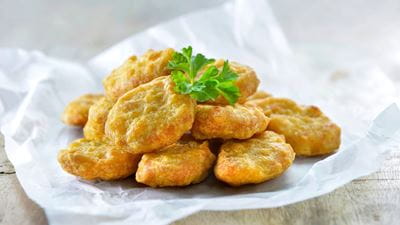
Masters of Cooking webinar
