

Successful industrial companies around the globe focus on two key elements in their production process: product optimization and cost reduction. Imagine the synergistic benefits if both could be achieved together while reducing energy consumption and operational costs. At GEA, we help customers do just that by providing industrial heat pump technology for their facilities.
Why heat pumps?
Around 60 percent of the total cost of processing is typically linked to energy consumption, so that’s where the greatest cost-reduction potential lies. In addition to providing customized industrial refrigeration solutions, GEA optimizes processing-related water and energy resources to prevent waste heat from being lost to the atmosphere. This helps our customers to save energy and reduce their carbon footprint.
Our customized heat pumps will:
- Minimize energy consumption
- Reduce operational costs
- Lower CO2 footprint
See how it works
Replacing fossil-fuel boilers with electric heat pumps can help reduce CO₂ and NOx emissions, with the potential for further reductions as electricity grids increasingly incorporate renewable energy sources such as wind and solar. In this way, heat pumps can support companies in improving the energy efficiency of their industrial processes.
What does the heat pump do?
A heat pump prevents waste heat from leaving a refrigeration plant by reusing it, and upgrading it to become useful elsewhere in the production process for functions such as:
- Washing and cleaning water operations
- Heating water for processing purposes such as pasteurization, blanching and drying

GEA heat pump plant installed at Mars, the Netherlands (Photo source: RCC K&L)
Heat pump example
This dairy processing example below illustrates the levels at which sustainable heat may be managed in order to achieve a zero-carbon-emission solution.
Level 1: Reusing energy that flows directly via heat exchangers.
Level 2: Applying a heat pump to elevate the temperature level to a higher value.
Level 3: Harvesting solar heat (directly from solar collectors or indirectly from geothermal heat) and applying it directly in the process after a temperature lift with a heat pump.

Range of heat pumps
GEA offers a comprehensive array of heat pumps for process industries. We provide state-of-the-art technology and customize our solutions to meet customer requirements, spanning from 300 to 10,000 kW. The key component is the proven high-quality, high-efficiency GEA ammonia screw and piston compressors.


On-demand webinar
Industrial Heat Recovery

Decarbonizing industry, one heat pump installation at a time

Heat pump eCalculator

powerful, future‑ready solution for decarbonizing industrial processes.
GEA meVap®
Products & Technologies
Showing 4 of 27

GEA Grasso FX GC / GEA Grasso FX GCduo
The chillers of this series are characterized by great part-load efficiency.

GEA Omni Control Panel
The intuitive touch for machine control technology.

Customized GEA heat pumps
Customized heat pumps are designed for optimized efficiency and a wide range of temperatures and capacities. They serve all common industrial applications and district heating. They are applied when special conditions or requirements outstrip the limits of our standard heat pumps.

FES Premium-Quality Refrigeration Oils
FES oils are the natural choice to optimize industrial cooling and heating applications operating with reciprocating or screw compressors.

Energy Recovery Unit


NEXUS - GEA's Holistic Engineering Solutions

HEAT TO COOL
Downloads
GEA Insights
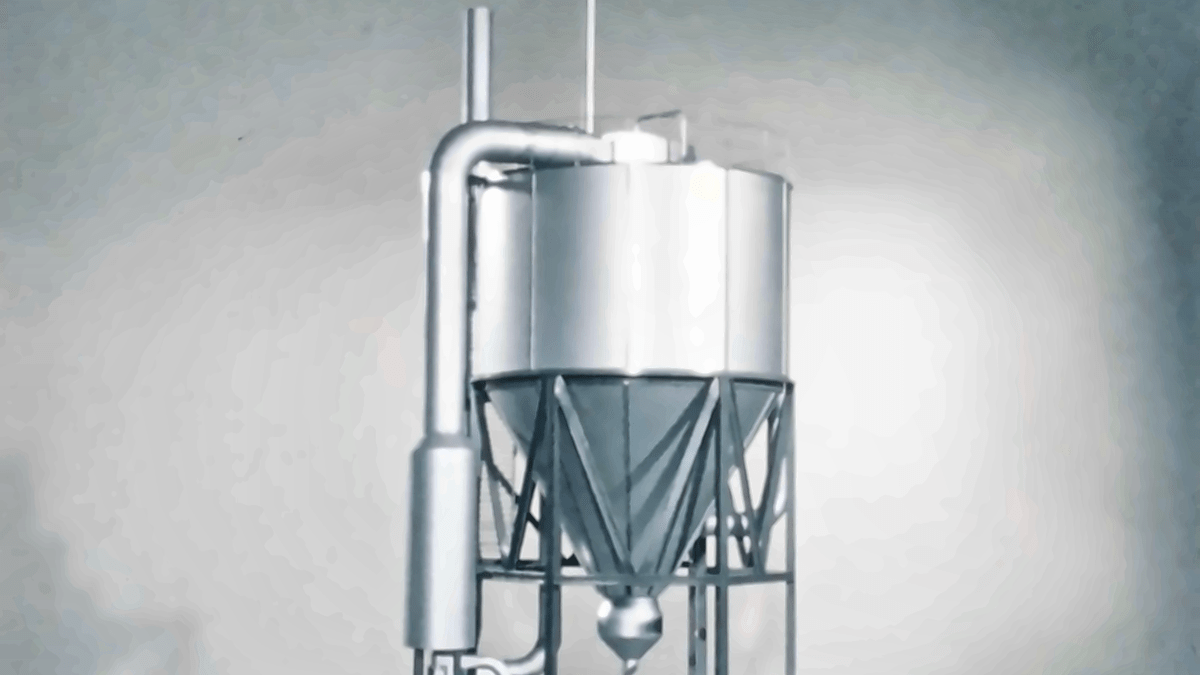
The breakthrough that changed spray drying
In 1976, NIRO engineers responded to a competitive challenge by rethinking what spray drying could do. Their idea became the multi-stage dryer MSD. Fifty years later, the same fundamental principle helps turn liquids into the powders used in essential nutrition products and important medicines around the world. Refined through decades of engineering expertise, customer insight and continuous development, MSD is a story of innovation with lasting impact.
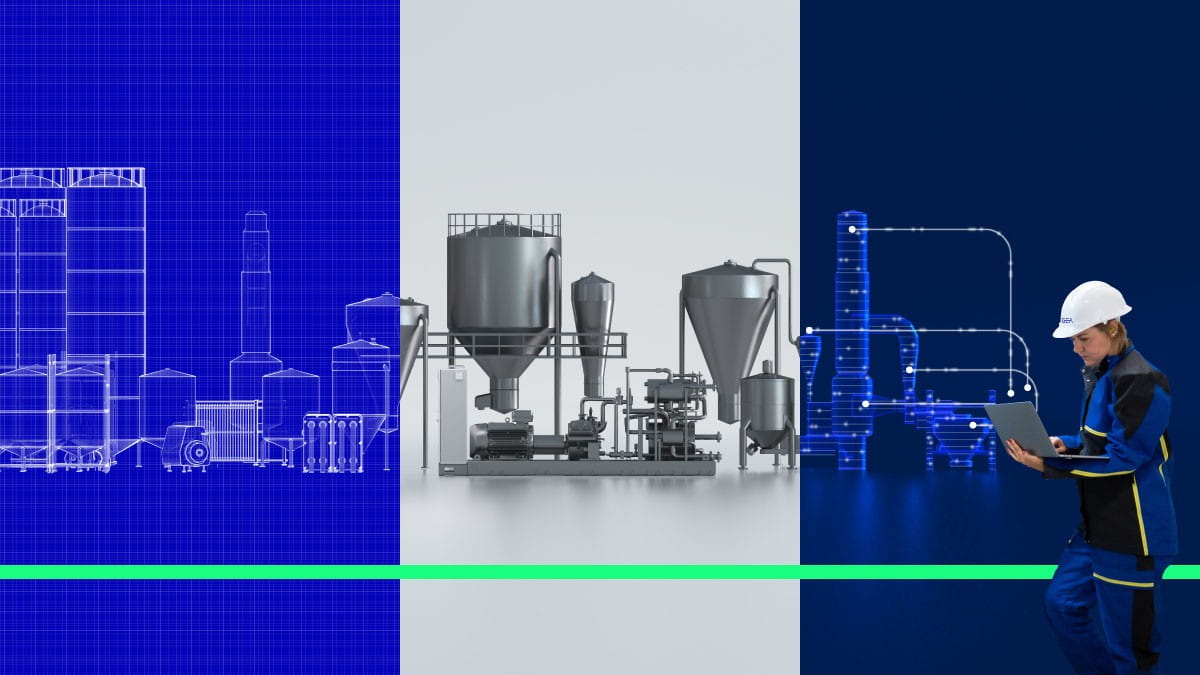
Beyond the machine: unlocking better plant performance
An efficient machine does not automatically make an efficient factory. Real improvement often starts by looking beyond individual equipment and understanding how processes, energy systems and operating decisions affect one another. It’s a holistic approach designed to uncover opportunities that might otherwise be missed.
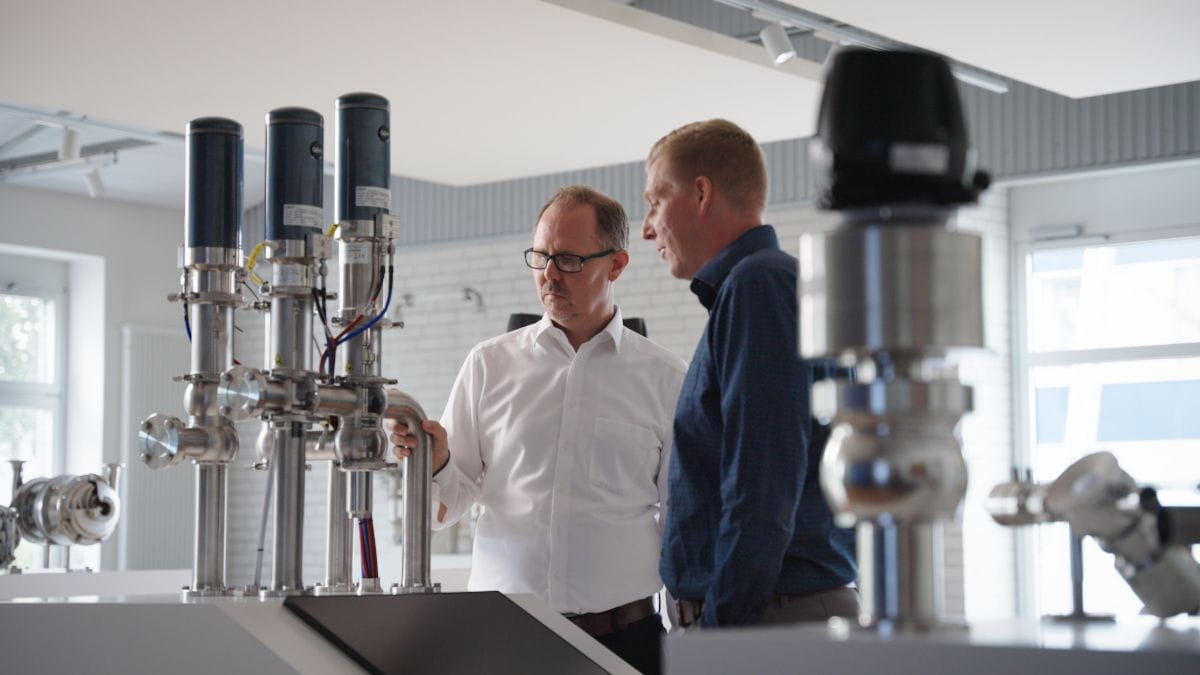
How a valve reshapes the way food and drinks are made
In food and beverage plants, valves are commonly operated using compressed air. GEA Hydract® Actuation Technology moves valves with water instead, in a closed, digitally controlled circuit. The result is a valve that can be held exactly in place and steered in fine-tuned steps. This results in lower energy use and greater control.
