


Historically, because of the random nature of the nucleation process, lyophilization has been difficult to control. For a typical pharmaceutical formulation filled in vials, for example, crystals might form at temperatures ranging from –5 to –20 °C).
As the nucleation temperature has a direct impact on the developing ice structure and crystal size — as well as the appearance of the dried product cake — it can negatively influence the product’s critical quality attributes (CQAs), such as residual moisture or dissolution behavior.
A new patent-pending technology from GEA, which is fully compatible with all our currently available freeze dryers, provides a novel and scalable method to control the nucleation process without having to develop new pharmaceutical formulations.

Process without LYOSPARK®
Simultaneous Crystal Nucleation
LYOSPARK® enables the user to control the temperature at which nucleation crystals form inside the product, thereby ensuring that, at any time, every vial in the chamber is subjected to the same process conditions, irrespective its specific location on the shelf.Combining LYOSPARK® technology with conventional freeze-drying processes is very simple. The vials are loaded into the freeze dryer as usual and cooled to the optimal (product dependent) nucleation temperature. As soon as the nucleation temperature is reached, the chamber is vented with gas from a condenser.
A filter-equipped cooling trap is mounted on the chamber. Ice crystals form on the cooled surface of the trap and are entrained in the gas stream during venting. Inside the supercooled product solution, the ice crystals undergo immediate and homogenous nucleation in each vial.
As the formation of ice crystals at higher temperatures results in larger pores, drying times can be shortened. Furthermore, LYOSPARK® offers better scalability, sterility and higher throughput speeds than conventional systems, resulting in optimized performance and productivity.

Process with LYOSPARK®
Process Optimization
LYOSPARK®, which eliminates issues such as the denaturation of active ingredients or unpredictable scale-up, also provides several technical advantages, including improved product quality, better vial uniformity per batch and a more homogenous, aesthetically pleasing cake.In summary, LYOSPARK® controlled nucleation technology facilitates uniform ice crystal formation in laboratory and production-scale freeze dryers with a minimum degree of supercooling. This is reflected in more consistent and larger ice crystal sizes with a more open product structure. As a result, faster drying and reconstitution times can be achieved.
QbD-compliant, GEA’s LYOSPARK® delivers a more uniform, higher quality product, reduces process times and provides a cost-effective solution to controlled nucleation.
At a glance advantages
- Larger ice crystals
- Shorter drying times
- Better process control
- Better reconstitution
- Less vial cracking
- Less stress on biological agents
- Better looking cake
This cost-efficient technology will be offered as an option for all GEA freeze dryers and will also be available as a retrofit option for existing plant.
Downloads
Powiązane produkty

LYOVAC® Pharma Freeze Dryer
GEA’s LYOVAC® industrial-scale freeze dryers are built to customer specifications and are available with production areas of 1–60 m² and condenser capacities of more than 1000 kg.

LYOVAC® Freeze dryers for small scale production modules
LYOVAC® Freeze dryers for small scale production modules

LYOVAC® Small-Scale Freeze Dryers
Extending its range of LYOVAC™ Freeze Dryers, GEA now offers both integrated and standalone equipment for the production of small-scale batches and formulation or process development.
GEA Insights
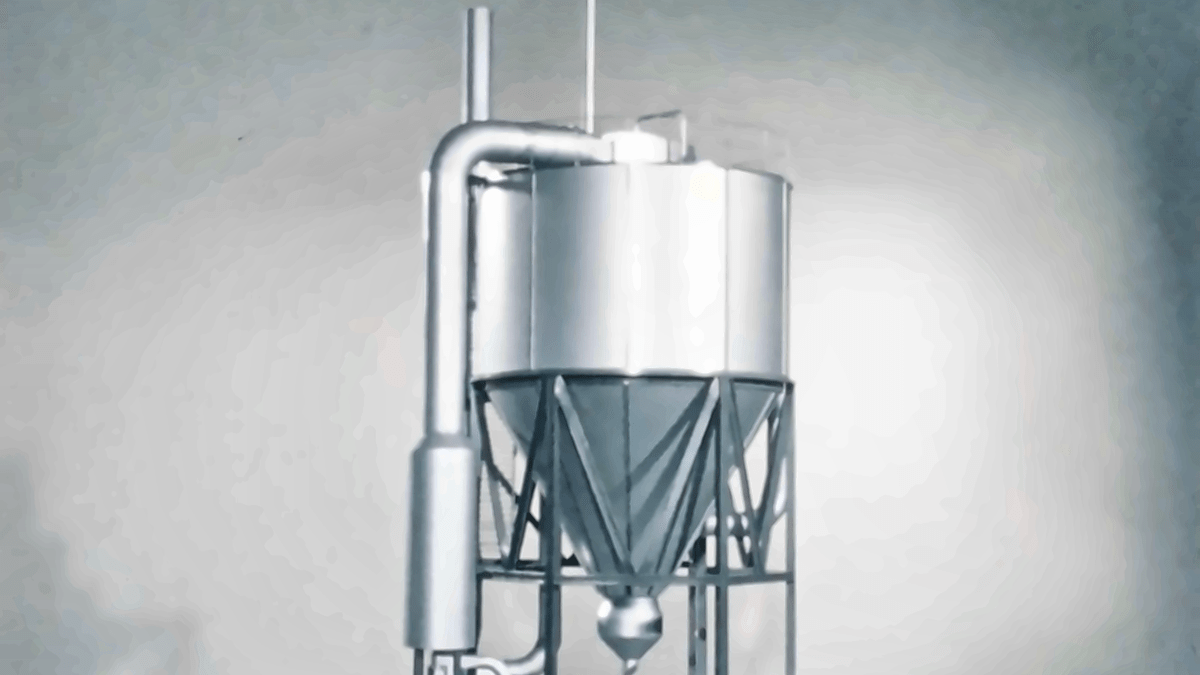
Przełom, który odmienił suszenie rozpyłowe
W 1976 roku inżynierowie NIRO odpowiedzieli na wyzwanie ze strony konkurencji, na nowo definiując możliwości suszenia rozpyłowego. Ich pomysł dał początek wielostopniowej suszarce MSD. Pięćdziesiąt lat później ta sama podstawowa zasada pomaga przekształcać płyny w proszki wykorzystywane na całym świecie do produkcji niezbędnych produktów żywieniowych i ważnych leków. Historia MSD, doskonalonej przez dziesięciolecia dzięki wiedzy inżynieryjnej, doświadczeniom klientów i ciągłemu rozwojowi, to historia innowacji o trwałym znaczeniu.

Więcej niż maszyna: klucz do poprawy wydajności zakładu
Wydajność maszyny nie przekłada się automatycznie na wydajność fabryki. Prawdziwa poprawa często zaczyna się od wyjścia poza ramy poszczególnych urządzeń i zrozumienia, w jaki sposób wzajemnie na siebie oddziałują procesy, systemy energetyczne i decyzje operacyjne. Jest to podejście kompleksowe, mające na celu odkrycie możliwości, które w przeciwnym razie mogłyby zostać przeoczone.

W jaki sposób zawór może wpływać na sposób produkcji żywności i napojów
Zazwyczaj w zakładach produkujących żywność i napoje zawory są uruchamiane za pomocą sprężonego powietrza. Tymczasem w GEA Hydract® Actuation Technology do sterowania zaworami wykorzystuje się wodę w zamkniętym obiegu sterowanym cyfrowo. W rezultacie otrzymujemy zawór, który można precyzyjnie utrzymać w odpowiednim położeniu i sterować nim z dużą dokładnością. Skutkuje to mniejszym zużyciem energii i większą kontrolą.
