Fine-tune your separation results
Our oil refining separators feature the GEA finetuner, a combination between a centripetal pump and a paring tube. It is characterized by a substantially improved efficiency factor compared to conventional centripetal pumps.
This is the ratio of the conversion of rotational energy into pressure. The effect is viscous media such as gums from super degumming installations can be discharged without difficulty. The adjustment of the finetuner diameter can be done by a manual hand wheel or by a pneumatic actuator from the control unit.
Maximum uptime with Integrated Direct Drive from GEA
There are different drive concepts available for our oil refining separators: the conventional gear drive, flat-belt drive with power transmission from the torque-controlled motor to the bowl spindle vial single flat belt, direct drives with the motor directly mounted to the spindle and the newest evolution in drive technology from GEA: integrated direct drives. The integrated direct drive also transfers the motor power directly to the bowl but is integrated into the centrifuge’s housing.
Thus, our separators need up to 35 percent less space and operate much more quietly. The entire technical concept has been simplified and the number and variety of parts reduced. Bowl and motor can both be removed as a single entity reducing the downtime for maintenance considerably. . Our integrated direct drive concept maximizes the availability of our separators making sure your oil mill is working to capacity.
Gentle product treatment for highest yields
The hydrohermetic feed system developed by GEA protects the product from exposure to the high shearing forces, which would break up the gums or soap particles and consequently making separation a lot more difficult. Emulsification is avoided at this point especially during washing and winterisation. The also featured hydrohermetic vapor seal (sealing by liquid) prevents vapors from rising out of the feeding chamber into the lower centripetal pump chamber. This has a positive effect in case of higher separating temperatures (> 90°). Additionally, liquid can be fed into the bowl through a separate bowl flush water channel.
Features & Benefits:
GEA finetuner
- For optimum adjustment of the separating zone
- Flexibility of the separators: a single machine can carry out all refining processes without the need for converting the machine
- For improved operating reliability and no oil losses
Hydrohermetic feed
- Protects the product from exposure to high shearing forces through gentle product feed
- No mechanical seal and therefore no additional cooling water consumption
- No oxygen pick-up
Hydrohermetic vapour seal
- The hydrohermetic seal prevents vapours in the inlet space from causing turbidity in the oil
Bowl flush
- A highly viscous heavy phase can be diluted to improve its flow characteristics
- Also available for use in explosion hazarded surroundings
Integrated direct drive
- Very small footprint
- Fast maintenance and maximum availability
- Reduced energy costs due to direct power transmission
- Fewer wearing parts
- Reduction of noise level
- GEA direct drives meet all explosion proof requirements
Edible oil refining
Edible oil refining consists of a series of different processes to turn crude vegetable or animal oils into edible oil. The quality of the end product depends on the refining process and on crude oil quality. The crude oil is obtained by crushing the beans or seeds, the subsequent refining can be done either chemically or physically. GEA has extensive process line expertise for all the stages that contain centrifugal separators and decanters as well as for the production of high-quality by-products, i.e. lecithin.
Edible oils and fats can be refined chemically or physically. Either way, GEA has extensive expertise for both process types.
Crushing
From feedstock to crude oil
Crushing
During crushing the crude oil is obtained from the original feedstock. Seeds are usually pressed while beans require extraction to separate the oil from the rest. Examples for seed oils are canola and sunflower, a typical oil bean is soy. Pressed oils are clarified in a decanter stage before the gums are removed by water degumming.
Press oil clarification

Press oil clarification
Feedstock: all oil types that are pressed, i.e. rapeseed or sunflower.
What to consider:
- Solids content > 3 Vol.%
- Adding water before entering the decanter improves clarification results, oil quality and yield.
Benefits:
- Fully automatic, no intervention or optimization needed by operator
- Closed process: clean product, clean production
- Very small footprint
- Easy maintenance and service
Water degumming

Water degumming
Feedstock: all oil types, beans or seeds, from pressing or extraction
What to consider:
- Standard process stage in the crushing plant to remove hydratable phospholipids (HP) from the pressed or extracted oil
- The degummed oil is either directly conveyed to refining or has to be dried in a vacuum if it is stored or sold
Benefits:
- Recovery of lecithin possible as an additional valuable by-product
- No tank bottoms in storage tanks
- Less oil losses in the following refining stages
Chemical Refining
Neutralization of the free fatty acidsChemical refining is the traditional method to remove the free fatty acids from the crude oil. Caustic soda is used to neutralize the FFAs chemically. That's why chemical refining is the most efficient method. It reliably removes all FFAs and produces premium quality oil. Compared to physical refining it requires higher investment and is more complex, though.If the chemistry is right...

If the chemistry is right..
... free fatty acids don't stand a chance. The caustic soda added to the crude oil reacts with the FFAs to form sodium soaps. Centrifugal separators then remove the soaps from the crude oil. The neutral oil is subsequently bleached and deodorized. This method can be used for reliably refining virtually all crude oils, including oils of low quality, with the exception of castor oil.
Neutralization

In chemical refining caustic soda is used to neutralize free fatty acids.
The standard neutralization process is called exactly this, Standard Neutralization. It is the most common method to neutralize pre-degummed oils or oils with only a low phosphatide content.
Feedstock: Virtually all oils, including and especially low quality oils, except castor oil.
What to consider:
- In order to condition the NHPs (non-hydratable phosphatides), a small quantity of concentrated phosphoric acid is added and intensively mixed with the oil. Only then neutralization takes place by adding caustic soda.
- Crude oils with a relatively high phosphatide content require a reaction tank after mixing, oils with lower phosphatide contents can be conveyed directly to the first separator that removes the sodium soaps.
- After the first separator stage the residual soap content in the neutralized oil is still too high for subsequent process stages. So a washing stage is required, in most cases one stage will suffice.
- Cottonseed oil is the only exception here: in order to eliminate most of the gossypol we recommend a second caustic treatment. Cottonseed oil should always be neutralized in 3-stage installations.
Benefits:
- Most reliable process, also and especially for low-quality oils
- Better oil quality than with physical refining
- All oils except castor oil can be processed
Cold refining

Cold refining
Feedstock: for oils that contain waxes and have relatively low FFA contents, e.g. sunflower oil
What to consider
- The oil's residence time in the crystallizers is several hours
- Before removing the soapstock in the separator the crude oil has to be gently heated to reduce viscosity
- Also in cold refining an additional washing stage is required
Benefits:
- Effective removal of FFAs and waxes
- Compact installation
Soapstock splitting

Soapstock splitting
In physical refining the free fatty acids are removed by distillation in one stage during deodorizing. This method requires lower investment and is simpler in installation and operation compared to chemical refining. However, crude oils that are refined physically have to be degummed as far as possible because residual gums affect the oil quality during the extensive heat treatment in distillation. For some oil qualities this is only possible to a limited extend. Other oils, i.e. cottonseed or fish oil, are fundamentally not suitable for physical refining.
The crude oils from the crushing plants still contain high amounts of phospholipids. They have to be removed as they harm the oil's storage stability as well as further processing. Some phospholipids can be hydrated (HP), some cannot (NHP). Most of the HPs have already been removed during water degumming. Thus, the degumming stage in physical refining attends to the NHPs. There are myriad of possibilities to engineer a degumming stage, the actual realization usually depends on customer preferences and oil type and quality respectively. In general, we recommend either TOP or cold degumming (aka dewaxing). Why? Read on, please.
Let's get the gums out

Physical refining
The crude oils from the crushing planst still contain high amounts of phospholipids. They have to be removed as they harm the oil's storage stability as well as further processing. Some phospholipids can be hydrated (HP), some cannot (NHP). Most of the HPs have already been removed during water degumming. Thus, the degumming stage in physical refining attends to the NHPs. There are myriad of possibilities to engineer a degumming stage, the actual realization usually depends on customer preferences and oil type and quality respectively. In general, we recommend either TOP or cold degumming (aka dewaxing). Why? Read on, please.
TOP degumming

TOP degumming
What is so top about TOP degumming is that it is the only degumming method without waste water.
Feedstock: all oil types that do not contain waxes
What to consider:
Have we mentioned that this is the only degumming method that does not produce waste water? Well, it does incur of course, at least to some extend, but we have set up the process in such a way that the water is constantly recycled.
Benefits:
- No waste water
- No dealing with waste water high on BOD and COD
- Extremely short retention times of only 6 minutes which is perfect for anyone who processes different raw materials
- Oil losses are extremely low or oil yields are very high - depends on how you prefer to look at it
- HPs and NHPs are reliably and effectively removed
- Small footprint - you don't need lots of space to profit from all those benefits
Cold degumming
Cold degumming
Feedstock: for oils that contain waxes: sunflower, olive pomace or corn oil
What to consider:
You can also opt for dry dewaxing, a process that goes without centrifuges. In return you get higher product losses and filter aids. And with them the constant dealing, purchasing and disposal of the same. So either way, you have to invest. The question is only into what.
Benefits:
- Reliable and effective removals of HPs, NHPs and waxes
- No filter aids: no purchasing, no dealing with, no disposal of

Working principle of RSI separator with finetuner and integrated direct drive

Edible oil refining separator series RSI and RSE
Resource efficient solution
The GEA Advanced Water Supply optimization concept is an example of how further savings potential can be unlocked at any point within the process chain. In this case, it is the smart reduction of the consumption of cooling and operating water without any negative impact on performance.
With optimized control matched to the technical conditions, it is possible to optimize the consumption of operating water for a self-cleaning centrifuge as well as the cooling water for the hood, the solids catcher and in case of the RSIs the drive, resulting in water savings of minimum 48%.
*The Add Better label relates to the serial product Edible Oil Refining Separator RSI, released in November 2024, as well as to the serial product Edible Oil Refining Separator RSE, released in December 2025.
The comparison refers to its predecessor model, the RSI and RSE series without GEA Advanced Water Supply.
Downloads
関連製品

分離デカンタによる食用油の精製
製油プロセスでは、分離デカンタをプレス油浄化に使用します。葉状ろ過器を使用する従来のホットシードプレスプラントに比べて、デカンタを使用すると、本プロセスのセットアップがはるかに簡単になります。

Automation & Controls Separation
Even the best centrifuges cannot function optimally if they are not partnered with control systems of equal quality. For their range of separators and decanters, GEA offers standardized as well as tailor-made solutions for machine automation with many features to meet customer requirements.
サービス製品

GEA遠心分離機/油清浄機用のリモートFAT(工場受入試験)
現在の旅行制限、非常にきついスケジュール、またはその他の緊急の理由により、お客様の遠心分離機/油清浄機のFAT(工場受入試験)を現場で行うことは可能でしょうか?お客様は通常、ビジネスプロセスをさらにデジタル化し、費用と時間を持続的に削減する方法を探していますか?ここでも、当社はお客様が慣れ親しんでいるプロ品質を提供するお客様の味方であり、完全に包括的なデジタルFATをお客様にご提供しています。

GEA EffiClean
EffiClean disk cleaning for centrifuges in mineral oil applications

GEA遠心分離機の国際修理ワークショップ
世界中に17カ所の認定修理工場ネットワークを持つGEAのサービスエキスパートが、機器保守、サポート、予備品でお客様をサポートします。
関連のある動画
Direct drive. Direct Impact. Separators with exchangeable direct drives.
GEA Pre2Fuel - The better HVO pretreatment
Let’s get connected – digital solutions for GEA centrifuges
GEAインサイト
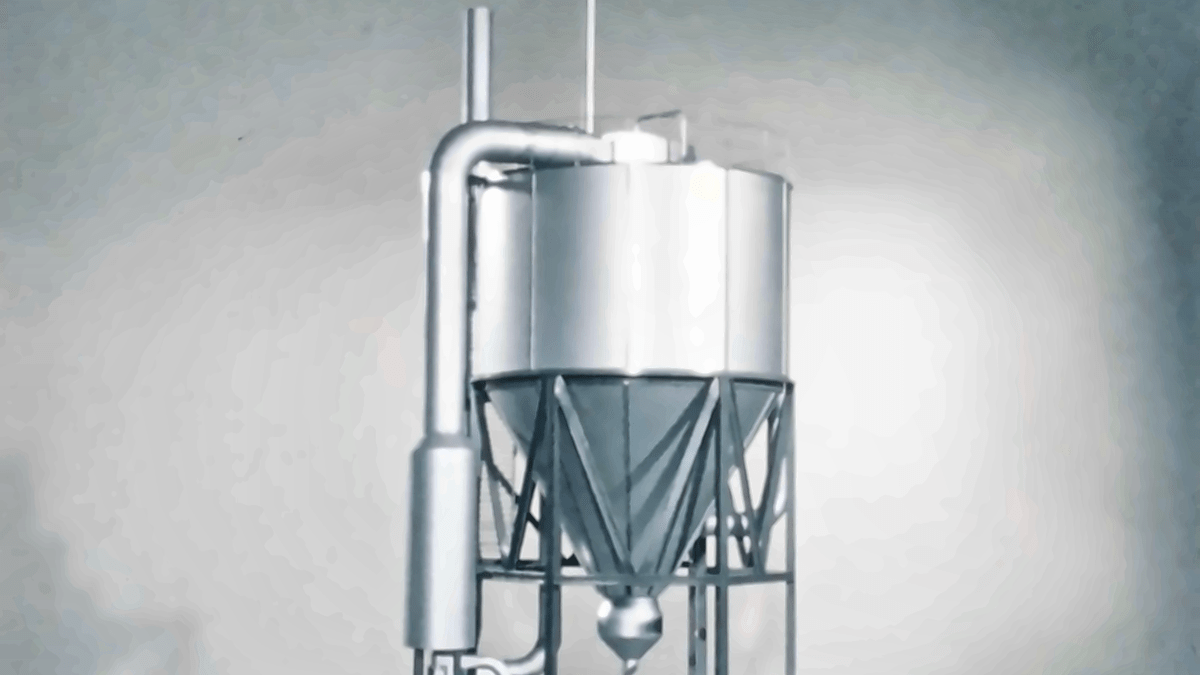
The breakthrough that changed spray drying
In 1976, NIRO engineers responded to a competitive challenge by rethinking what spray drying could do. Their idea became the multi-stage dryer MSD. Fifty years later, the same fundamental principle helps turn liquids into the powders used in essential nutrition products and important medicines around the world. Refined through decades of engineering expertise, customer insight and continuous development, MSD is a story of innovation with lasting impact.