
You can spot the first clue from the parking lot
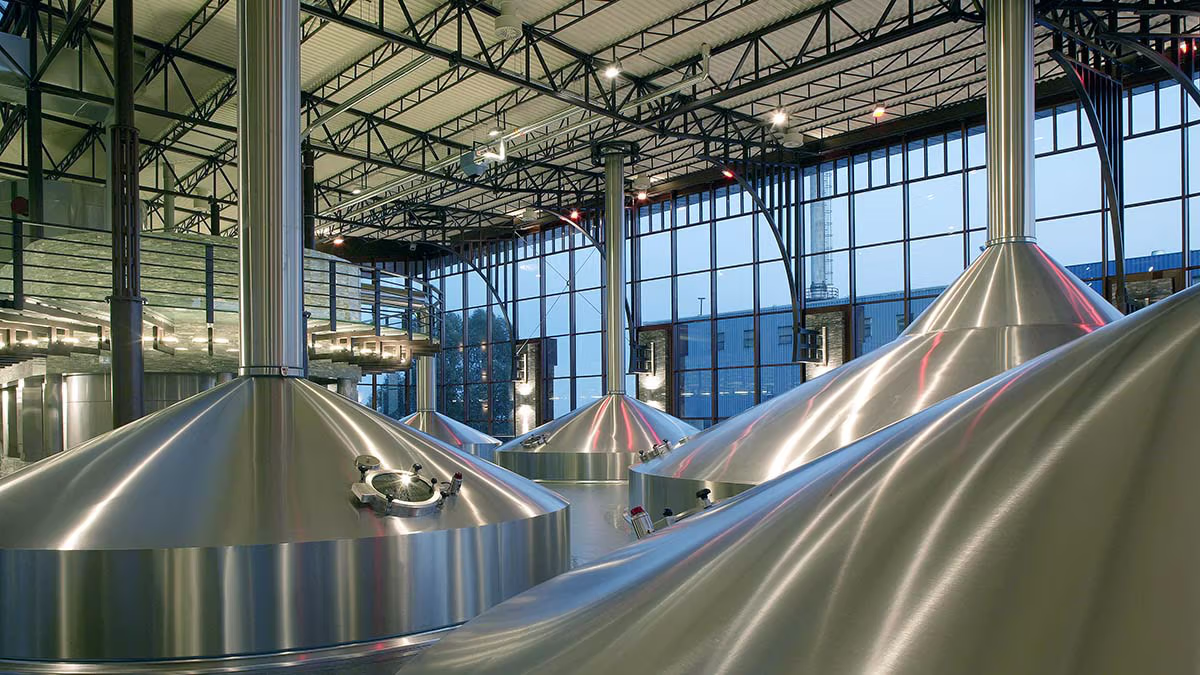
Julius Jung, Global Technical Sustainability Manager at GEA, can often detect something is off, even before setting foot in a brewery. A master brewer by training, he spent ten years commissioning projects around the world; today he examines existing plants. Sometimes a glance at the roof is enough. If large plumes of steam can be seen rising even though a system is supposed to recover the heat, he takes a closer look.
“That’s not necessarily a diagnosis,” he says. “But it can alter my original plans for the day.” What’s remarkable here: The brewery hasn’t reported a problem. The beer is good, the plant is running, the utility bill gets paid. And still something is escaping up there that took effort to produce.
Everyone knows the cost. Where the energy goes, not so much.
Most breweries know how much gas they use in a year. The meter on the main line shows precise amount. “But where the energy goes in detail is often less clear,” says Jung. The total doesn’t reveal which process uses how much gas, or where heat is lost.
“The question goes beyond how much energy is available, but when and for what it can be used.”

Dr. Isabel Osterroth
Senior Director Add Better Consulting & Nexus, GEA
Small inefficiencies show how quickly costs add up. During brewing, the mash – a mixture of milled malt and water – is heated step by step to precisely defined temperatures. If the first step is even one to two degrees too low, the mash has to be heated further. In a single brew, the term for one brewing run, this seems insignificant. Yet, a simple calculation by GEA shows the order of magnitude: If a brew of 500 hectoliters (50,000 liters) has to be reheated by 1.5 degrees, that takes about 80 kilowatt-hours of additional heat. With 60 brews a week and 50 production weeks a year, that adds up to roughly 240,000 kilowatt-hours, enough to heat around 15 large homes for a year. Depending on the energy source and its price, that comes to five-figure sums.
Dr. Isabel Osterroth, Senior Director Add Better Consulting & Nexus at GEA, sees another difficulty: timing. A brewery can give off heat in one place while needing heat in another. That sounds like an easy fix, but it gets tricky when the two happen at different times. “The question goes beyond how much energy is available, but when and for what it can be used,” explains Osterroth.
A procedure that ran for 30 years – unquestioned
A brewery in the Asia-Pacific region shows what this looks like in practice. After boiling, the hot wort has to be cooled down. To do that, the brewery chilled water to a low temperature. As it cooled the wort, the water warmed up but did not reach the temperature needed for brewing. Steam therefore had to be used to raise its temperature to around 80 degrees Celsius.
Expensive cooling, then expensive heating. In the same plant, in the same cycle. This procedure had been in place for about 30 years. It apparently never raised a flag, because the beer came out of the tank the way it should. Jung puts it this way: “The plant ran the same way for decades, and that was exactly the problem.”
“The fact that something works every day doesn’t mean it works well every day.”

Julius Jung
Global Technical Sustainability Manager, GEA
The solution did not require major new equipment; small adjustments to the existing plant and its controls were enough. Since then, the brewery has made better use of the energy already available and avoids unnecessary consumption.
“Running normally” is not the same as “running well”
You might ask why those who work at these plants every day fail to notice these inefficiencies? Simply because the process works. Jung has an explanation everyone will recognize: “When a temperature is consistently a little too low and then is topped up with heat, you get used to it. At some point, the deviation is considered normal.”
According to Jung, this one decision – changing nothing as long as the product is right – is responsible for holding operations back more than any other. “It’s understandable. Nobody wants to jeopardize a running production,” he says. But good beer is deceptive proof. “The fact that something works every day doesn’t mean it works well every day.”
A clever stand-alone decision can be the wrong one
“Optimizing every investment on its own sounds like prudent management. But the best solution for an individual system can limit the options of the entire operation,” says Osterroth.
“If you replace a heating system today, you should think about whether waste heat from cooling might be available tomorrow. Otherwise, you buy something that works superbly on its own but stands in the way of the next sensible step.” Wherever something is cooled, heat has to be removed, just like what happens at the back of our kitchen refrigerators. This scenario is one many people experience every day, perhaps without knowing.
Reviewing the entire plant begins with three questions: Do the temperatures match? Is the heat needed at the same time? And what would have to change in operations to make that work? From this, a roadmap is developed, charting priorities and the path to lower CO₂.
That doesn’t discount a major overhaul; new equipment and comprehensive modernizations can make sense technically and economically. However, the sequence of updates then becomes key.
Together, Jung and Osterroth identify where energy is lost in day-to-day operations and how individual measures fit into the plant as a whole.
Heating, cooling and process expertise at one table
That such losses can be found has to do with who is on the team. On many projects, specialists in heating and cooling work separately from the process experts – the ones who know the brewhouse and bottling. In the GEA approach, they sit at the same table.
This pays off – quite literally – because substantial savings potential in plants often lies exactly where heating and cooling meet. A heat pump, for example, works like a refrigerator in reverse. It can raise lukewarm waste heat from the refrigeration plant to a usable temperature level. Whether that makes sense, however, only someone who also understands the process can say. They know where hot water is produced in the plant; how hot it is; and where which temperature is needed so that quality and performance are maintained.
Looking beyond brewing offers further insights. At Arla’s milk powder plant in Denmark, one GEA heat pump system serves two needs often considered separately: heat for drying and cooling for the plant. Gas consumption for heating the drying air fell by 59 percent. GEA also combines process and energy expertise in projects for Britvic in London and innocent in Rotterdam.
For Osterroth, energy savings are one part of the assessment. “We look at the triad of sustainability, performance and quality.” For a brewery, any measure must also protect the beer’s taste and the plant’s performance.
Getting the best out of plants under real-world conditions
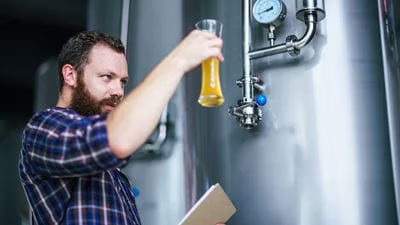
In an existing brewery, optimization must often contend with limited space, different control systems and the need for uninterrupted production. Three criteria matter here:
- Sustainability: Does the solution reduce energy usage?
- Performance: Does the plant still deliver the required output?
- Quality: Is product quality maintained?
Those who listen find out more
GEA experts come from the outside. So, why should people who have known their plant for decades listen to them? Jung turns the question around: “First, we have to listen to them.”
Everyone in the plant sees a different part of the picture. Someone notices that hot water is disappearing down the drain every day. Someone else knows that a temperature regularly deviates from its setpoint. Such observations, Jung says, are extremely valuable.
For Osterroth, skepticism is not an obstacle but valuable input for planning. People who have run a plant for years often know exactly where change will be difficult. That is why our experts involve customer technical teams early. “A critical objection can lead to a better solution,” she says.
The first step is smaller than you think
Taking a critical look at one’s plant doesn’t mean having to buy anything. Jung recommends operators talk to the people who work with the equipment every day; listen to what they notice; and check whether the available data really explains what is happening in the plant.
Osterroth adds the longer-term perspective: Define where the operation needs to be and derive manageable steps from that goal. The result is a prioritized roadmap that shows which improvements are technically feasible, what they require and in what order they should be implemented.
Then the steam over the roof may be just the first clue – not a verdict on the brewery, but a reason to take a closer look.
GEA efficiency experts for breweries
 Dr. Isabel Osterroth is Senior Director Add Better Consulting & Nexus at GEA. She leads the service and helps companies worldwide translate sustainability goals into economically viable strategies and realistic investment steps.
 Julius Jung is Global Technical Sustainability Manager at GEA. The master brewer spent ten years on commissioning projects around the world. Today he examines existing plants, carries out energy audits and develops step-by-step modernization concepts with breweries.
Go deeper at BrauBeviale
In a workshop entitled “Where does your energy really go?”, Dr. Isabel Osterroth and Julius Jung use real brewery examples to show how to identify and assess savings potential and turn it into a concrete roadmap for your operation.
Nov. 11, 2026, 3:30–5:00 p.m., Focus Corner, Hall 9, Booth 9-626.
Register: BrauBeviale | Supporting program
Is there still room for improvement in your brewery?
