

Combining efficiency with resource savings
Imagine adding value to your utilities savings and contributing to a more sustainable world. Only by choosing a GEA homogenizer.
GEA ReFlow recirculates the process water used by high-pressure homogenizers to cool and lubricate plungers. This reduces significantly the amount of treated process water or potable city water used. The unit can operate independently using its built-in control system, exchanging signals with the homogenizer and the associated process, or it can be fully integrated by incorporating the provided functional description into the process control system.
Key features and benefits
Resource-efficient
- Water flows back into the system for filtration instead of being wasted
- Up to 95% water savings and recirculation for all homogenizers*
- Recirculating water is compliant to safe water regulations
- Conductivity sensors to detect product leaks into the plungers cooling water
- Heat exchanger to remove heat from plungers and circulation pump
Safe and flexible
- Robust ceramic membrane to remove all bacteria and nearly all viruses, proteins and enzymes
- Flow meter to set required plunger cooling flow
- Backflushing possible
- Manual-CIP and Auto-CIP (Cleaning In Place)
- Sanitization at 100°
- Suitable for all homogenizers as well as a retrofit option
Water savings
| Without ReFlow [l/h] | With ReFlow [l/h] | |
|---|---|---|
| Water used for cooling and lubricating plungers | 200 | ~0** |
See how the GEA ReFlow works
Resource-efficient configuration for homogenizers
GEA ReFlow is part of the resource-efficient configuration for homogenizers. Learn more >>
*When compared to homogenizers without ReFlow.
**Actual water savings depend on the homogenizer model and specific application.
Prodotti correlati

AirFlow Water-Saving Unit for Oil Cooling
GEA AirFlow is the water-saving device for homogenizers that cools the oil in the transmission body and gearbox using air instead of traditional water‑based methods.

PureFlow Oil Purification Unit
GEA PureFlow is the bypass oil-filtering unit for homogenizers that guarantees continuous oil regeneration by removing particles, water and corrosive gases.

Omogeneizzatori della Serie Ariete
Le macchine Ariete sono la tecnologia all'avanguardia per omogeneizzatori ad alta pressione potenti e affidabili e per soluzioni personalizzate.
Approfondimenti GEA
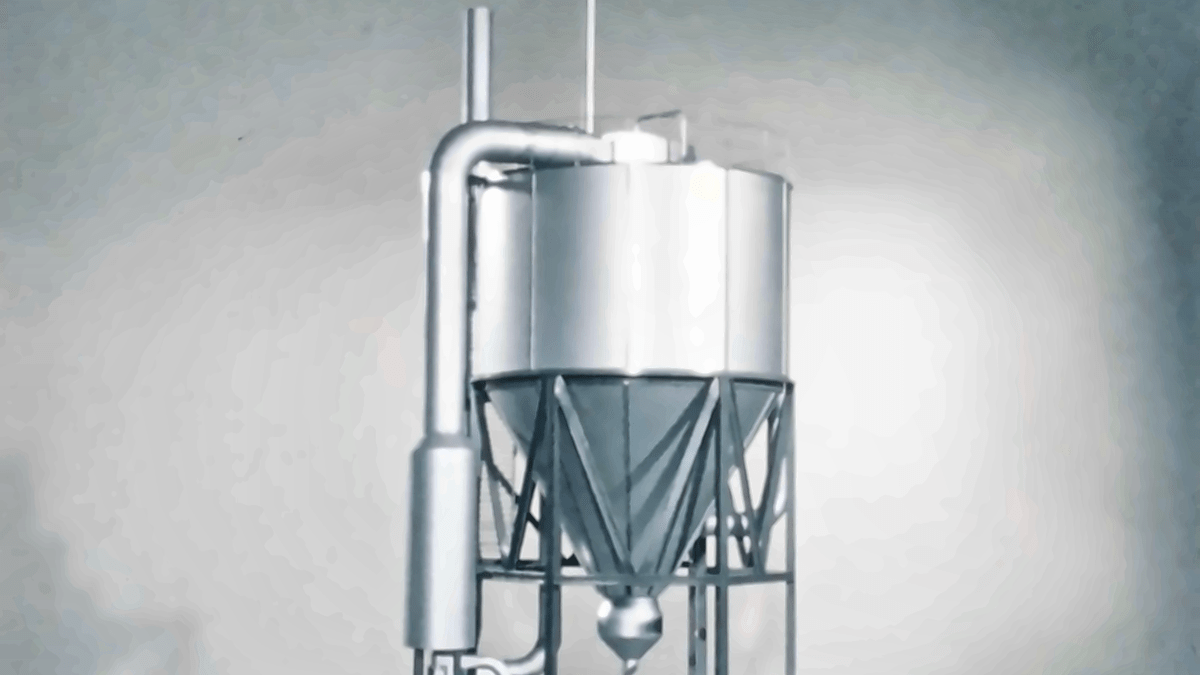
The breakthrough that changed spray drying
In 1976, NIRO engineers responded to a competitive challenge by rethinking what spray drying could do. Their idea became the multi-stage dryer MSD. Fifty years later, the same fundamental principle helps turn liquids into the powders used in essential nutrition products and important medicines around the world. Refined through decades of engineering expertise, customer insight and continuous development, MSD is a story of innovation with lasting impact.
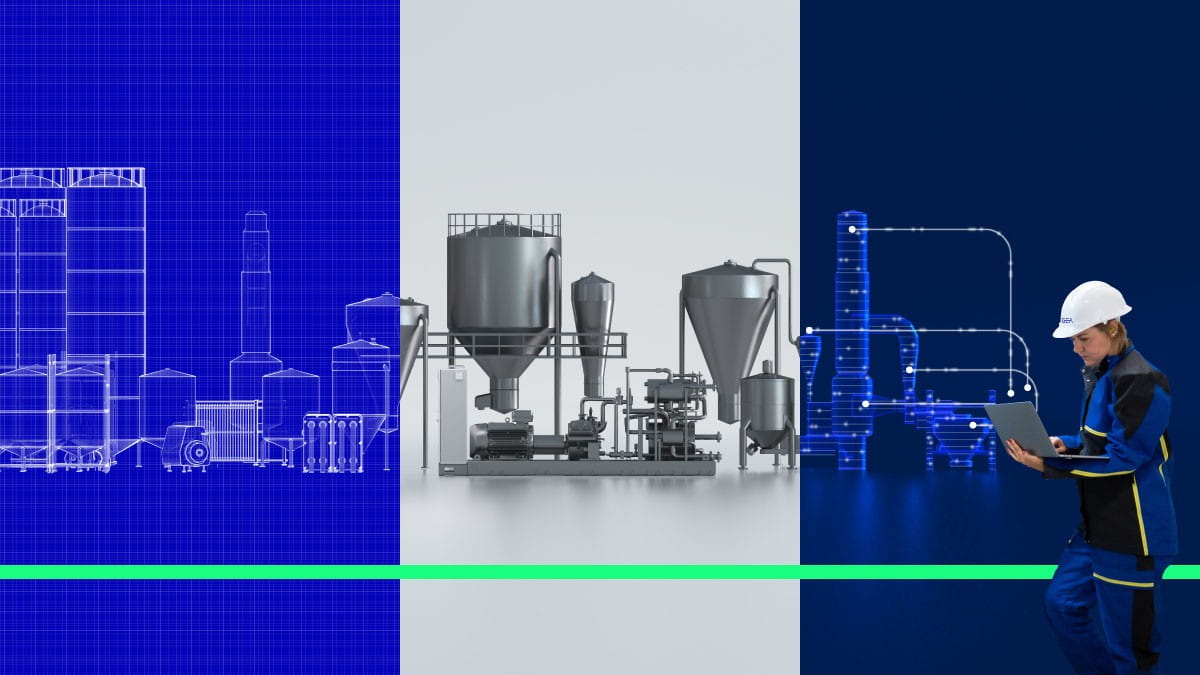
Oltre le macchine: come migliorare le prestazioni dell’impianto
Una macchina efficiente non garantisce automaticamente l'efficienza di uno stabilimento. Il vero miglioramento spesso inizia guardando oltre le singole attrezzature e comprendendo come i processi, i sistemi energetici e le decisioni operative si influenzino a vicenda. Si tratta di un approccio olistico pensato per individuare opportunità che altrimenti potrebbero sfuggire.
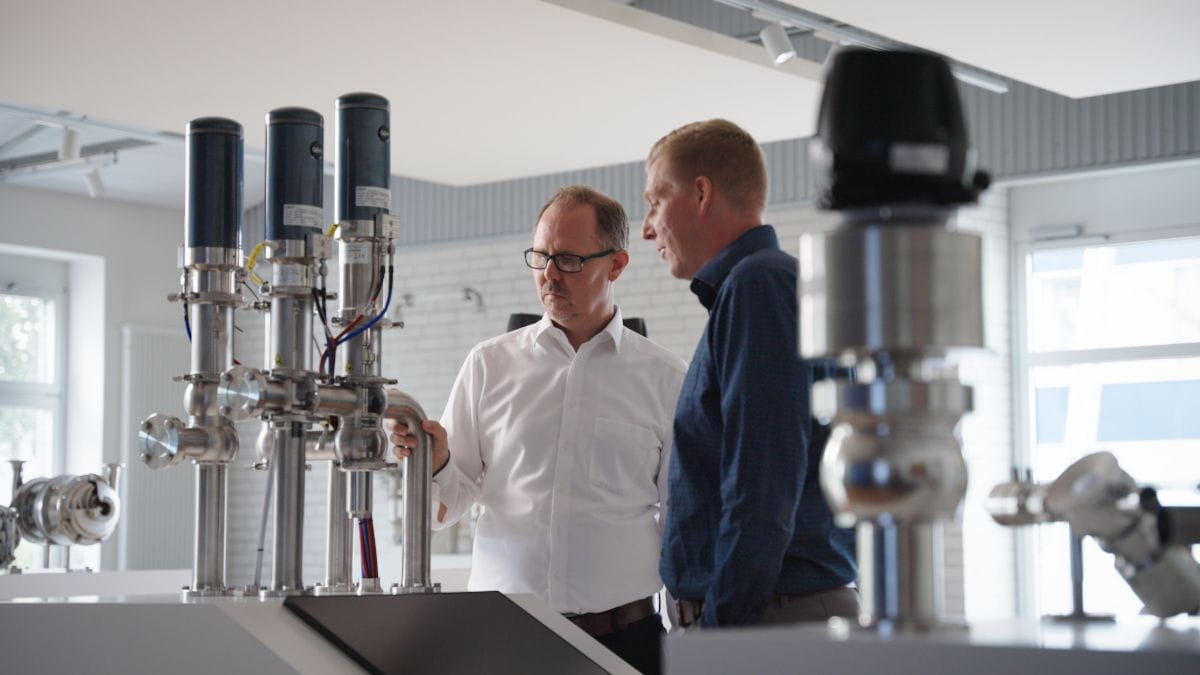
Come una valvola rivoluziona la produzione di alimenti e bevande
Negli impianti di produzione di alimenti e bevande, le valvole vengono solitamente azionate tramite aria compressa. GEA Hydract® Actuation Technology utilizza l'acqua all'interno di un circuito chiuso e controllato digitalmente. Il risultato è una valvola che può essere mantenuta esattamente in posizione e regolata con per piccoli incrementi con grande precisione. Ciò si traduce in un minor consumo energetico e in un maggiore controllo.
