
GEA is, among others, a single-source supplier of cost effective, energy efficient and reliable wastewater evaporator systems, based on using spray drying evaporation.
Drying of salt and solid-containing effluents from various industrial processes, including wastewater streams from wet type FGD (flue-gas desulfurization), is efficiently enabled using the well-proven GEA spray drying technology and proprietary equipment. The heat of the hot flue gas from the industrial process is used to evaporate the water in the effluent, leaving a dry powder to be collected in a downstream filter with no liquid effluent discharge at all.
Spray drying is a mature technology that was developed over a century ago. GEA has successfully delivered installations worldwide across many different spray drying applications in the power, waste to energy, sinter & metallurgical and glass industries — to name some.
Key features
- Mature and well-proven technology.
- Unmatched rotary atomizer.
- Excellent performance and with outstanding distribution of droplets' size.
- Flexible process.
- The heat source for effluent evaporation can be hot flue gas or pre-heated combustion air.
- Dried salts and solids can be collected either in an optional particular filter or in the main dust collector.
- Can be adapted for large variations of hot gas temperatures and ash load.
- Full ranges of atomizer sizes for different effluent capacities.
- System simplicity. Carbon steel construction with high degree of local supply.
Working Principle
Working Principle of Spray Drying Evaporation
The GEA spray drying evaporation process is highly efficient yet very simple, as it basically consists of the spray dryer evaporator module and a down-stream filter.
A slipstream of hot flue gas is fed into a spray-drying chamber where it immediately comes in contact with a fine spray from atomization of the discharged scrubber liquid of a wet FGD (WFGD) system.
There is a precise control of the gas distribution, the WFGD scrubber liquid flow rate and droplet size to ensure that all droplets are converted into a fine dry powder.
The flue gas further flows into an optional dust collector or the main filter where any remaining suspended solids are removed. The filtered flue gases are then fed to the wet FGD for acid gases removal.
Downloads

Approfondimenti GEA
The breakthrough that changed spray drying
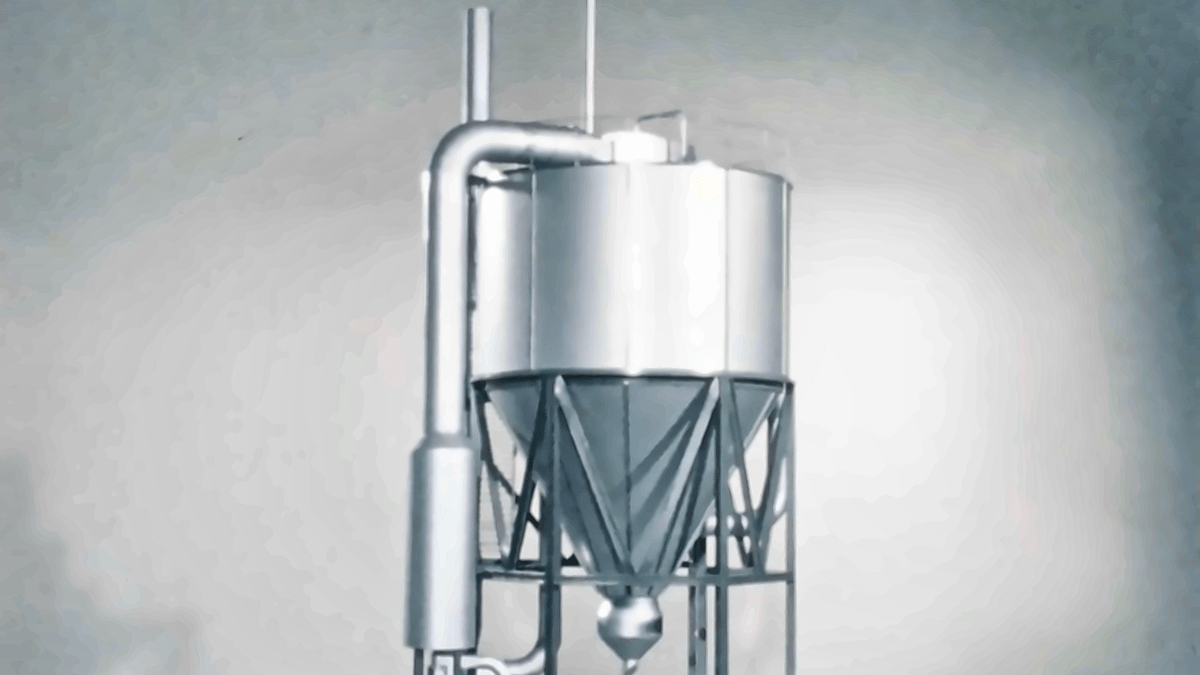
In 1976, NIRO engineers responded to a competitive challenge by rethinking what spray drying could do. Their idea became the multi-stage dryer MSD. Fifty years later, the same fundamental principle helps turn liquids into the powders used in essential nutrition products and important medicines around the world. Refined through decades of engineering expertise, customer insight and continuous development, MSD is a story of innovation with lasting impact.

Oltre le macchine: come migliorare le prestazioni dell’impianto
Una macchina efficiente non garantisce automaticamente l'efficienza di uno stabilimento. Il vero miglioramento spesso inizia guardando oltre le singole attrezzature e comprendendo come i processi, i sistemi energetici e le decisioni operative si influenzino a vicenda. Si tratta di un approccio olistico pensato per individuare opportunità che altrimenti potrebbero sfuggire.

Come una valvola rivoluziona la produzione di alimenti e bevande
Negli impianti di produzione di alimenti e bevande, le valvole vengono solitamente azionate tramite aria compressa. GEA Hydract® Actuation Technology utilizza l'acqua all'interno di un circuito chiuso e controllato digitalmente. Il risultato è una valvola che può essere mantenuta esattamente in posizione e regolata con per piccoli incrementi con grande precisione. Ciò si traduce in un minor consumo energetico e in un maggiore controllo.
