

NICA Spheronizer Process
The NICA Spheronizer consists of a horizontal spinning wheel with a special friction pattern machined on its top surface; it rotates within a cylindrical bowl. Spaghetti-like extrudates are batched and dropped onto the spinning wheel where they are fractured into short lengths. Interactions between the spinning wheel, the wall and the pellets themselves cause the extrudate to be worked into spheres.
Operating Principles
The size distribution and surface characteristics of the spheres are controlled by the batch size, speed, process time and, most importantly, by the characteristics of the extruded mass. The NICA Spheronizer has a patented 'smooth edge' on the friction wheel to eliminate 'milling' of the developing pellets, ensuring a narrow size distribution. Different friction wheel patterns can be interchanged to suit particular requirements. For continuous production, multiple units can be combined with appropriate up and downstream equipment to form an extremely compact and flexible package (such as the NICA IPS range of integrated pelletizing systems).
NICA Range
NICA Spheronizers are available in three sizes: S250, S450 and S700. The NICA S250 is only available as part of the integrated IPS5 system, a process module available exclusively with the GEA PharmaConnect® product. The S450 is available as a standalone machine and, with a batch capacity of 2 kg, is suitable for both product development and small-scale production purposes. The S450 is often integrated with a NICA E140 Extruder to form the IPS25 and IPS50 machines.
The S700 Spheronizer has a typical product capacity of up to 10 kg, providing high throughput capabilities when linked to the NICA E220 Extruder in the form of the IPS100 and IPS200 machines. All units feature variable speed inverter drives and the S450 and S700 are both fitted with pneumatic discharge as standard, allowing remote operation and plant integration.
Features
- Patented 'smooth edge' wheel design
- Low attrition for maximum yield
- Reduced spheronization time
- Interchangeable friction discs for process optimisation
- Easy operation: both operator safety and ease of cleaning
- Air purge conditioning of the product
- Air extraction connection
- Pneumatic discharge valve
- Electronic speed control.
Options
- Interchangeable friction wheel patterns
- Jacketing systems for temperature control.
Typical Capabilities
| 0S25 | S450 | S700 |
| 0.1–0.5 kg | 0.4–2.0 kg | 2–10 kg |
Downloads
Prodotti correlati

NICA Extruder System
The NICA Extruder is a low shear extruder that has been designed to offer low temperature handling of even the most sensitive products.

NICA Integrated Pelletizing Systems
Developed specifically for the Pharmaceutical industry, the NICA Integrated Pelletizing Systems (IPS) fuses NICA Extrusion and Spheronization technologies to create a range of compact, continuous systems for the production of spherical pellets.
Approfondimenti GEA
La svolta che ha rivoluzionato lo spray drying
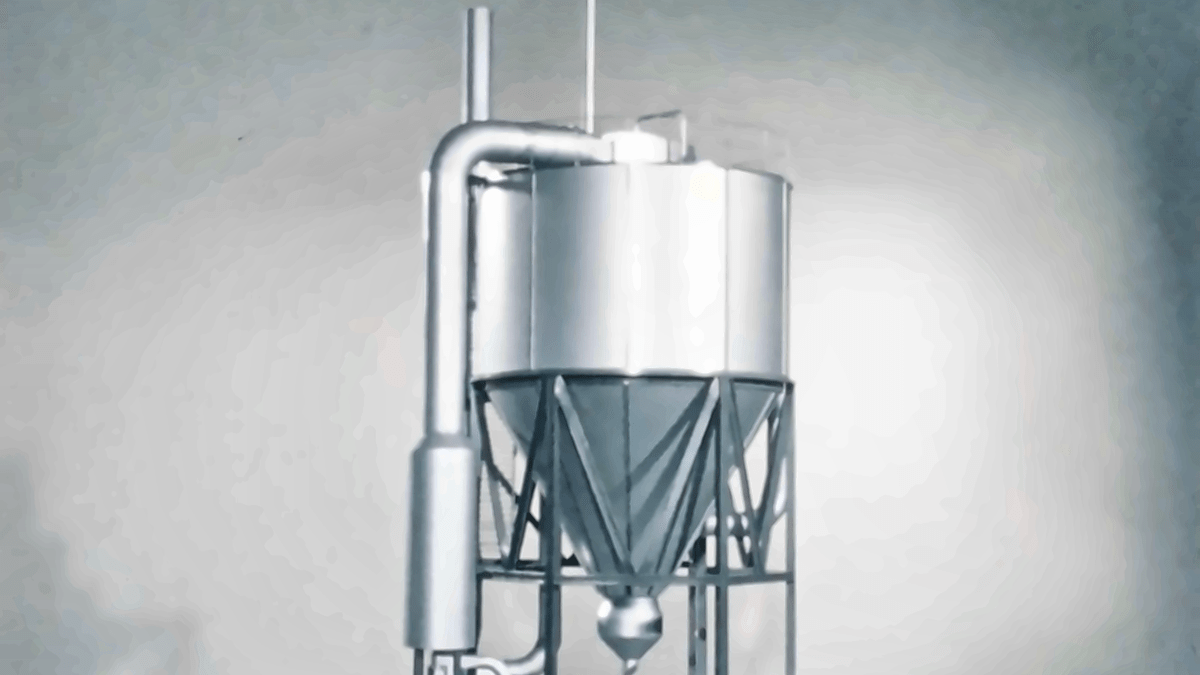
Nel 1976, gli ingegneri di NIRO risposero a una sfida della concorrenza ripensando radicalmente le potenzialità dello spray drying. Da questa intuizione nacque l'essiccatore multistadio MSD. Cinquant'anni dopo, lo stesso principio fondamentale contribuisce a trasformare i liquidi nelle polveri utilizzate in prodotti nutrizionali essenziali e in importanti farmaci in tutto il mondo. Perfezionato grazie a decenni di competenza ingegneristica, attenzione alle esigenze dei clienti e sviluppo continuo, l'MSD rappresenta una storia di innovazione dall'impatto duraturo.

Oltre le macchine: come migliorare le prestazioni dell’impianto
Una macchina efficiente non garantisce automaticamente l'efficienza di uno stabilimento. Il vero miglioramento spesso inizia guardando oltre le singole attrezzature e comprendendo come i processi, i sistemi energetici e le decisioni operative si influenzino a vicenda. Si tratta di un approccio olistico pensato per individuare opportunità che altrimenti potrebbero sfuggire.

Come una valvola rivoluziona la produzione di alimenti e bevande
Negli impianti di produzione di alimenti e bevande, le valvole vengono solitamente azionate tramite aria compressa. GEA Hydract® Actuation Technology utilizza l'acqua all'interno di un circuito chiuso e controllato digitalmente. Il risultato è una valvola che può essere mantenuta esattamente in posizione e regolata con per piccoli incrementi con grande precisione. Ciò si traduce in un minor consumo energetico e in un maggiore controllo.
