
The patented innovation comprises a sensor that provides a constant reading (compared with a baseline) of any product exposure at the sampling point. Adjustable to suit a specific particle size distribution if required, the information is relayed to a control system that initiates an alarm or corrective action if out-of-specification data is received.
Modern pharmaceutical equipment is designed to operate in a completely dust-tight manner; but, it’s absolutely critical to be fully prepared for worst-case scenarios, such as an unexpected containment breach. As the level of potentially dangerous airborne particles is often far below what can be seen with the naked eye, the Digital Canary is designed to be a fully integrated and reassuring part of your production line.
When the sensor detects powder levels that are above the allowed limit, a warning is sent to the operators. This enables them to leave the contaminated area as soon as possible. Once the concentration of airborne particles has returned to an acceptable level, the system will inform the operators.
Compatible with a wide range of new and existing solid dosage applications, the Digital Canary reduces the need for industrial hygiene testing. It also provides an audit trail in terms of cross-contamination risk and regulatory compliance, and acts as a trigger for preventive maintenance — potentially reducing the need for secondary personal protection equipment (PPE) — by offering real-time containment monitoring.
Product loss and downtime can be costly. More seriously, exposing personnel to toxic or highly potent dust could be catastrophic. The GEA BUCK® Digital Canary is designed to prevent this.
Find out more
If you want to learn more about the GEA BUCK® Digital Canary, follow this link to view the recording of the presentation by Dr. Jim Holman on this topic.
Downloads
Verwandte Produkte

BUCK® MC Containment Valves
BUCK® valves were the first commercially available split valves on the market. Used for the contained transfer of active powders from one vessel to another in pharmaceutical production, BUCK® technology is the result of thousands of successful applications worldwide and more than 15 years of experience.

Hicoflex® Single Use Containment System
A disposable high containment Interface for the safe & dust-free transfer of solid dosage material to fully protect your operator, your product and the environment.
Powder Sampling for Contained Systems
GEA offers a range of contained sampling devices for the pharmaceutical industry. These devices are build around the Buck® valve technologies.
GEA Insights
Der Durchbruch, der die Sprühtrocknung revolutionierte
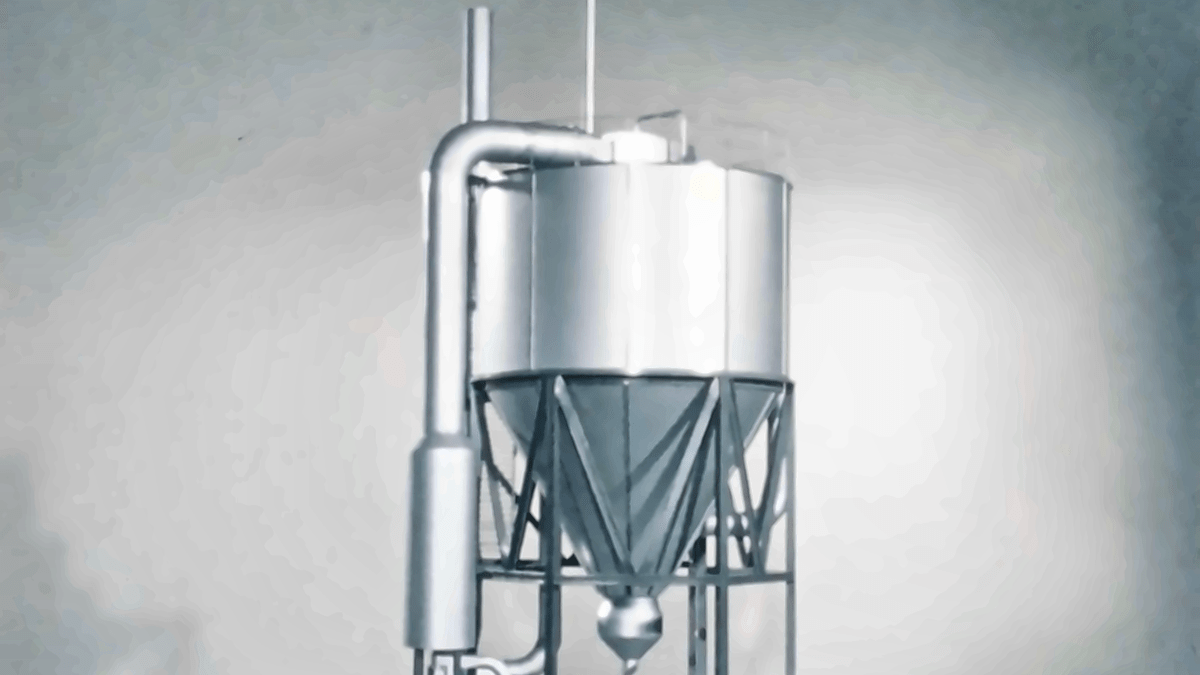
Im Jahr 1976 stellten sich die Ingenieure von NIRO einer neuen Herausforderung im Wettbewerbsumfeld und überdachten die Möglichkeiten der Sprühtrocknung. Aus ihrer Idee entstand der Mehrstufentrockner MSD. Fünfzig Jahre später trägt dasselbe Grundprinzip dazu bei, Flüssigkeiten in Pulver umzuwandeln, die weltweit in unverzichtbaren Ernährungsprodukten und wichtigen Arzneimitteln zum Einsatz kommen. Der MSD wurde durch jahrzehntelanges ingenieurtechnisches Know-how, Kundenfeedback und kontinuierliche Weiterentwicklung verfeinert und steht für eine Erfolgsgeschichte der Innovation mit nachhaltiger Wirkung.

Das Ganze im Blick: Wie Anlagen dauerhaft besser laufen
Eine effiziente Maschine macht noch keine effiziente Produktion. Echte Verbesserungen beginnen oft damit, den Blick über die einzelnen Anlagenelemente hinaus zu richten und zu verstehen, wie sich Prozesse, Energiesysteme und betriebliche Entscheidungen gegenseitig beeinflussen. Ein solcher ganzheitlicher Ansatz hilft beim Identifizieren von Potenzialen, die sonst verborgen bleiben.

Wie eine neue Ventiltechnologie die Produktion von Lebensmitteln und Getränken verändert
In der Lebensmittel- und Getränkeindustrie werden Ventile traditionell mit Druckluft betrieben. Die GEA Hydract®-Antriebstechnologie betätigt Ventile dagegen mit Wasser in einem geschlossenen, digital gesteuerten Kreislauf. Das Ergebnis: Ventile lassen sich präzise in jeder gewünschten Position halten und in fein abgestuften Schritten steuern. Dadurch sinken der Energieverbrauch und gleichzeitig steigt die Prozesskontrolle erheblich.
