

The innovative and robustGEA Crude Oil Treatment Systemmeets the stringent requirements of the oil industry in relation to both product quality and environment.It can process crude oils with high densities and high water/salt content efficiently while minimizing the consumption of chemicals, which leads to considerable savings in operating costs.
Applications
- Dehydration of crude oil: Heavy crude oil, off-spec (opportunity) crude oil
- Desalting of crude oil: Heavy crude oil, off-spec (opportunity) crude oil
Your benefits at a glance

High g-forces of 5,000 to 7,500
- Simultaneous separation of water and solids:
- Efficiency of water and salt removal: 90-99 %
- Efficiency of solids removal: > 99 %
- Mechanical emulsion breaking capability
- Allowing lower separation temperatures
- Reduced use of chemicals

365 / 24 availability
- Back-up capacity with multiple separation units in operation
- Continuous operation with an uptime of > 98.5 %, depending on the service level agreement

Continuous reliability
- Installed base of 1000s of machines running
- Average operating time of 20 years
- Reliable erosion protection
- High-grade material against corrosion

Feed conditions and operation flexibility
- Extremely flexible and compact modular design
- Can be used as stand-alone system or as expansion of the existing installation to compensate for bottlenecks or increase the performance
- Flexible turndown capacity (20 to 100 %)
- Automatic response on changing feed conditions
- No dependency on low or stable oil conductivity
- Adaptation to NACE and sour crude oil possible
- Compliance with regulations for hazardous areas (zone 1 and zone 2)
The treatment system can perform as a fully functional stand-alone unit and can be integrated in a variety of existing upstream and downstream process setups to solve crude oil related separation challenges.
Basic process flows that can be applied are:
- Installation as upstream dehydration stage
- Parallel side stream installation to the existing process
- Stand-alone installation as replacement for the conventional solution on site
- Installation as intermediate system from tank to tank for further processing in refineries
Interested to learn more about how one system solution can solve all these different tasks efficiently?
Available units
Available unitsDue to the modular design several centrifuge units can be combined to achieve the desired performance and flow rate flexibility. The centrifuge unit can be optionally supplemented with additional units with transfer pump, heater and mixer, providing a tailor-made solution for each customer and process requirement.Modular system – Comprehensive know-how from a single supplier

Only someone who can see the system as a whole is able to design it from the start to achieve the highest efficiency. GEA develops package units and process lines whose intelligent technology and integrated concepts immediately create added value. This secures investments – and thus an economic future solution.
Complete solutions from one supplier eliminate time delays and expensive coordination processes right from the start. Instead, they ensure constant high performance in terms of flow rate and separation performance - with minimal effort. This excellent process economy secures your investment decisions in the long term.
For applications where mobility of the treatment system is important, GEA offers corresponding solutions in standard containers and enclosures.
Overview of available units

Centrifuge unit
Capacity: 30 - 150 m3 / h | 5,000 - 23,000 BPD
Dimensions* L x W x H (appr.):
8,000 x 3,000 x 4,550 mm | 26 x 10 x 15 ft
Weight* (empty): 17,700 kg | 39,000 lb
Required power: P = 75 - 150 kW / 100 - 200 HP

Feed pump unit (optional)
Capacity: 30 - 150 m3 / h | 5,000 - 23,000 BPD
Amount of pumps: 1 x 100 % positive cavity pump
Dimensions* L x W x H (appr.):
5,200 x 1,200 x 2,900 mm | 17 x 4 x 10 ft
Weight* (empty): 9,500 kg | 21,000 lb
Utilities: Power 45 kW / 62 HP

Heat exchanger unit (optional)
Heating capacity: 45 °C – 105 °C | 113 - 220 °F
Dimensions* L x W x H (appr.):
5,200 x 1,200 x 2,900 mm | 17 x 4 x 10 ft
Weight* (empty): 9,500 kg | 21,000 lb
Utilities: Saturated steam, thermal oil

Multi-stage mixer unit for the desalting process (optional)
Capacity: 30 - 150 m3/ h | 5,000 - 23,000 BPD
Dimensions* L x W x H (appr.):
3,800 x 3,800 x 5,500 mm | 12 x 12 x 18 ft
Volume: up to 7 m3 | 1,850 gallon
Weight* (empty): 10,000 kg | 22,000 lb
Utilities:
Power: 4.0 kW / 5.4 hp
Wash water: 1 - 5 % of the crude oil
feed flow

Chemical dosing unit (optional)
Capacity: 1 - 2 m³ / h | 4,4 gpm
Dimensions* L x W x H (appr.):
2,500 x 1,500 x 2,000 mm | 8,2 x 5,0 x 6,6 ft
Weight (empty): 1,000 kg | 2,200 lbs
Utilities Power 2 kW | 2,8 HP
_
*Weight and dimensions are based on a capacity of 30 - 85 m³/h
GEA crude oil Dehydrator
GEA crude oil DehydratorGEA crude oil Dehydrators are nozzle-type disk stack centrifuges. They are the right choice, if the main task is to reduce the water content of the crude oil and if the solids content varies.
These centrifuges are built for high performance by incorporating the know-how of more than 50 years of successful operation in the Canadian oil sands industry into their design. Robustness, high efficiency, ease of use and predictable maintenance costs are some of the main advantages.
Operating principles and constructional features
In a nozzle centrifuge, the solids and water are continuously removed through open nozzles placed on the outer diameter of the bowl. At the same time, oil and water are continuously separated by the high g-forces and removed from the top of the bowl under pressure. By using a large number of densely packed disks, the clarification space is significantly increased compared to static separators, thus further improving the oil-water separation.

Depending on the required capacity, GEA supplies the following machine types:
- GEA crude oil Dehydrator 130
- GEA crude oil Dehydrator 260
GEA crude oil Dehydrators are available with a direct driven or with a belt driven bowl.
Features
- Single unit capacity up to 37,500 BPD (250 m3/h); can easily be extended by combining several units
- Oil gravity > 12° API
- Flexible adjustment of the separating zone for maximum separation efficiency of the liquid phases
- Special wear protection including replaceable wear liners
- All product containing parts are made from high-grade stainless steel material
- Space-saving design
- ATEX compliant for the operation in ATEX Zone 1 and Zone 2 environments
Crude oil flow rates

Further technical data and dimensions are available in the technical datasheets you can find in the downloads of this page.
GEA crude oil Desalter
GEA crude oil DesalterGEA crude oil Desalters have a self-ejecting disk-stack bowl for the separation of oil, water and solids. They are the right choice, if the solids content is limited and if the main purpose is to reduce the salt content of the crude oil.
These centrifuges have been designed specifically for crude oil applications and cover the entire range of possible capacities. They are characterized by high motor performance and optimum dynamics with low energy consumption. Other advantages include high reliability, ease of use and low maintenance costs.
Operating principles and constructional features
In the rotating bowl, the salt-charged water and fine particles are separated from the crude oil. The desalting efficiency can be improved by adding fresh water upstream of the centrifuge to extract water-soluble salts from the crude oil. Water and crude oil are discharged continuously under pressure, with the solids collected in the holding space and being automatically ejected at regular intervals.

Depending on the required capacity, GEA supplies three options for this application:
• GEA crude oil Desalter 80
• GEA crude oil Desalter 120
• GEA crude oil Desalter 200
The GEA crude oil Desalter 200 is available with direct drive, both the versions 80 and 120 are available as belt-driven machines.
Features
- Single unit capacity up to 12,500 BPD (85 m3/h); can easily be extended by combining several units
- Oil gravity > 12° API
- Closed feed and discharge for the product phases
- Flexible adjustment of the separating zone for maximum separation efficiency of the liquid phases
- Special wear protection including replaceable wear liners
- All product containing parts are made from high-grade stainless steel material
- Space-saving design
- ATEX compliant for the operation in ATEX Zone 1 and Zone 2 environments
- BS&W and water-soluble salt are brought to pipeline / refinery quality
Crude oil flow rates

Further technical data and dimensions are available in the technical datasheets you can find in the downloads of this page.

GEA Crude Oil Treatment Systems
Your benefits at a glance

High g-forces of 5,000 to 7,500
Simultaneous separation of water and solids: Efficiency of water and salt removal: 90-99% Efficiency of solids removal: > 99% Mechanical emulsion breaking capability Allowing lower separation temperatures Reduced use of chemicals
365 / 24 availability
Back-up capacity with multiple separation units in operation Continuous operation with an uptime of > 98.5%, depending on the service level agreement
Continuous reliability
Installed base of 1000s of machines running Average operating time of 20 years Reliable erosion protection High-grade material against corrosionModular system – Comprehensive know-how from a single supplier


How does centrifugal dehydration and desalting work?
Centrifugal dehydration and desalting work by exploiting density differences: high g-forces inside a rotating bowl separate crude oil (lighter) from water and solids (heavier). In dehydration, water and solids are continuously ejected through nozzles; in desalting, fresh wash water is mixed with the crude upstream, dissolving salts, which are then removed along with the water phase in the centrifuge.

GEA crude oil Dehydrator
GEA crude oil Dehydrators are nozzle-type disk stack centrifuges. They are the right choice, if the main task is to reduce the water content of the crude oil and if the solids content varies.
These centrifuges are built for high performance by incorporating the know-how of more than 50 years of successful operation in the Canadian oil sands industry into their design. Robustness, high efficiency, ease of use and predictable maintenance costs are some of the main advantages.

Operating principles and constructional features
In a nozzle centrifuge, the solids and water are continuously removed through open nozzles placed on the outer diameter of the bowl. At the same time, oil and water are continuously separated by the high g-forces and removed from the top of the bowl under pressure. By using a large number of densely packed disks, the clarification space is significantly increased compared to static separators, thus further improving the oil-water separation.
Depending on the required capacity, GEA supplies the following machine types:
- GEA crude oil Dehydrator 130
- GEA crude oil Dehydrator 260
GEA crude oil Dehydrators are available with a direct driven or with a belt driven bowl.

Features
- Single unit capacity up to 37,500 BPD (250 m3/h); can easily be extended by combining several units
- Oil gravity > 12° API
- Flexible adjustment of the separating zone for maximum separation efficiency of the liquid phases
- Special wear protection including replaceable wear liners
- All product containing parts are made from high-grade stainless steel material
- Space-saving design
- ATEX compliant for the operation in ATEX Zone 1 and Zone 2 environments
Further technical data and dimensions are available in the technical datasheets you can find in the downloads of this page.

GEA crude oil Desalter
GEA crude oil Desalters have a self-ejecting disk-stack bowl for the separation of oil, water and solids. They are the right choice, if the solids content is limited and if the main purpose is to reduce the salt content of the crude oil.
These centrifuges have been designed specifically for crude oil applications and cover the entire range of possible capacities. They are characterized by high motor performance and optimum dynamics with low energy consumption. Other advantages include high reliability, ease of use and low maintenance costs.

Operating principles and constructional features
In the rotating bowl, the salt-charged water and fine particles are separated from the crude oil. The desalting efficiency can be improved by adding fresh water upstream of the centrifuge to extract water-soluble salts from the crude oil. Water and crude oil are discharged continuously under pressure, with the solids collected in the holding space and being automatically ejected at regular intervals.
Depending on the required capacity, GEA supplies three options for this application:
- GEA crude oil Desalter 80
- GEA crude oil Desalter 120
- GEA crude oil Desalter 200
The GEA crude oil Desalter 200 is available with direct drive, both the versions 80 and 120 are available as belt-driven machines.

Features
- Single unit capacity up to 12,500 BPD (85 m3/h); can easily be extended by combining several units
- Oil gravity > 12° API
- Closed feed and discharge for the product phases
- Flexible adjustment of the separating zone for maximum separation efficiency of the liquid phases
- Special wear protection including replaceable wear liners
- All product containing parts are made from high-grade stainless steel material
- Space-saving design
- ATEX compliant for the operation in ATEX Zone 1 and Zone 2 environments
- BS&W and water-soluble salt are brought to pipeline / refinery quality
Further technical data and dimensions are available in the technical datasheets you can find in the downloads of this page.
When should I choose a Dehydrator vs a Desalter?
Choose a Dehydrator when your primary goal is water removal and solids content is high or variable. Choose a Desalter when solids content is limited and your main objective is salt reduction to meet pipeline or refinery specifications.
Practical guidance:
- Upstream (oil field): Dehydrator is typically preferred due to high water cuts (often 30–70%) and variable solids from production.
- Midstream (tank-to-tank, pipeline prep): Dehydrator for bulk water removal, Desalter if salt specs are critical.
- Downstream (refinery): Desalter is standard for final salt removal before atmospheric distillation (target: <10 PTB salt).
- Combination approach: For very challenging crudes (high water + high salt), a two-stage system (Dehydrator followed by Desalter) may be optimal.
- Modular flexibility: Both units can be combined in parallel or series configurations to match your specific process requirements and flow rates.
Still unsure? Contact GEA for a free process consultation. Our engineers will analyze your crude properties (API gravity, water cut, salt content, solids type/concentration) and recommend the optimal configuration.
FAQ
What is the difference between an industrial crude oil centrifuge and a laboratory centrifuge?
Industrial crude oil centrifuges are large-scale continuous process units (up to 250 m³/h) for meeting pipeline specs, while laboratory centrifuges are small benchtop devices for analyzing oil samples.
How does a centrifuge compare to static separators or electrostatic desalters?
Centrifuges use high g-forces for faster, more thorough separation—especially in heavy or emulsified oils—resulting in a smaller footprint, lower temperatures, and reduced chemical use compared to conventional systems.
Can GEA centrifuges handle heavy crude oil with low API gravity?
Yes, GEA systems process heavy and opportunity crudes with oil gravity > 12° API by using high centrifugal force to break stable emulsions effectively.
What are the typical maintenance requirements for a crude oil centrifuge?
Maintenance focuses on wear-protected rotating parts with replaceable liners, ensuring > 98.5% uptime and predictable service intervals supported by global 24/7 service agreements.
Is the system suitable for offshore or remote locations?
Yes, the compact modular design fits space-constrained environments like offshore platforms, with container or enclosure options available for rapid deployment in remote locations.
Does the system comply with international safety and environmental standards?
All units are ATEX-compliant for Zone 1 and Zone 2 hazardous areas and help meet environmental regulations by maximizing water removal and minimizing chemical use.
Downloads

منتجات الخدمة


فيديوهات ذات صلة
Let’s get connected – digital solutions for GEA separators and decanters
رؤى GEA
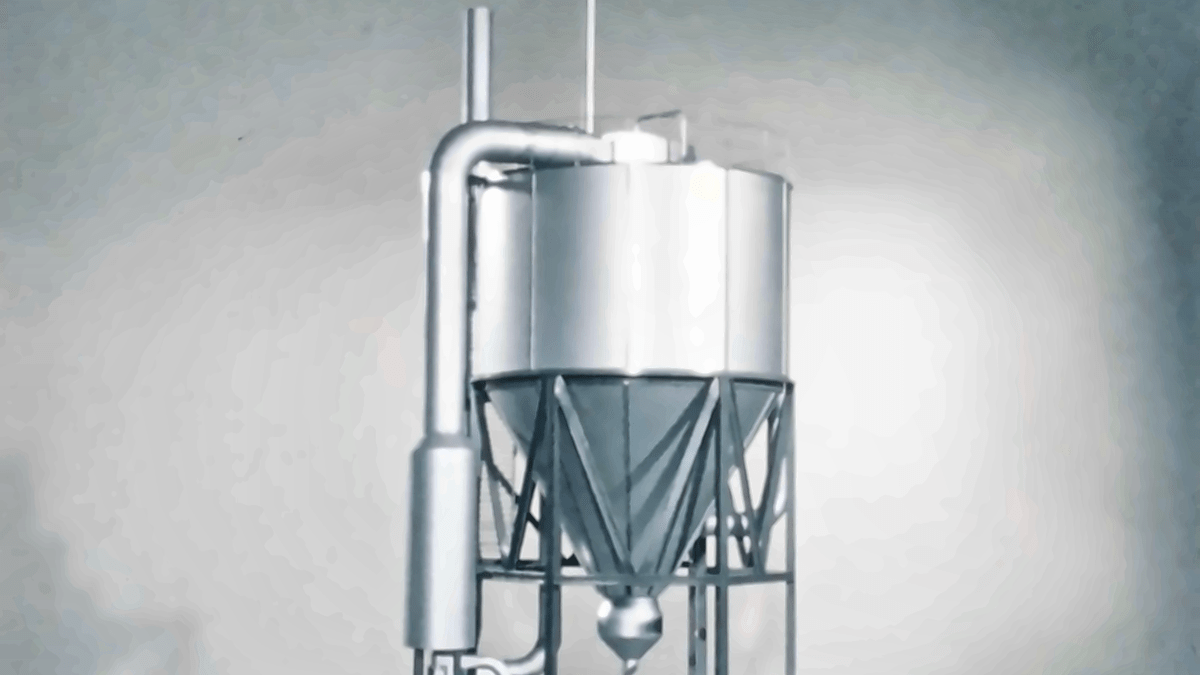
The breakthrough that changed spray drying
In 1976, NIRO engineers responded to a competitive challenge by rethinking what spray drying could do. Their idea became the multi-stage dryer MSD. Fifty years later, the same fundamental principle helps turn liquids into the powders used in essential nutrition products and important medicines around the world. Refined through decades of engineering expertise, customer insight and continuous development, MSD is a story of innovation with lasting impact.
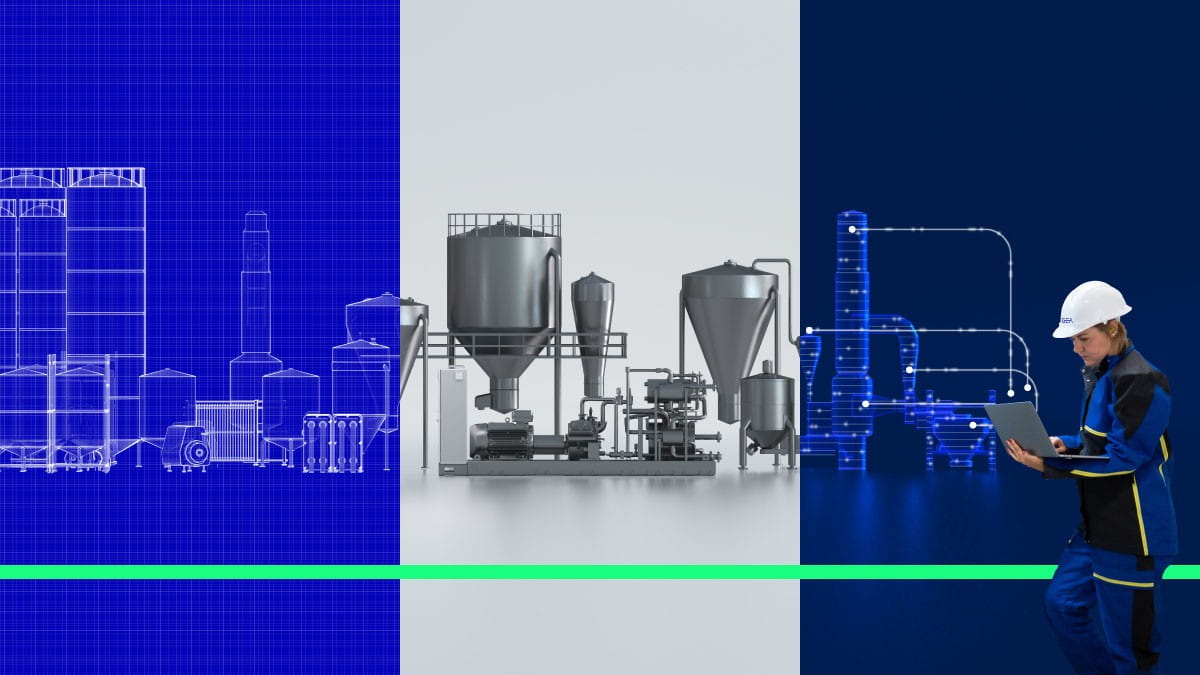
ما وراء الآلة: إطلاق العنان لأداء أفضل للمصنع
إن وجود آلة فعَّالة لا يعني بالضرورة وجود مصنع فعَّال. غالبًا ما يبدأ التحسين الحقيقي بالنظر إلى ما وراء المعدات الفردية، وفهم كيفية تأثير العمليات، وأنظمة الطاقة، وقرارات التشغيل على بعضها البعض. إنه نهج شامل يهدف إلى اكتشاف الفرص التي قد تُفوَّت لولا ذلك.
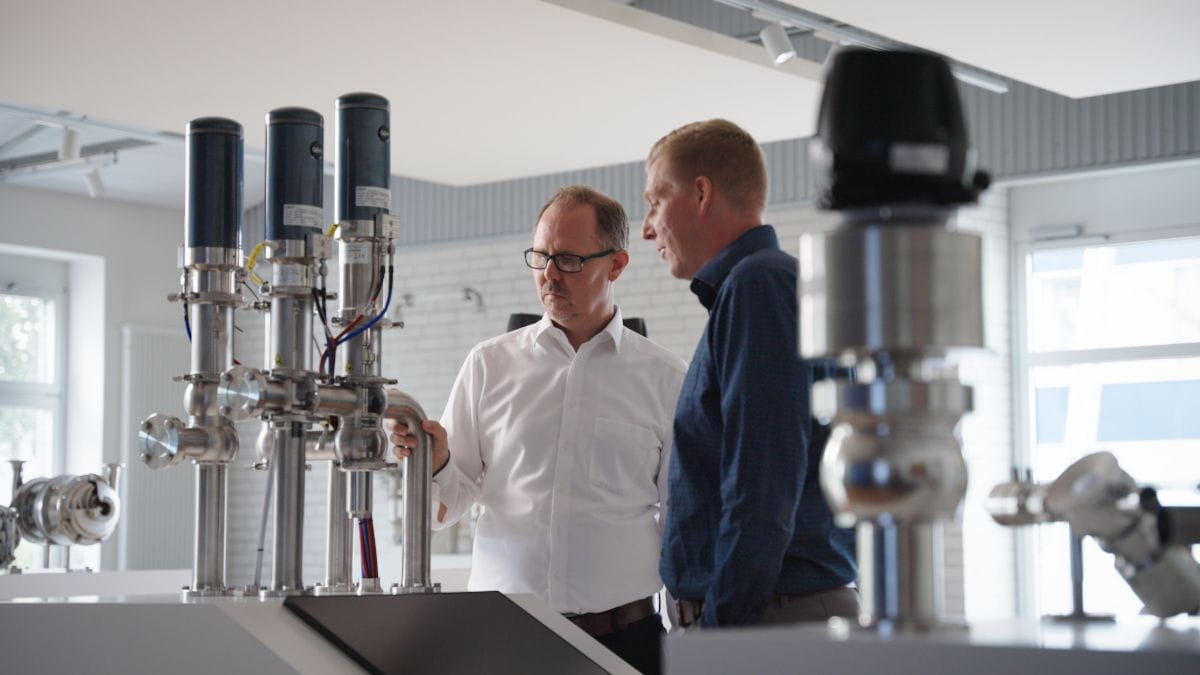
كيف يُحدث الصمام تغييرًا جذريًّا في طريقة تصنيع الأطعمة والمشروبات
في مصانع الأغذية والمشروبات، تُشغّل الصمامات عادةً باستخدام الهواء المضغوط. تعمل GEA Hydract® Actuation Technology على تحريك الصمامات باستخدام الماء بدلاً من ذلك، وذلك ضمن دائرة مغلقة يتم التحكم فيها رقميًا. والنتيجة هي صمام يمكن تثبيته بدقة في مكانه، وتوجيهه بخطوات دقيقة. وينتج عن ذلك انخفاض في استهلاك الطاقة، وتحسين مستوى التحكم.
