

GEA’s Gas Pretreatment
GEA’s gas pretreatment extends our regular emission control portfolio for advanced gas purification and is designed for easy integration at the end of our customers’ existing emission control system. Usually, it consists of two coupled units: the DCC and WESP.
GEA’s Direct Contact Cooler (DCC) does double duty: cooling and conditioning of the flue gas while also removing acidic components by pH-controlled injection of aqueous NaOH solution. GEA’s Wet Electrostatic Precipitator (WESP) is placed on top the DCC to remove particulate matter, mist and aerosols like SO3 in a compact design.
This combination enables cost-effective and adjustable flue gas pretreatment, preparing our customers individual flue gases to meet the requirements of their respective carbon capture units. To ensure a long service life of the system, GEA uses reliable technology with a self-cleaning system based on more than 30 years of experience.

Working principle of GEA’s Gas Pretreatment
For gas pretreatment, GEA’s products utilize evaporative and direct liquid-to-gas cooling in packed columns.
The technical implementation of a gas pretreatment systems is tailored to the presence of specific pollutant traces that need to be removed, and to the entire gas flow to be treated.
The aim of the gas pretreatment is to efficiently fulfill the necessary gas purification tasks in a single step.
Depending on specific needs, devices like the direct contact cooler (DCC), or wet electrostatic precipitator (wetESP) can be used.
Direct Contact Cooler (DCC)
In the Direct Contact Cooler (DCC) heat is directly transferred from the hot flue gas to the coolant. The DCC is filled with structured or unstructured packings made of materials that match the properties of the flue gases to enhance mass and heat transfer while maintaining a low pressure drop. Aqueous solutions are used as coolant, that enters in an evenly distributed manner from above and trickles down the packing in counter-current flow to the flue gas rising from below.
The formation of a thin film on the packing creates a large, volume specific heat and mass transfer surface. Due to the drop in temperature, water and other flue gas components condense and become entrained in the coolant. A demister is located at the upper end of the DCC to separate carry-over droplets from the conditioned flue gas.
After leaving the DCC at the sump, the heated coolant is cooled down via plate type heat exchanger. A second liquid is running in a closed loop to an air cooled heat dispenser, avoiding contamination of the packing and ensuring a long service life. Before reentering the DCC, reactive substances are added to the aqueous coolant, turning it into a scrubbing liquid to absorb chemical pollutants. For example, NaOH is injected to reduce SO2 content down to the target value and to perform a slight reduction of SO3.

Working principle of Direct Contact Cooler (DCC)
Wet electrostatic precipitator (wetESP)
The Wet Electrostatic Precipitator (WESP) efficiently removes residual fine dust particles < 1 µm as well as SOx mist or aerosols from vapor-saturated gases. GEA’s WESP consists of a compact arrangement of hundreds of discharge electrodes, which are surrounded by equidistant discharge electrodes. Between these, a high voltage electrical field charges the particles in the flue gas. These charged particles migrate to the electrodes, where they deposit and agglomerate.
Blow-down water is used to periodically flush the WESP to remove particles and condensates from the electrodes. In case the WESP functions as a second step after the DCC, both share the same casing with the WESP being placed on top of the DCC. In this step, a considerable reduction in the SO3 concentration is achieved, so that the expected value decrease below the standardized detection limit.

Working principle of Wet electrostatic precipitator (wetESP)
Downloads

Insights da GEA
A inovação que revolucionou a secagem por pulverização
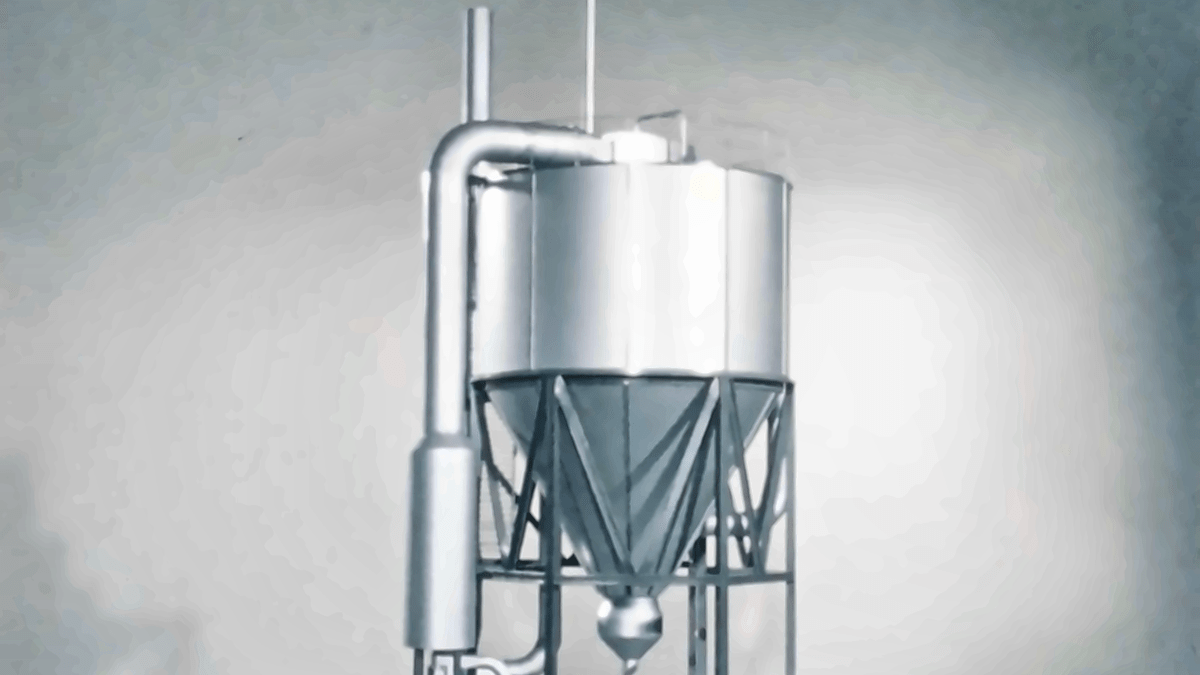
Em 1976, os engenheiros da NIRO responderam a um desafio da concorrência repensando as possibilidades da secagem por pulverização. A ideia deles resultou na secadora de multi-estágios MSD. Cinquenta anos depois, esse mesmo princípio fundamental ajuda a transformar líquidos nos pós utilizados em produtos nutricionais essenciais e em medicamentos importantes em todo o mundo. Aperfeiçoada ao longo de décadas de experiência em engenharia, conhecimento do cliente e desenvolvimento contínuo, a MSD é uma história de inovação com impacto duradouro.

Além da máquina: como alcançar um melhor desempenho da planta
Uma máquina eficiente não significa, por si só, uma fábrica eficiente. A verdadeira melhoria geralmente começa quando se vai além dos equipamentos individuais e se compreende como os processos, os sistemas de energia e as decisões operacionais se afetam mutuamente. É uma abordagem integral concebida para identificar oportunidades que, de outra forma, poderiam passar despercebidas.

Como uma válvula revoluciona a forma como alimentos e bebidas são produzidos
Em plantas de alimentos e bebidas, as válvulas são normalmente acionadas por meio de ar comprimido. A GEA Hydract® Actuation Technology aciona as válvulas por meio de água, em um circuito fechado e controlado digitalmente. O resultado é uma válvula que pode ser mantida exatamente no lugar e ajustada em etapas precisas. Isso resulta em menor consumo de energia e maior controle.
