

Batch and Continuous Solutions
Suitable for both batch and continuous operations, NICA Extruders are available in three sizes: E100, E140 and E220. The E100 is only available as part of the integrated IPS5 system, a process module available exclusively with the GEA PharmaConnect product. The NICA E140 extruder is available as a standalone machine and, with production capabilities of 500 g (batch) up to 2.0 kg/minute (continuous), the unit is equally suited for R&D as well as for small-scale production. The E140 more often integrated with a NICA S450 spheronizer to form the IPS25 and IPS50 machines.
The E220 model offers the same processing characteristics as the smaller E140 but gives four times the throughput. Machine construction makes it particularly suitable for integration into full pellet production lines, forming the NICA IPS100 and IPS200 systems, with direct connection to upstream granulation and downstream spheronization and drying processes. The E220 is available as a free-standing piece of equipment or can be installed 'through-the-wall'.
Principles of Operation
The NICA Extruder is a radial basket-type product with two rotors (one for the E100) that rotate within a cylindrical screen. The wet mass is gravity fed into the inner rotor — the feeder — which distributes the material into cavities between the blades on the outer rotor — the impeller. Pressure is generated in a continuous wave as these blades sweep across the inner surface of the screen. NICA extruders can be fitted with a wide range of screens with a variety of different hole diameters and wall thicknesses. Both rotors feature variable speed drives.
This allows a high degree of flexibility to optimize product compaction and extrudate consistency. The system’s patented design ensures a very low temperature increase during the extrusion process and a consistent wet mass compression into an extrudable paste. These features work together to guarantee reproducible product density throughout a batch. Product is processed in a “plug-flow” regime and hold-up at the end of a batch only amounts to a few grams.
Features
- Patented high efficiency design
- Gentle product treatment
- Low product temperature
- Multiple screen and impeller options for production flexibility
- Product temperature monitoring
- Easy scale-up
- Plug flow — first in, first out — with negligible product hold-up
- Easy to dismantle and clean
- Compact design
Typical Capabilities
| E100 | E140 | E220 |
| 0.1–0.5 kg/min | 0.5–2.0 kg/min | 2–8 kg/min |
Downloads
Produtos relacionados

NICA Spheronizer System
Developed specifically for the pharmaceutical industry, NICA Spheronizers deliver spherical pellets at fast production rates using patented technology to maximize yields.

NICA Integrated Pelletizing Systems
Developed specifically for the Pharmaceutical industry, the NICA Integrated Pelletizing Systems (IPS) fuses NICA Extrusion and Spheronization technologies to create a range of compact, continuous systems for the production of spherical pellets.
Insights da GEA
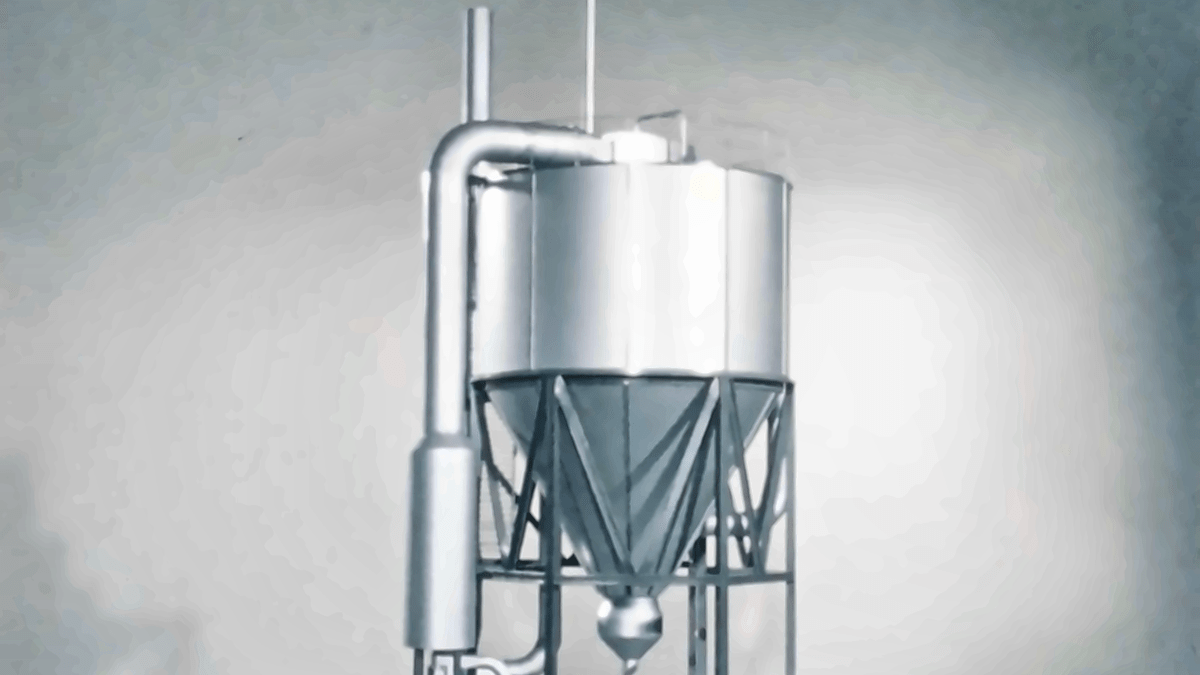
A inovação que revolucionou a secagem por pulverização
Em 1976, os engenheiros da NIRO responderam a um desafio da concorrência repensando as possibilidades da secagem por pulverização. A ideia deles resultou na secadora de multi-estágios MSD. Cinquenta anos depois, esse mesmo princípio fundamental ajuda a transformar líquidos nos pós utilizados em produtos nutricionais essenciais e em medicamentos importantes em todo o mundo. Aperfeiçoada ao longo de décadas de experiência em engenharia, conhecimento do cliente e desenvolvimento contínuo, a MSD é uma história de inovação com impacto duradouro.

Além da máquina: como alcançar um melhor desempenho da planta
Uma máquina eficiente não significa, por si só, uma fábrica eficiente. A verdadeira melhoria geralmente começa quando se vai além dos equipamentos individuais e se compreende como os processos, os sistemas de energia e as decisões operacionais se afetam mutuamente. É uma abordagem integral concebida para identificar oportunidades que, de outra forma, poderiam passar despercebidas.

Como uma válvula revoluciona a forma como alimentos e bebidas são produzidos
Em plantas de alimentos e bebidas, as válvulas são normalmente acionadas por meio de ar comprimido. A GEA Hydract® Actuation Technology aciona as válvulas por meio de água, em um circuito fechado e controlado digitalmente. O resultado é uma válvula que pode ser mantida exatamente no lugar e ajustada em etapas precisas. Isso resulta em menor consumo de energia e maior controle.
