

United Nations‘ (UN) Food and Agriculture Organization (FAO) estimates suggest that global meat supply reached 364 million tonnes[1] in 2023, and could increase to 455 million tonnes[2] by 2050 as the global population continues to grow.
This urgent need to meet rising meat demands worldwide and at the same time address the impact of livestock farming on the environment[3] and climate change means that new solutions are needed - beyond pastures. Cultivated meat that is grown in bioreactors as cultured cells is expanding the new food sector. According to one report there are in excess of 170 publicly announced cultivated meat and seafood companies, and more than $3.1 billion has been invested in the industry.[4]
The good news is that GEA offers a wealth of expertise in bioreactor design and configuration for cultivated meat production. Whether you are at the lab bench R&D stage or looking to progress from bench to pilot-scale, or if you are ready to scale up and establish an end-to-end commercial production line for cultivated meat or seafood, experts at our global centers of excellence can provide in depth process and engineering knowhow. And at the dedicated GEA New Food Application and Technology Center of Excellence (ATC), we can work together with you to design and test your cells in pilot scale bioreactors, and use the latest digital tools to accurately model the optimum parameters and setup for scaling up healthy cell growth and productivity to allow production at industrially viable volumes.
Toward cellular agriculture
Cultivated animal meat, also known as cultured, cell-based or lab-grown meat, is a real animal product. It’s created by taking cells from established collections of pluripotent stem cells - derived from a cow or a chicken egg, for example – and propagating these cells in bioreactors. The cells are supplied with all the oxygen and nutrients they need to grow and replicate. The exact composition of the growth medium can be tailored to trigger differentiation of the immature cells into the desired cell type, say muscle or fat cells. These replicating cells can then be harvested from the bioreactor and processed into the desired product.
Cell cultivation is carried out in a closed system. The required gases and nutrients are fed into the system, and unwanted byproducts and waste generated by the cells are removed. It’s all precisely controlled to support cell health and growth. This may all sound high-tech, but the basic process uses proven methods and technologies that have been around for a long time.
Upstream first – with bioreactors
GEA can configure and supply both standardized and customized high-performance bioreactors for pilot plants and for large-scale industrial applications – whether as a stand-alone plant or as part of an automated process unit.
In addition to sterile working conditions, permanent media quality is not just wishful thinking, but technically achievable. With perfusion technology, separation is carried out permanently over a number of days or weeks – i.e. growth-inhibiting substances are continuously removed and replaced by new medium. The cell concentrate is returned to the bioreactor. This creates precisely the right environment for the cell to continue growing.
In downstream processes, it’s all about maximum concentration!
Importantly, we don’t just configure and supply bioreactor technology, we’ll collaborate to configure a downstream process line designed so you can process your end product as efficiently as possible. Our globally recognized centrifugation technology is an ideal fit for separating out and concentrating the cells from your cell culture solution.
Further equipment includes grinding and mixing technologies to prepare the cell concentrate for further processing – which may include forming, coating, cooking or frying – as well as systems that can freeze, slice and pack your final product. We’ll always aim to help you establish a top-performing, effective line for creating innovative high quality nutritional products for emerging markets.

Where food pioneers are testing and scaling
Stay in touch for the latest news on cultivated meat

Strategic partnership
GEA and Believer Meats join forces
Explore other New Food markets
[1] https://www.fao.org/3/cc3020en/cc3020en.pdf
[2] https://www.fao.org/4/ap106e/ap106e.pdf
[3] https://www.fao.org/livestock-environment/en
[4] https://gfi.org/wp-content/uploads/2024/08/State-of-the-Industry-Report-Cultivated-meat-and-seafood.pdf?_gl=1%2Aczozuo%2A_up%2AMQ..%2A_ga%2AMTU2NjAwOTU4NC4xNzIzNDU1MjU4%2A_ga_TT1WCK8ETL%2AMTcyMzQ1NTI1Ni4xLjEuMTcyMzQ1NTI3MC4wLjAuMA..TcyMzQ1NTI1Ni4wLjAuMA..
Produtos e Tecnologias
Mostrando 4 de 7

Centro de Excelência em Tecnologia e Aplicação de New Food (Novos Alimentos) da GEA
Uma linha piloto de cultivo e fermentação de células para acelerar as inovações desde o laboratório até a fabricação em escala comercial.

GEA Bioreactor for Cell Culture
The GEA Bioreactor for Cell Culture is an industrial-scale bioreactor system that has been designed specifically for cultivating mammalian and other eukaryotic cells in the food and biotech industry.

Misturadores de alto cisalhamento
A GEA oferece uma ampla linha de avançados componentes de processamento que garantem uma mistura eficiente e bem-sucedida, e um produto final de alta qualidade.

Plantas e soluções de membrana
Os sistemas de filtração por membrana da GEA são usados em toda a indústria. Em muitas aplicações, eles substituíram as tecnologias mais tradicionais de separação por centrífuga, evaporação e coagulação para oferecer benefícios significativos em termos de eficiência, qualidade do produto e sustentabilidade.
Insights da GEA
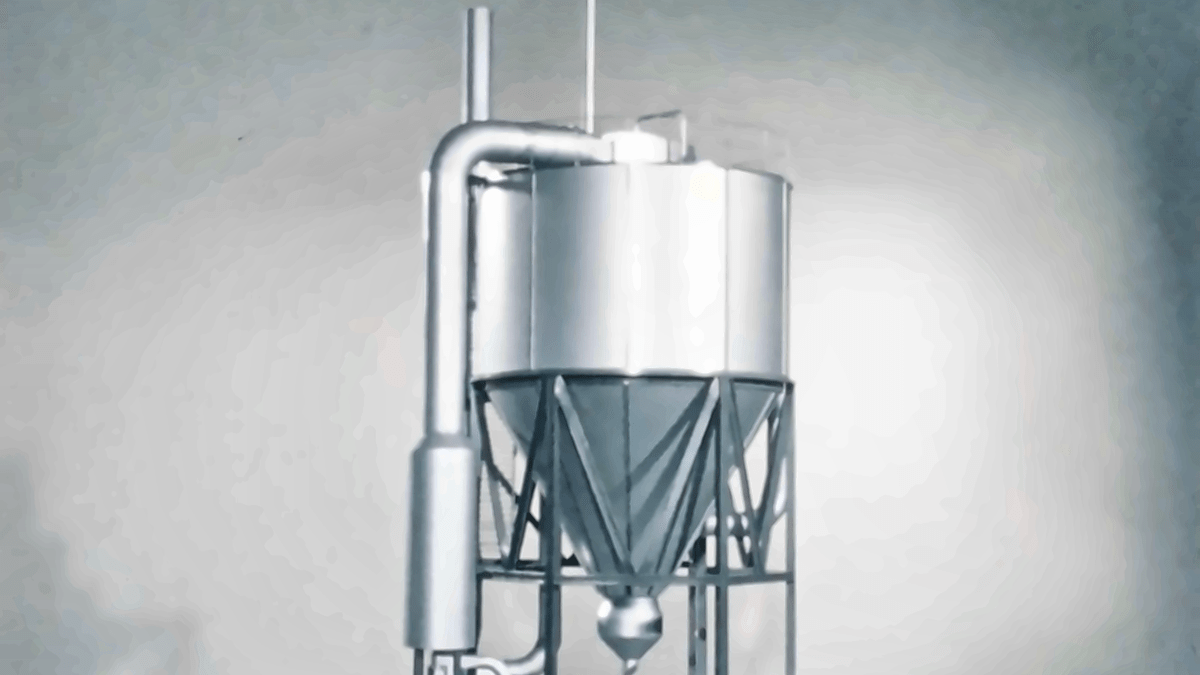
A inovação que revolucionou a secagem por pulverização
Em 1976, os engenheiros da NIRO responderam a um desafio da concorrência repensando as possibilidades da secagem por pulverização. A ideia deles resultou na secadora de multi-estágios MSD. Cinquenta anos depois, esse mesmo princípio fundamental ajuda a transformar líquidos nos pós utilizados em produtos nutricionais essenciais e em medicamentos importantes em todo o mundo. Aperfeiçoada ao longo de décadas de experiência em engenharia, conhecimento do cliente e desenvolvimento contínuo, a MSD é uma história de inovação com impacto duradouro.

Além da máquina: como alcançar um melhor desempenho da planta
Uma máquina eficiente não significa, por si só, uma fábrica eficiente. A verdadeira melhoria geralmente começa quando se vai além dos equipamentos individuais e se compreende como os processos, os sistemas de energia e as decisões operacionais se afetam mutuamente. É uma abordagem integral concebida para identificar oportunidades que, de outra forma, poderiam passar despercebidas.

Como uma válvula revoluciona a forma como alimentos e bebidas são produzidos
Em plantas de alimentos e bebidas, as válvulas são normalmente acionadas por meio de ar comprimido. A GEA Hydract® Actuation Technology aciona as válvulas por meio de água, em um circuito fechado e controlado digitalmente. O resultado é uma válvula que pode ser mantida exatamente no lugar e ajustada em etapas precisas. Isso resulta em menor consumo de energia e maior controle.
