

Highly agile and available in 4 standard set-ups, the ConsiGma® FC can coat any amount of tablets between 1.5 kg and 500 kg within a 8 hour shift (up to 1000 kg for a twin-coater system). Nominal throughputs (from 15 kg/h up to 60 kg/h, to be verified by testing) are flexible due to the interchangeable coating wheels, and the systems can be customized with a number of options to suit the customer’s needs.
They are suitable for applying aesthetic, enteric or API coating in a very accurate way and are ideal for pharmaceutical companies who wish to benefit from a higher process control and resulting higher quality of the product.
The Conductor software ensures seamless control of the entire process, full reporting and tracking of OOS. Material genealogy can be integrated into the controls. Handshaking with up- or downstream equipment can also be offered.
Standard Configuration
1 or 2 coater wheels
2 sizes of wheel available
Available options
- Feeding from:
- Specially designed tablet feeder
- Fully integrated ConsiGma® CT line
- Standalone tablet press
- Fully integrated with new GEA press
- Handshake with existing or customer selected press
- IBC
- Manual
- Solvent capable
- Wash offline
- PAT Probe
- Tablet Waxing unit
- 80 mm coater wheel for small scale R&D available on special demand
- 480 mm coater wheel for high volume production in development
Main benefits
- Ideal conditions for excellent coating quality
- Unique coating concept reducing the risk for common defects
- No risk to lose an entire batch of tablets
- Less coating solution required for effective functional coatings (up to 50% reduction)
- Small footprint relative to the throughput
- No Scale up: same system for R&D, clinical and full scale commercial production
- Can be integrated with various tablet presses for both batch and continuous modes
Read more about how GEA and its partners are implementing this technology to lead the way toward smaller, more flexible, continuous processing technologies that are transforming the future of pharmaceutical development and manufacturing.
Downloads
Verwandte Produkte

ConsiGma® Direct Compression with Linear Blending (DC-LB) Lines
A highly integrated solution for continuous linear blending and direct compression, the ConsiGma® DC-LB lines offer all the advantages of continuous manufacturing: supply chain agility, small footprint, controlled blending and compression and improved quality.

ConsiGma® Granulation and Compression (GC) Lines
Highly integrated solutions for continuous wet granulation, drying and tablet compression, the ConsiGma® GC lines offer all the advantages of continuous manufacturing: supply chain agility, small footprint, controlled granulation and improved quality.

ConsiGma® 1 - R&D Granulation and Drying
The ConsiGma® 1 offers standalone continuous twin-screw granulation and drying for small-scale R&D operations. It allows users to develop the process and achieve high granule quality on a compact unit.

Lighthouse Probe® - online measurement
The Lighthouse Probe® can be used for real-time monitoring of chemical and pharmaceutical processes and provides in-process window cleaning at any time, recalibration during the process, full CIP (cleaning) of wash housing and seal, and a clear view inside – even in difficult conditions.
GEA Insights
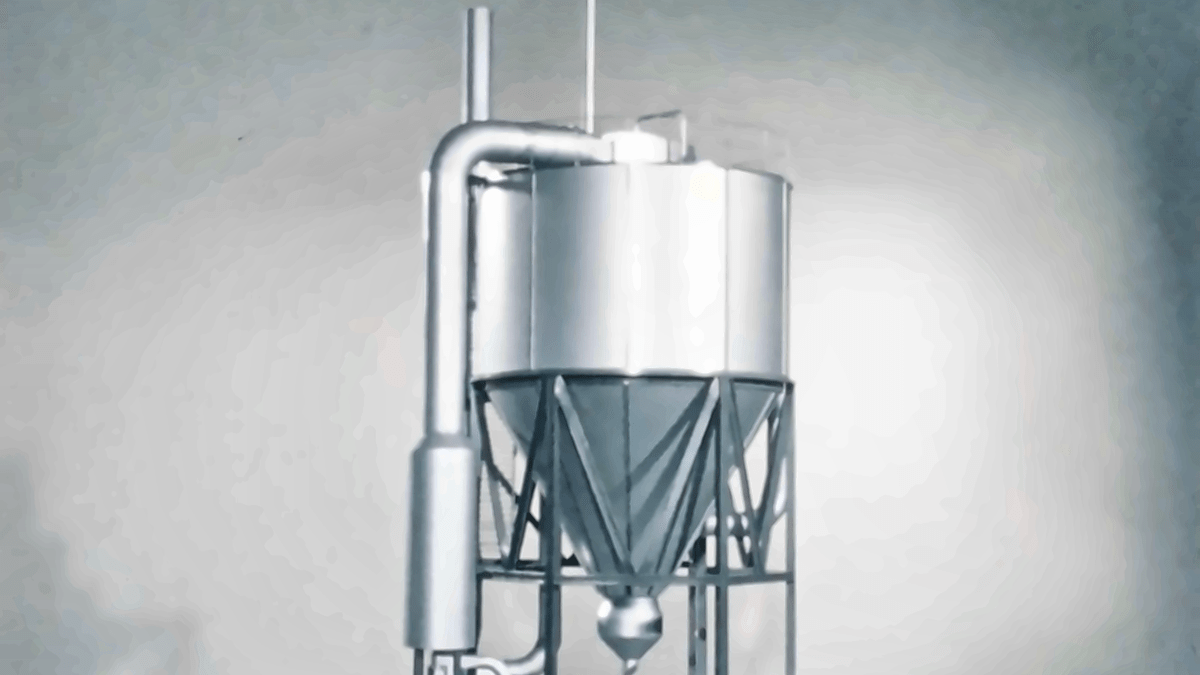
Der Durchbruch, der die Sprühtrocknung revolutionierte
Im Jahr 1976 stellten sich die Ingenieure von NIRO einer neuen Herausforderung im Wettbewerbsumfeld und überdachten die Möglichkeiten der Sprühtrocknung. Aus ihrer Idee entstand der Mehrstufentrockner MSD. Fünfzig Jahre später trägt dasselbe Grundprinzip dazu bei, Flüssigkeiten in Pulver umzuwandeln, die weltweit in unverzichtbaren Ernährungsprodukten und wichtigen Arzneimitteln zum Einsatz kommen. Der MSD wurde durch jahrzehntelanges ingenieurtechnisches Know-how, Kundenfeedback und kontinuierliche Weiterentwicklung verfeinert und steht für eine Erfolgsgeschichte der Innovation mit nachhaltiger Wirkung.

Das Ganze im Blick: Wie Anlagen dauerhaft besser laufen
Eine effiziente Maschine macht noch keine effiziente Produktion. Echte Verbesserungen beginnen oft damit, den Blick über die einzelnen Anlagenelemente hinaus zu richten und zu verstehen, wie sich Prozesse, Energiesysteme und betriebliche Entscheidungen gegenseitig beeinflussen. Ein solcher ganzheitlicher Ansatz hilft beim Identifizieren von Potenzialen, die sonst verborgen bleiben.

Wie eine neue Ventiltechnologie die Produktion von Lebensmitteln und Getränken verändert
In der Lebensmittel- und Getränkeindustrie werden Ventile traditionell mit Druckluft betrieben. Die GEA Hydract®-Antriebstechnologie betätigt Ventile dagegen mit Wasser in einem geschlossenen, digital gesteuerten Kreislauf. Das Ergebnis: Ventile lassen sich präzise in jeder gewünschten Position halten und in fein abgestuften Schritten steuern. Dadurch sinken der Energieverbrauch und gleichzeitig steigt die Prozesskontrolle erheblich.
