
Scope
Created for reliable, high-output operation in a competitive industry, the PERFORMA D has been designed to offer the smallest footprint per tablet produced in the market. This double-sided rotary tablet press from GEA is easy to maintain, clean and operate, and ensures the cost-effective and energy efficient production of both single and bilayer tablets.
The PERFORMA D features a large turret containing up to 106 stations, making it capable of producing up to 1,140,000 tablets per hour. It is the machine of choice for high-volume applications when minimal downtime and high quality are key.
Unique to the PERFORMA D and a key differentiator from other available tablet presses is the turret enclosure. The exchangeable turret is encased in a barrier system that, compared with standard machines, provides higher levels of operator protection, enables rapid changeovers and also supports GMP-compatible production. A further benefit is the ability to perform intermediate dry cleans during extended manufacturing campaigns.
Featuring a longer, PAT-compatible double-paddle forced powder infeed system that maximizes output, the PERFORMA D also benefits from an anti-bridging agitator that keeps the powder column above the paddle feeder constant, resulting in a uniform pressure and reduced weight variation.
The press comes fitted with a three- or four-way tablet chute for both manual and automated station sampling. The design is offering easy, tool-free removal that facilitates both cleaning and changeovers.
Features
- Turret enclosure concept
- Multiple compression modes
- Programmable dwell times at pre-compression and main compression
- Weight control by displacement or force measurement
- Maximized length of the powder feeding unit
- Bilayer production capable
- Small footprint
Main Benefits
- Robust, flexible and reliable, high-output operation
- Fast and easy (interbatch) cleaning
- Higher levels of operator protection
- Enhanced tablet quality
- Reduced weight variation (resulting in a more consistent drug delivery)
- Individual weight control for both layers of a bilayer tablet
- User friendly, intuitive MC5 operating system
Bilayer Production: The GEA Way
The PERFORMA D manufactures bilayer tablets using a unique GEA process: it measures the weight of each layer independently to ensure the correct drug delivery profile; however, most tablet presses can only accurately assess weight when a high force is applied. High forces result in dense tablets that are difficult to bond together, making separation of the layers, or capping, almost inevitable.
GEA’s double-sided tablet presses have been specifically designed and developed for the high-speed production of quality bilayer tablets and provide
- displacement weight monitoring/control for the accurate and independent weight control of the individual layers
- low compression force exerted on the first layer to avoid capping and separation of the two individual layers
- increased dwell time at pre-compression of both first and second layer to provide better de-aeration and defined hardness at maximum turret speed
- maximum prevention of cross-contamination between the two layers
- a clear visual separation between the two layers
- maximized yield.
Data Collection
The MULTI-CONTROL 5 (MC5) is the latest GEA control system for rotary presses. The system’s hardware and software are designed to allow for full compliancy with the 21 CFR PART 11 guideline. It is a fully automated monitoring, control and reporting system based on a PLC/PC hardware configuration. MC5 features include
- standalone PC application (all-in-one), independent from Windows operating system
- Microsoft Windows 10 operating system
- 21.5” HD multi-touch widescreen
- industrial IPC
- Siemens PLC (S7-1500) for machine control
- software design and lifecycle management according to GAMP and internal ISO procedures (QMS)
- integrated help system, with user manual, machine operation manual, mechanical and electrical drawings.
The HMI panel can be moved to either side of the unit for increased flexibility and positioning.
Technical Specifications
The PERFORMA D is available for D35, D, B, BB, BBS and A2D tooling
| Tooling (EUR or TSM) | D35 | D | B | BB | BBS | A2D |
| Max. tablet diameter/lenght [mm] | 35 | 25,4 | 16 (L=19) | 13 (L=14,3) | 11 | 11 |
| Punch body diameter [mm] | 35 | 25,4 | 19 | 19 | 19 | 12 |
| Outside die diameter [mm] | 52 | 38,1 | 30,16 | 24 | 22 | 38,1 |
| Die height [mm] | 23,81 | 23,81 | 22,22 | 22,22 | 22,22 | 23,81 |
| Number of punch positions | 39 | 53 | 67 | 81 | 89 | 106 |
| Max. fill depth [mm] | 20 (25) | 20 | 19 | 19 | 19 | 19 |
| Top punch penetration [mm] | 1 to 4 | |||||
| Max. pre-compression force [kN] | 10 (under extended dwell time) | |||||
| Max. main compression force [kN] | 100 | |||||
| Max. output capacity [tab/h] | 350.000 | 540.000 | 722.000 | 875.000 | 1.069.000 | 1.272.000 |
| Electrical requirements | 3phase+PE – 380 / 400 / 415 / 460 / 480 V – 50Hz / 60Hz
(nominal consumption 16 kVa; power installed 32,4 kVA) | |||||
| Compressed air requirements | clean & dry - 7-8 bar - 500Nl/min peak - 100 Nl/min average | |||||
| Dust extraction requirements | 150 m³/h at 15 mbar (single layer) - 230 m3/h at 50 mbar (bi-layer) | |||||
| Operating conditions | temperature 15 - 40 °C ; relative humidity < 60% | |||||
| Machine dimensions & weight | W = 1.450 mm x D = 1.450 mm (+ max 865 extended HMI arm) x H = 2.245 m – 5.700 kg
(excluding electrical cabinet: W 810 x D 510 x H 2.150 ; weight +/- 300 kg) | |||||
Downloads
Verwandte Produkte

NexGen Press® 30
Combining the best features of the MODUL-P and PERFORMA-P, the NexGen Press® 30 is ideally suited for formulation development, clinical trial production and small batch/multi-product production. It is modular by design and can be configured to fit specific applications, such as bi-layer compression, MUPS, micro-tablets, OEB levels from 1 to 5, wi...

NexGen Press® 45
The NexGen Press® 45 represents the ultimate combination of modular design, digitization, safety, ease of use and ergonomic functionality, while providing high throughputs for larger tablet production campaigns.
NexGen Press® range
Featuring an innovative design that promotes operator (and environmental) safety and ease of use, the NexGen Press® range is modular, intuitive and cost-effective to run, combining unrivaled containment with fast product changeovers and the best price-performance tableting system..
Zugehörige Videos
PERFORMA D Versatile compression technology
GEA Insights
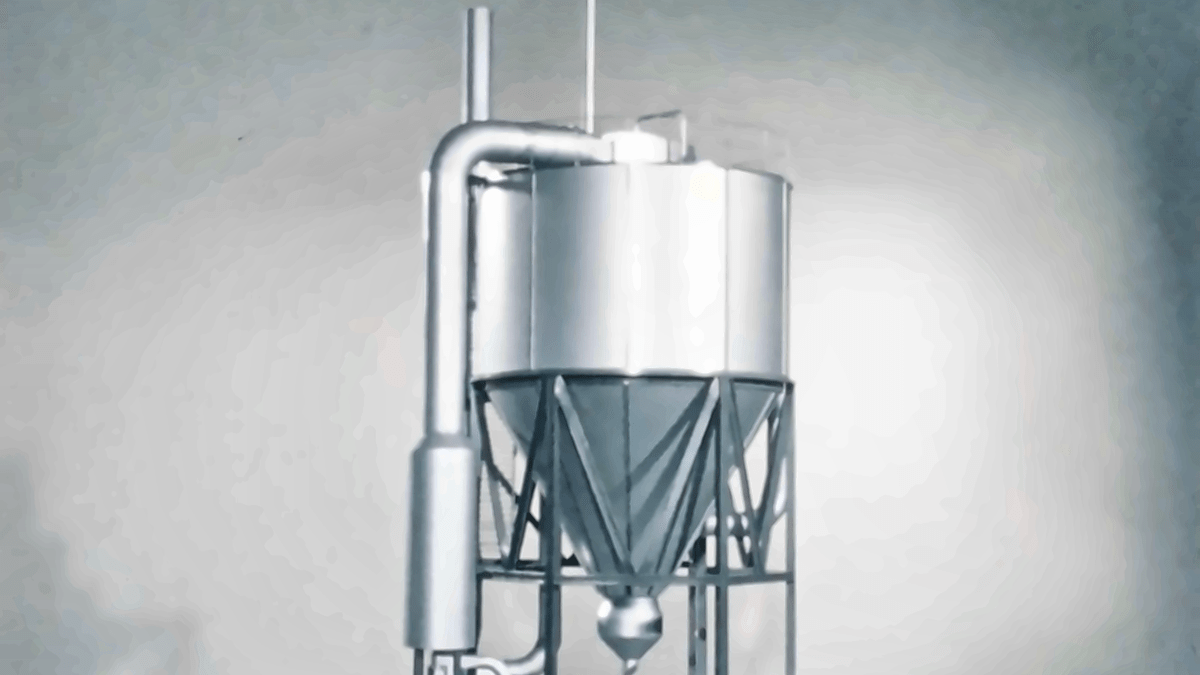
Der Durchbruch, der die Sprühtrocknung revolutionierte
Im Jahr 1976 stellten sich die Ingenieure von NIRO einer neuen Herausforderung im Wettbewerbsumfeld und überdachten die Möglichkeiten der Sprühtrocknung. Aus ihrer Idee entstand der Mehrstufentrockner MSD. Fünfzig Jahre später trägt dasselbe Grundprinzip dazu bei, Flüssigkeiten in Pulver umzuwandeln, die weltweit in unverzichtbaren Ernährungsprodukten und wichtigen Arzneimitteln zum Einsatz kommen. Der MSD wurde durch jahrzehntelanges ingenieurtechnisches Know-how, Kundenfeedback und kontinuierliche Weiterentwicklung verfeinert und steht für eine Erfolgsgeschichte der Innovation mit nachhaltiger Wirkung.

Das Ganze im Blick: Wie Anlagen dauerhaft besser laufen
Eine effiziente Maschine macht noch keine effiziente Produktion. Echte Verbesserungen beginnen oft damit, den Blick über die einzelnen Anlagenelemente hinaus zu richten und zu verstehen, wie sich Prozesse, Energiesysteme und betriebliche Entscheidungen gegenseitig beeinflussen. Ein solcher ganzheitlicher Ansatz hilft beim Identifizieren von Potenzialen, die sonst verborgen bleiben.

Wie eine neue Ventiltechnologie die Produktion von Lebensmitteln und Getränken verändert
In der Lebensmittel- und Getränkeindustrie werden Ventile traditionell mit Druckluft betrieben. Die GEA Hydract®-Antriebstechnologie betätigt Ventile dagegen mit Wasser in einem geschlossenen, digital gesteuerten Kreislauf. Das Ergebnis: Ventile lassen sich präzise in jeder gewünschten Position halten und in fein abgestuften Schritten steuern. Dadurch sinken der Energieverbrauch und gleichzeitig steigt die Prozesskontrolle erheblich.
