

GEA's Environmental Spray Drying Systems combine decades of spray drying expertise with advanced solutions for flue gas cleaning and liquid waste stream concentration. Whether the objective is reducing atmospheric emissions or achieving Zero Liquid Discharge (ZLD), GEA offers proven spray drying technologies that help customers meet increasingly stringent environmental requirements.
Our solutions address both air emission control and liquid waste management challenges. They facilitate the removal of acidic pollutants, heavy metals, dioxins, and dust from flue and off-gases to achieve ultra-low emission levels, while also converting wastewater, brines, and other liquid waste streams into manageable dry solids. The result is improved process efficiency, optimized resource utilization, and enhanced environmental sustainability. The portfolio includes Spray Drying Absorption (SDA) for flue gas cleaning and Spray Drying Evaporation (SDE) for Zero Liquid Discharge (ZLD) applications.
The right spray drying solution for every challenge
Using the same core principle of atomizing liquids into a hot gas stream, GEA's spray drying technologies address two distinct environmental challenges.
Spray Drying Absorption (SDA)
The Spray Drying Absorption (SDA) process is a proven semi-dry flue gas desulfurization and cleaning technology. It efficiently converts gaseous pollutants such as SO₂, SO₃, HCl, mercury, and dioxins into stable, dry reaction products through contact with a lime-based absorbent. The resulting dry powder is easy to handle, transport, and dispose of while supporting compliance with stringent emission regulations. SDA systems are widely used in waste-to-energy plants, fossil-fueled power plants, waste incinerators, sinter plants, smelters, metallurgical facilities, and other industrial installations.
Spray Drying Evaporation (SDE)
The Spray Drying Evaporation (SDE) process is designed for Zero Liquid Discharge applications, converting salt- and solids-containing wastewater streams into dry solids. Using the heat available from industrial flue gases, water is evaporated from the effluent stream, leaving a dry powder that is collected in a downstream filtration system. This enables complete elimination of liquid effluent discharge while supporting water recovery and sustainable waste management. SDE systems are widely used in chemical processing, mining and minerals processing, industrial wastewater treatment, wet flue gas desulfurization (FGD) wastewater treatment, and metallurgical and refining operations.
Together, SDA and SDE provide a comprehensive portfolio of spray drying solutions for air pollution control, wastewater minimization, and sustainable industrial operation.
Produkte
Zeigt 2 von 2 an

Spray Drying Evaporation
GEA's spray drying evaporation is a simple process that requires limited attention from the operator while maintaining high reliability. It can be easily integrated with either existing or new WFGD.

Sprühtrockner-Absorber
Sprühtrockner-Absorber erleichtern die Abscheidung von sauren Schadstoffen, Schwermetallen und Staub aus Rauchgasen und Abgasen in Kraftwerken mit fossilen Brennstoffen, Müllverbrennungsanlagen und Industrieinstallationen.
Downloads
GEA Insights
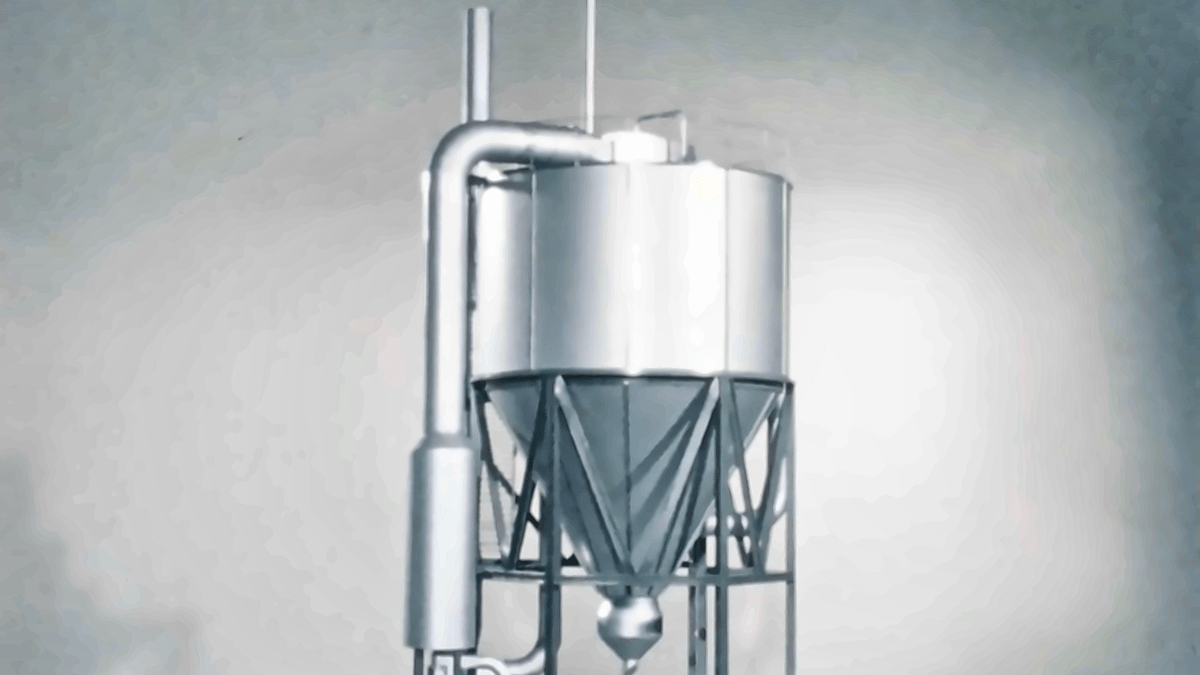
The breakthrough that changed spray drying
In 1976, NIRO engineers responded to a competitive challenge by rethinking what spray drying could do. Their idea became the multi-stage dryer MSD. Fifty years later, the same fundamental principle helps turn liquids into the powders used in essential nutrition products and important medicines around the world. Refined through decades of engineering expertise, customer insight and continuous development, MSD is a story of innovation with lasting impact.

Das Ganze im Blick: Wie Anlagen dauerhaft besser laufen
Eine effiziente Maschine macht noch keine effiziente Produktion. Echte Verbesserungen beginnen oft damit, den Blick über die einzelnen Anlagenelemente hinaus zu richten und zu verstehen, wie sich Prozesse, Energiesysteme und betriebliche Entscheidungen gegenseitig beeinflussen. Ein solcher ganzheitlicher Ansatz hilft beim Identifizieren von Potenzialen, die sonst verborgen bleiben.

Wie eine neue Ventiltechnologie die Produktion von Lebensmitteln und Getränken verändert
In der Lebensmittel- und Getränkeindustrie werden Ventile traditionell mit Druckluft betrieben. Die GEA Hydract®-Antriebstechnologie betätigt Ventile dagegen mit Wasser in einem geschlossenen, digital gesteuerten Kreislauf. Das Ergebnis: Ventile lassen sich präzise in jeder gewünschten Position halten und in fein abgestuften Schritten steuern. Dadurch sinken der Energieverbrauch und gleichzeitig steigt die Prozesskontrolle erheblich.
